
Have you ever filled a prescription and been shocked by the price-only to find out there’s no cheaper generic version available? It’s not a glitch. It’s not bad luck. It’s the system working exactly as designed-for drug companies, not patients.
Patents aren’t the whole story
Most people think generic drugs show up as soon as a brand-name drug’s patent runs out. That’s not true. Patents are just the starting line. The average pharmaceutical patent lasts 20 years from the date it’s filed. But by the time a drug gets FDA approval, five to seven years have already passed in clinical trials. That leaves only 13 to 15 years of market exclusivity before generics can enter. But companies don’t just sit back and wait. They file follow-up patents-on everything from the shape of the pill to the way it dissolves in your stomach. These are called "patent thickets." One drug might have 20 or more patents covering different aspects. The FDA’s Orange Book lists over 14,000 patents for just 2,500 brand-name drugs. Many aren’t about innovation-they’re about delay. A 2020 Harvard study found these tactics extend market exclusivity by an average of 3.2 years beyond the original patent.Complex drugs can’t be copied easily
Not all drugs are made the same. Simple pills, like atorvastatin (the generic version of Lipitor), are straightforward to replicate. But some drugs are like locked boxes. Take Premarin, a hormone therapy made from pregnant mares’ urine. It contains a mix of 10 different estrogen compounds, many of which aren’t fully identified. No lab can recreate that exact blend. Even if they tried, the FDA wouldn’t approve it because they can’t prove it’s bioequivalent. Then there are biologics-drugs made from living cells, like Humira or Enbrel. These aren’t chemicals you can mix in a vat. They’re proteins grown in labs using complex biological processes. You can’t just copy them. You have to make a biosimilar, which requires its own clinical trials, years of testing, and billions in investment. The first biosimilar for Humira didn’t hit the U.S. market until 2023, even though the patent expired in 2016.Delivery systems block generics
It’s not just what’s in the drug-it’s how it gets to your body. Take Advair Diskus, an inhaler for asthma. The active ingredient, fluticasone, could be made cheaply. But the device that delivers it? That’s patented. The exact size of the particles, the pressure of the spray, the way the powder clumps-all of it matters. A generic version would need to match this down to the micron. The FDA requires proof that the generic delivers the same dose to the same part of the lung. That’s expensive. Many generic companies just walk away. Same with extended-release pills. Prozac Weekly releases its active ingredient slowly over seven days. To replicate that, you need the exact polymer coating, the exact release rate. Change one ingredient by 2%, and the drug might hit too fast-or not at all. The FDA requires extra bioequivalence studies for these, and many companies can’t afford the time or cost.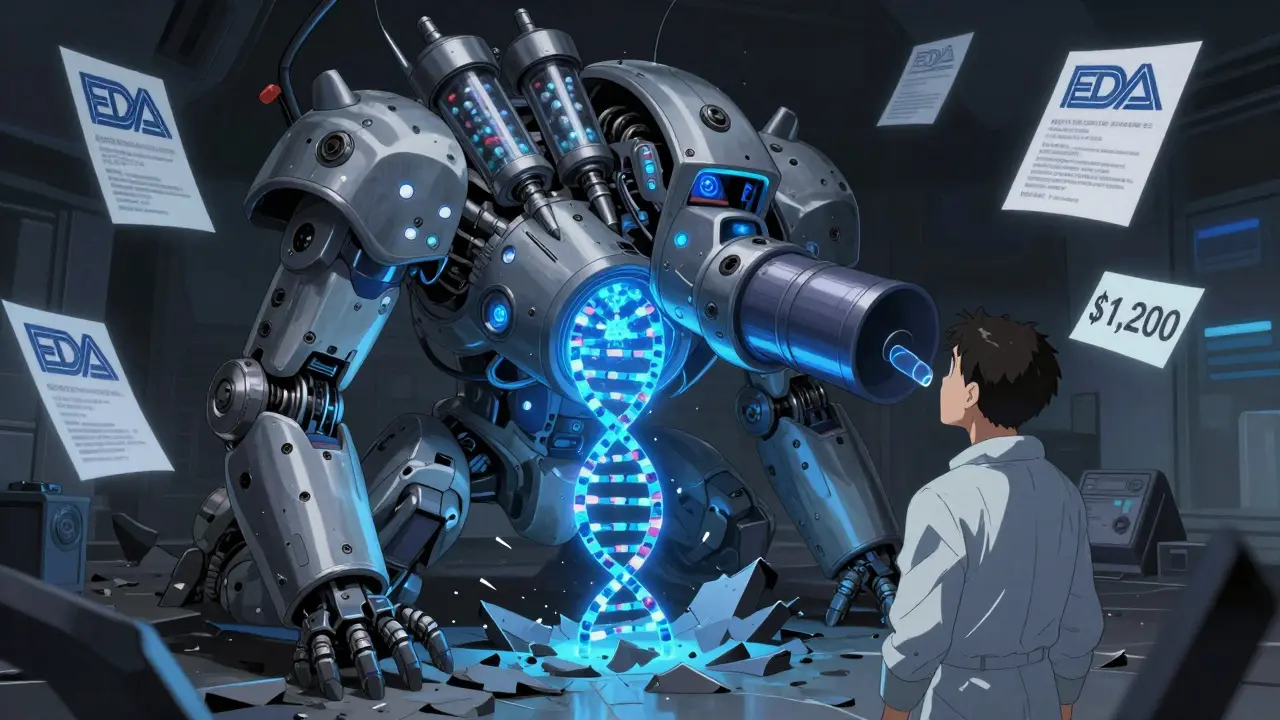
Product hopping and pay-for-delay
Some companies don’t wait for patents to expire. They change the drug before that happens. This is called "product hopping." AstraZeneca did it with Nexium. When Prilosec’s patent was about to expire, they introduced Nexium-a slightly different version of the same molecule. They marketed it as "better," even though it wasn’t clinically superior. Patients switched. Generics couldn’t enter until Nexium’s patents ran out, delaying competition by over a decade. Then there’s pay-for-delay. Brand-name companies pay generic makers to stay off the market. The FTC found 297 of these deals between 1999 and 2012. In one case, a generic maker agreed to delay launching a cheaper version of the antidepressant Wellbutrin for six years-in exchange for $1.2 billion. These deals cost consumers an estimated $3.5 billion a year.Why some drugs never get generics-ever
About 25% of top-selling brand-name drugs still have no generic version, even after patents expire. Why? Three reasons: cost, complexity, and risk. For drugs with a narrow therapeutic index-like warfarin, lithium, or thyroid meds-even tiny differences in absorption can be dangerous. Generic manufacturers know that if one patient has a bad reaction, they’ll face lawsuits. So they avoid them. Orphan drugs-medications for rare diseases-are another category. The market is small. Maybe 10,000 patients in the U.S. need it. The cost to develop a generic? $10 million. The return? Maybe $2 million. No company will do it. And then there’s insulin. Despite being discovered in 1921, insulin still has almost no true generics. Why? Because it’s a biologic. And the FDA gives it 12 years of data exclusivity. Even after patents expire, no one can legally copy it until that clock runs out. The first insulin biosimilar didn’t arrive until 2021. Most are still priced above $300 per vial.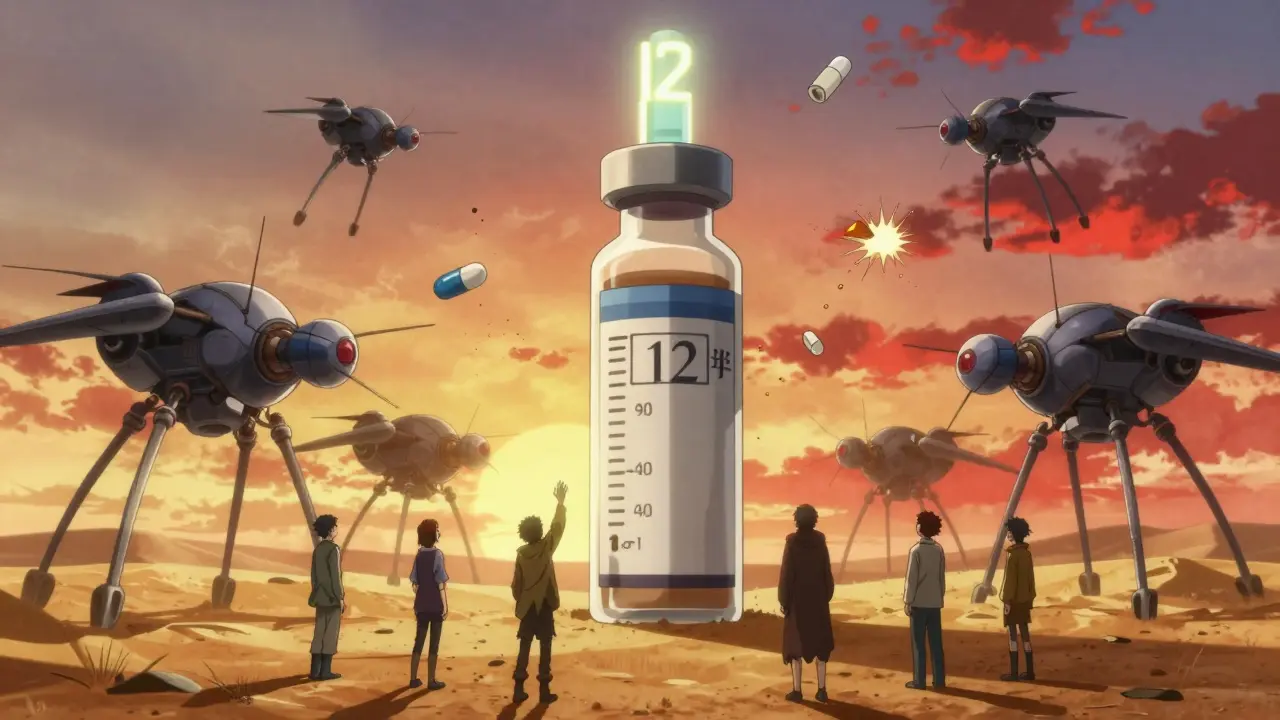
What this means for patients
The price difference is staggering. A brand-name drug with no generic can cost 400% more than one with competition. GoodRx found that in 2022, the average cost of a brand-name drug without a generic was $1,200 per month. With a generic? $220. Patients on Medicare Part D who take drugs without generics spend over $5,000 a year out-of-pocket-more than double those who take generics. Some pay $14,500 a month for Gleevec before generics arrived. After? $850. And it’s not just money. Some patients report that generic versions of inhalers or epilepsy drugs don’t work the same. One user on PatientsLikeMe said the generic tiotropium made her asthma feel worse. The FDA says generics must be bioequivalent. But bioequivalence doesn’t always mean identical experience. For chronic conditions, even small differences matter.What’s changing-and what’s not
The CREATES Act of 2019 stopped brand-name companies from refusing to sell samples to generic makers. The FDA’s GDUFA III program sped up reviews of complex generics. In 2022, approvals for complex drugs jumped 27%. Biosimilars are growing. There were 32 approved in 2022. By 2025, that number could hit 75. But even then, only about 95% of drugs will have generics by 2030. The remaining 5%? Ultra-complex biologics, orphan drugs, and those with delivery systems too hard to copy. The truth? Most drugs will eventually have generics. But for some, the barriers are too high-not because they’re too good, but because the system is built to protect profit, not patients.What you can do
If your drug has no generic:- Ask your doctor if there’s a similar drug with a generic alternative. For example, if Viibryd (vilazodone) is too expensive, sertraline might work just as well.
- Check the FDA’s Orange Book. It lists patent expirations and exclusivity periods. You can see when a generic might arrive.
- Use GoodRx or SingleCare. Even brand-name drugs can be discounted-sometimes by 50% or more.
- Ask your pharmacist. They know which drugs are likely to go generic next-and which ones never will.
Why don’t all brand-name drugs have generic versions?
Not all drugs can be easily copied. Some have complex chemical structures, like biologics made from living cells. Others rely on patented delivery systems-like inhalers or extended-release pills-that are hard to replicate. Even after patents expire, manufacturers may avoid making generics if the cost of testing and approval is too high or if the market is too small.
How long does it take for a generic drug to become available after a patent expires?
It can take anywhere from a few months to over a decade. Simple pills often have generics within months. But for complex drugs-like biologics, inhalers, or those with narrow therapeutic windows-it can take years. Legal battles, patent extensions, and manufacturing challenges can delay entry by 5-10 years or more.
Are generic drugs less effective than brand-name drugs?
For most drugs, generics are just as effective. The FDA requires them to have the same active ingredient, strength, and bioequivalence. But for drugs with narrow therapeutic windows-like seizure meds or thyroid hormones-some patients report differences. This isn’t because generics are inferior, but because tiny variations in absorption can matter more in these cases.
What is "product hopping" and how does it block generics?
Product hopping is when a drug company makes a minor change to a drug-like switching from a pill to a tablet-just before its patent expires. They then market the new version as "improved," even if it’s not clinically better. This resets the clock on exclusivity and delays generic competition. AstraZeneca did this with Nexium after Prilosec’s patent expired.
Can I get a cheaper version of a brand-name drug without a generic?
Yes. Ask your doctor if there’s a different drug in the same class that has a generic. For example, if you’re on a costly antidepressant with no generic, sertraline or fluoxetine might work just as well. Also, use discount programs like GoodRx or SingleCare-many brand-name drugs still have significant discounts available.
Why are insulin and other biologics so expensive with no generics?
Biologics like insulin are made from living cells, not chemicals. You can’t copy them like a regular pill. The FDA requires a 12-year data exclusivity period before biosimilars can be approved. Even after that, developing a biosimilar costs billions and takes years. That’s why insulin still costs hundreds of dollars per vial-despite being over 100 years old.

Aishah Bango
January 27, 2026 AT 08:40This is why I refuse to buy brand-name meds unless absolutely necessary. Pharma companies are laughing all the way to the bank while people skip doses just to make their prescriptions last. It’s criminal.
And don’t even get me started on insulin. It’s been around since the 1920s. We’re literally charging people hundreds of dollars for a life-saving chemical that should cost pennies. This isn’t capitalism-it’s exploitation dressed up as innovation.
Robin Van Emous
January 28, 2026 AT 04:50It’s frustrating, but I get why some generics don’t exist. I’ve seen how complicated biologics are-my cousin’s rheumatoid arthritis meds are like magic in a vial. Copying them isn’t like copying a song.
Still, the pay-for-delay deals? That’s just dirty. And product hopping? Come on. If it’s not better, why are they even doing it? It’s all about keeping the cash flowing, not helping people.
Angie Thompson
January 28, 2026 AT 06:54Okay but can we just take a second to appreciate how wild it is that we’re still paying $300 for insulin??? 🤯
It’s like buying the same flashlight from 1921 and paying $500 for the batteries because the original company owns the patent on the shape of the battery compartment. 😭
And why do we let them get away with this? We’re not even mad-we just start Googling coupons. We’ve been conditioned to accept this. We need to riot. Or at least email our reps. 🙏
shivam utkresth
January 29, 2026 AT 02:38From India, we’ve seen this play out differently. Generic manufacturers here are aggressive-sometimes too aggressive. We’ve had cases where generics failed because they didn’t match bioequivalence. But the system here is built to produce cheap drugs fast. The U.S. system? It’s designed to protect IP, not patients. The FDA’s process is slow, expensive, and full of loopholes.
And don’t forget: many of these complex generics are made in India, but the U.S. won’t approve them because of regulatory friction. It’s not about safety-it’s about control.
Joanna Domżalska
January 30, 2026 AT 01:24Let’s be real-no one cares about patients. They care about profit margins. The fact that you’re even surprised by this means you’ve never read a single annual report from Pfizer or Merck.
And for those saying ‘ask your doctor for alternatives’-great. Except your doctor gets kickbacks from pharma reps. They’re not your ally. They’re a middleman in a system built to bleed you dry.
Also, ‘bioequivalent’ doesn’t mean ‘identical.’ You think your body can’t tell the difference between a 2% variation in coating? Please. Your nervous system remembers everything.
Faisal Mohamed
February 1, 2026 AT 00:29From a systems theory perspective, the pharmaceutical ecosystem operates as a closed-loop oligopoly with rent-seeking incentives embedded at every layer: patent law, regulatory capture, payer asymmetry, and supplier monopolization.
The emergence of biosimilars is a nascent disintermediation mechanism, yet its scalability is structurally constrained by FDA’s equivalence paradigms and the high capital intensity of bioprocessing. The market fails not due to inefficiency-but because value extraction has been institutionalized.
Also, 💸🤯
Josh josh
February 2, 2026 AT 02:00SWAPNIL SIDAM
February 3, 2026 AT 16:27I work in a pharmacy in Delhi. We sell generic versions of drugs that cost $1,000 in the U.S. for $8. People cry when they hear the price. Here, we don’t have insurance. We just pay what we can.
But when I see what’s happening in America-how people choose between food and medicine-I feel sick. This isn’t healthcare. It’s a casino where the house always wins.
And you know what? The worst part? The system knows you’ll keep coming back. Because you have no choice.