
It’s 2025. You’ve been on the same brand-name antidepressant for three years. Your doctor switches you to the generic version. Suddenly, you feel dizzy. Your sleep gets worse. You start doubting if the medication is even working. You didn’t change anything else. But your body feels different. And you’re not alone.
Over 89% of prescriptions in the U.S. are filled with generic drugs. They’re cheaper. They’re just as effective. And yet, nearly 4 in 10 patients still believe generics are weaker. Why? It’s not chemistry. It’s perception.
The Nocebo Effect Is Real - and It’s Harming Patients
The nocebo effect isn’t in your head. It’s in your biology. When you expect a drug to cause side effects, your brain actually triggers them - even if the pill has no active ingredient. In clinical trials, about 1 in 5 people on placebo pills report side effects. 1 in 10 quit the trial because of them. And when those placebo pills are labeled as "generic," the side effects get worse.
A 2025 study tested this with sham oxytocin sprays. One group was told they were getting a brand-name spray with a simple label and high price. Another group got the exact same spray, but labeled as a generic with a complex name and low price. The generic-labeled group reported significantly more side effects - even though the spray contained nothing. The only difference? What they believed they were taking.
This isn’t just theory. In 2023, researchers at Harvard and Brigham and Women’s Hospital found that patients switched from brand-name to generic medications reported more side effects - even when blood tests showed identical drug levels. The pills were the same. The body reacted differently because the mind expected harm.
Why Do People Think Generics Are Worse?
It starts with packaging. A 2024 study gave people an inert anti-itch cream. One group got it in a sleek blue box with a fancy name: "Solestan® Creme." The other got the same cream in a plain orange box labeled "Imotadil-LeniPharma Creme." The people with the "expensive" cream reported more pain sensitivity - even though the cream had no active ingredient. Price and packaging shaped their experience.
It’s not just about cost. It’s about trust. Brand-name drugs come with years of advertising, recognizable logos, and familiar shapes. Generics? Often look different. Smaller. Different color. Harder to pronounce. Patients see that and think: "This isn’t the real thing. It’s cheap. It must be inferior."
And then there’s the internet. Reddit threads like r/pharmacy are full of stories: "My doctor switched me to generic sertraline and now I’m having panic attacks I never had before." These aren’t lies. They’re real experiences - shaped by expectation, not chemistry.
What Makes a Generic Drug Actually the Same?
Let’s clear up the science. A generic drug must meet strict standards. It must contain the exact same active ingredient, in the same strength, same dosage form, and same route of administration as the brand. It must deliver the same amount of medicine into the bloodstream at the same rate. That’s called bioequivalence.
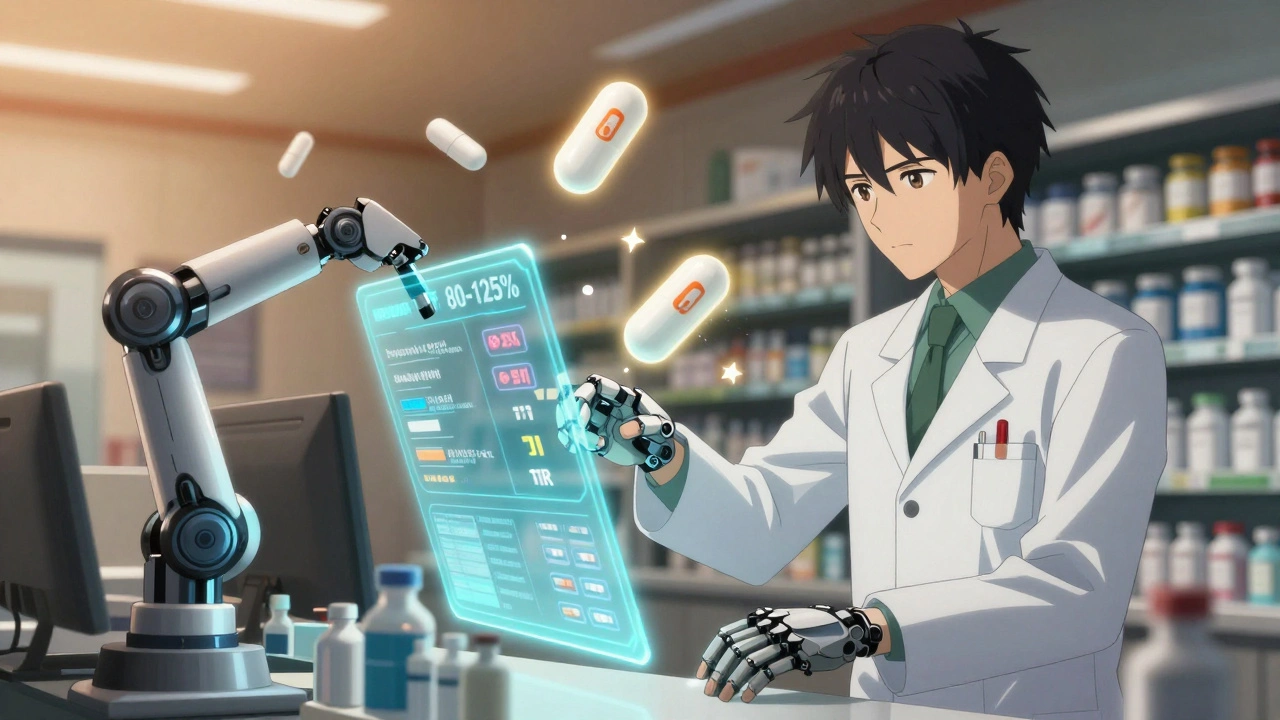
The FDA requires that the average blood concentration of the generic be within 80-125% of the brand. That’s not a wide gap. That’s tight. For comparison, two different batches of the same brand-name drug can vary by up to 10% between production runs. Yet no one complains about that.
And here’s the kicker: many generics are made in the same factories as the brand-name drugs. The FDA doesn’t care what’s on the box. It cares about what’s inside. And the data shows that, for 95% of patients, generics work just as well.
How Doctors and Pharmacists Can Reduce Nocebo Effects
Changing a patient’s medication isn’t just a prescription change. It’s a communication moment. And how you say it matters more than you think.
Here’s what doesn’t work: "I’m switching you to the generic because it’s cheaper." That sentence plants the seed of doubt. It tells the patient: "This is the budget option. It’s not as good."
Here’s what does work: "This is the exact same medicine you were taking, just without the brand name. Studies show patients do just as well on it - and many save over $3,000 a year."
Kaiser Permanente uses this script in their clinical protocols. It’s simple. It’s factual. It’s positive. And it reduces nocebo responses by nearly 40%.
Another trick? Don’t list every possible side effect. Saying "some people get headaches" is better than "possible side effects include nausea, dizziness, insomnia, fatigue, weight gain, suicidal thoughts, and liver damage." The second version makes people hyper-aware of every twinge in their body. The first builds trust.
Use the patient’s own words. If they say, "I don’t think the generic will work for me," respond with: "That’s a common concern. Many patients feel that way at first. But the medicine is the same. Let’s check in after two weeks and see how you’re feeling."
What Patients Can Do to Protect Themselves
If you’re being switched to a generic, here’s what to do:
- Ask if it’s the same medicine. If yes, remind yourself: your body doesn’t know the difference.
- Don’t Google side effects before starting. A 2013 study showed that patients told an opioid would make them more sensitive to pain lost all pain relief. Positive expectations doubled it. Your mind is powerful. Protect it.
- Track symptoms, not assumptions. Write down how you feel before and after the switch. Are you really worse? Or are you noticing normal body sensations because you’re now looking for them?
- Ask about cost savings. Knowing you’re saving $3,000 a year while getting the same medicine can shift your mindset. One study found that adding cost information reduced nocebo effects by 37%.
- Don’t panic if you feel off. If symptoms appear right after switching, it’s likely your brain reacting - not the drug. Wait a week. Talk to your doctor. Don’t assume it’s the generic’s fault.

Why Packaging and Branding Matter - Even for Pills
Look at the pill. The brand-name version might be a large, blue, diamond-shaped tablet with a logo. The generic? A small, white, round pill with a number stamped on it. It’s not just different. It looks like something you’d find in a discount bin.
That’s not an accident. Pharmaceutical companies design brand-name packaging to feel premium. Generics are designed to be cost-efficient. But that visual difference triggers subconscious bias.
Some companies are now using "branded generics" - generics that look more like the original brand. Same color. Same shape. Same logo-style imprint. These reduce the nocebo effect because they don’t look "cheap." The European Medicines Agency warns against copying brand packaging exactly (to avoid confusion), but encourages minimizing unnecessary differences that scare patients.
And it works. In countries where branded generics are common, patient complaints about generics drop.
The Bigger Picture: Systemic Change Is Needed
This isn’t just about individual doctors or patients. It’s about culture. We’ve been told for decades that brand = quality. Generic = cheap. That’s not true in medicine.
Public health campaigns need to fix this. Imagine a TV ad that says: "The generic version of your medication has the same active ingredient, same results, and saves you thousands. It’s not cheaper because it’s worse. It’s cheaper because you’re not paying for advertising."
Health systems should train pharmacists to give brief, positive counseling when dispensing generics. Insurance companies should reward providers who reduce nocebo-driven switches. Medical schools should teach future doctors about the psychology of medication perception.
And we need to stop blaming patients. When someone says, "The generic made me sick," they’re not being irrational. They’re reacting to a system that trained them to distrust cheaper options.
Final Thought: The Pill Is the Same. Your Mind Isn’t.
Generic drugs are not second-rate. They’re not watered-down. They’re not experimental. They’re the same medicine, sold without the marketing markup.
The nocebo effect is one of the most powerful forces in medicine. It can turn a harmless pill into a source of suffering - not because of chemistry, but because of belief.
When you understand that, you can take back control. Whether you’re a patient, a doctor, or a pharmacist - your words, your packaging, your mindset matter more than you think.
Next time you’re switched to a generic, don’t assume it’s broken. Ask yourself: Is this my body reacting - or my mind?




Chad Handy
December 4, 2025 AT 09:07The nocebo effect is one of those things that gets ignored because it’s inconvenient. I’ve seen patients flat-out refuse generics because they "look wrong," even when their bloodwork shows identical concentrations. It’s not laziness or ignorance-it’s conditioning. We’ve been sold the idea that price equals quality since childhood. A $100 bottle of aspirin feels more effective than a $3 one, even if they’re chemically identical. And it’s not just pills-think about how people treat generic batteries, phone chargers, even toilet paper. The mind doesn’t care about science. It cares about narrative. The pharmaceutical industry didn’t create this. It just exploited it. We’re all victims of a system that profits from our insecurities. And until we start treating perception as a legitimate clinical variable, we’re just rearranging deck chairs on the Titanic.
Augusta Barlow
December 5, 2025 AT 18:42Let’s be real-this whole "nocebo" thing is just Big Pharma’s way of gaslighting patients who actually *do* react badly to generics. I know someone who went from brand-name Lexapro to generic sertraline and ended up in the ER with panic attacks so severe she couldn’t breathe. The doctor told her it was "all in her head." Meanwhile, the generic was made in a factory in China that got flagged for contamination three times last year. The FDA doesn’t inspect every batch. They don’t even know what’s in half these pills. And now you want me to believe the only problem is my *belief*? That’s not science. That’s corporate propaganda dressed up as psychology.
Joe Lam
December 7, 2025 AT 02:39Oh, please. You’re treating the nocebo effect like it’s some groundbreaking revelation. This is basic behavioral psychology-classic conditioning. People associate visual cues with outcomes. The color of the pill, the shape, the branding-it’s Pavlovian. The fact that you need a 2025 study to confirm this shows how detached modern medicine has become from its own roots. The real issue isn’t perception-it’s that we’ve outsourced patient education to marketing departments. If you’re surprised that people react negatively to a white pill with a number on it, you’ve never spent five minutes in a pharmacy waiting room. The problem isn’t the patient. It’s the system that lets a pill’s appearance determine its perceived efficacy.
Jenny Rogers
December 7, 2025 AT 03:15It is both lamentable and profoundly disquieting that the medical establishment continues to reduce the complex phenomenology of subjective experience to mere cognitive bias. The nocebo effect, while empirically documented, is often weaponized to dismiss legitimate patient concerns under the guise of "psychological" explanation. One must ask: if a patient’s biological response is triggered by belief, then what is the ontological status of that belief? Is it not a legitimate physiological phenomenon in itself? To label it as "in the mind" is to perpetuate the Cartesian dualism that has long impoverished medical discourse. The body does not distinguish between external stimulus and internal conviction; both are material. Therefore, to treat perception as secondary is not merely negligent-it is epistemologically incoherent.
Rachel Bonaparte
December 7, 2025 AT 17:19I love how this article tries to sound so rational, but it completely ignores the fact that generics *do* sometimes cause issues-not because of belief, but because of fillers. You know, the inactive ingredients? The ones that vary between manufacturers? I had a friend who went from brand-name Adderall to generic and started having heart palpitations. Turns out the generic used a different dye that she was mildly allergic to. The FDA doesn’t require those to be identical. And don’t even get me started on how some generics have inconsistent dissolution rates. Sure, the active ingredient is the same-but if it doesn’t release properly, it’s not the same. This whole "it’s all in your head" narrative is toxic. It’s not about distrust. It’s about real, documented variability. And the fact that we’re being told to just trust the system? That’s the real nocebo.
Scott van Haastrecht
December 9, 2025 AT 14:56Everyone’s acting like this is some new revelation. Newsflash: patients have been complaining about generics for decades. And guess what? They’re right to. The FDA’s 80-125% bioequivalence range is a joke. That’s a 45% swing. If you took two different batches of the same brand-name drug and one gave you 125% and the other 80%, you’d be screaming about inconsistency. But when it’s a generic? Oh, it’s fine. It’s just perception. Meanwhile, I’ve personally seen patients relapse after switching, and their doctors shrugged it off as "noncompliance." The system is designed to save money, not to save lives. And now you want us to believe that the only reason people feel worse is because they’re paranoid? That’s not medicine. That’s abuse.
Chase Brittingham
December 11, 2025 AT 09:11I’ve been a pharmacist for 18 years, and I’ve seen this play out a thousand times. The key isn’t to convince people they’re wrong-it’s to help them feel heard. I used to say, "It’s the same medicine," and get blank stares. Then I started saying, "I know this looks different, and that’s scary. But I’ve given this exact pill to hundreds of people on your same dose, and almost all of them did fine. Let’s track how you feel over the next two weeks, and if anything feels off, we’ll switch back. No judgment." That’s it. Just listening. No jargon. No condescension. And you know what? The complaints dropped. People don’t need to be educated. They need to be respected. The science is solid. But trust? That’s built one conversation at a time.
Bill Wolfe
December 12, 2025 AT 01:33Let’s not pretend this is just about perception. 🤔 The real issue is that we’ve turned healthcare into a commodity. Pills are branded like sneakers. Patients are treated like consumers. And if you don’t like the generic? Too bad-your insurance won’t cover the brand. 🤷♂️ The fact that a $3 pill looks like something you’d buy at a gas station while the $300 version looks like a luxury product? That’s not an accident. That’s capitalism. And now we’re supposed to believe the problem is that people are too sensitive? No. The problem is that we’ve normalized the idea that your health should be dictated by your bank account. 📉 The nocebo effect is real-but it’s a symptom, not the disease.
jagdish kumar
December 12, 2025 AT 17:44Same pill. Different mind. That’s all.