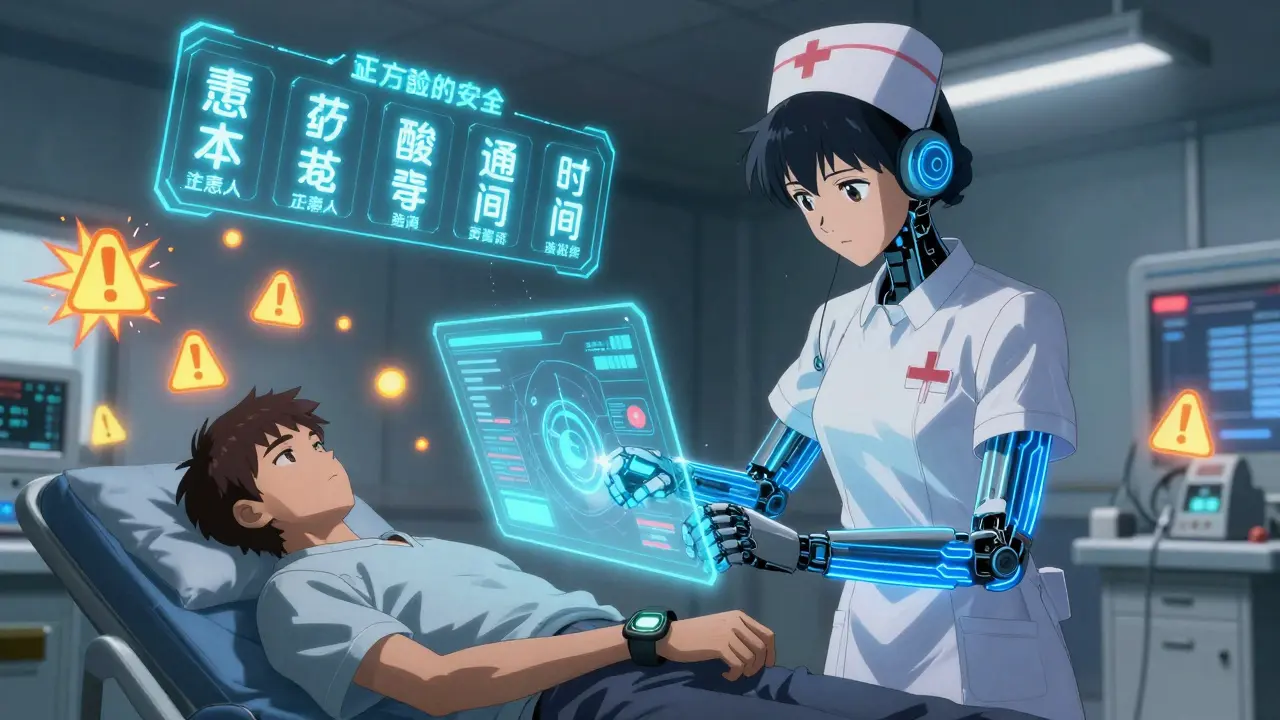
Medication Dose Safety Calculator
Calculate Safe Medication Dose
Enter patient information to determine safe dosage ranges for high-alert medications.
Safe Dose Range
Enter patient information and select a medication to see safe dose range.
Important Safety Note
This calculator provides general guidance only and should not replace clinical judgment. Always verify dosages with institutional protocols and consult pharmacists when in doubt.
Medication errors kill more people than car accidents in U.S. hospitals - and most are preventable.
Every year, over 1.3 million people in the United States are injured because of mistakes with medicines. Around 7,000 of them die. These aren’t rare accidents. They’re systemic failures - and they happen because the system is broken, not because doctors or nurses are careless.
The truth? Most medication errors occur because of poor design, not poor people. A nurse gives the wrong dose because the EHR auto-fills a default value. A pharmacist misses a drug interaction because the system floods them with 30 alerts per patient. A doctor prescribes methotrexate daily instead of weekly - and the patient dies. These aren’t human errors. They’re system errors.
Medication safety isn’t about blaming staff. It’s about building systems that make mistakes hard to make - and easy to catch. And that starts with training that’s real, not just another PowerPoint slide deck.
What Medication Safety Actually Means Today
Medication safety isn’t just checking the label before giving a pill. It’s a full system: from when a drug is ordered, to when it’s dispensed, to when it’s given to the patient. The World Health Organization calls it a "critical component of healthcare" - and they’re right. One wrong dose of insulin, heparin, or potassium chloride can kill someone in minutes.
The key is the "five rights": right patient, right drug, right dose, right route, right time. Sounds simple. But in a busy ER, during a code, or when you’re juggling 12 patients and a broken printer? It’s not. That’s why systems have to do the heavy lifting.
High-alert medications - drugs like IV oxytocin, insulin, and opioids - are the biggest killers. A 2020 ISMP report found that 68% of fatal medication errors involved one of these. That’s why safety protocols now demand hard stops: if a doctor orders daily oral methotrexate (which should be weekly), the system must block it. No override. No "I know what I’m doing." That’s the new standard.
Technology That Saves Lives - and What’s Still Broken
Electronic Health Records (EHRs) were supposed to fix this. And they did - partially.
Computerized Provider Order Entry (CPOE) systems cut serious medication errors by 55% across the Veterans Health Administration. Barcode-assisted medication administration (BCMA) reduces administration errors by 41%. That’s huge. But here’s the catch: these tools are only as good as their design.
Dr. David Bates at Brigham and Women’s Hospital found that 34% of digital medication errors come from EHRs themselves - not from humans. Dropdown menus auto-select the wrong dose. Default values stick. Alerts pop up for drug interactions that don’t matter because the patient isn’t even taking that medication. Clinicians start ignoring them. In one study, nurses overrode 80% of alerts because 95% were irrelevant.
Alert fatigue is real. And it’s deadly. When the system cries wolf too often, people stop listening. The fix isn’t more alerts. It’s smarter alerts. AI is starting to help: new algorithms can now spot 89% of potential prescribing errors before they’re sent - compared to 67% with old systems. But AI isn’t magic. It needs clean data, good training, and human oversight.
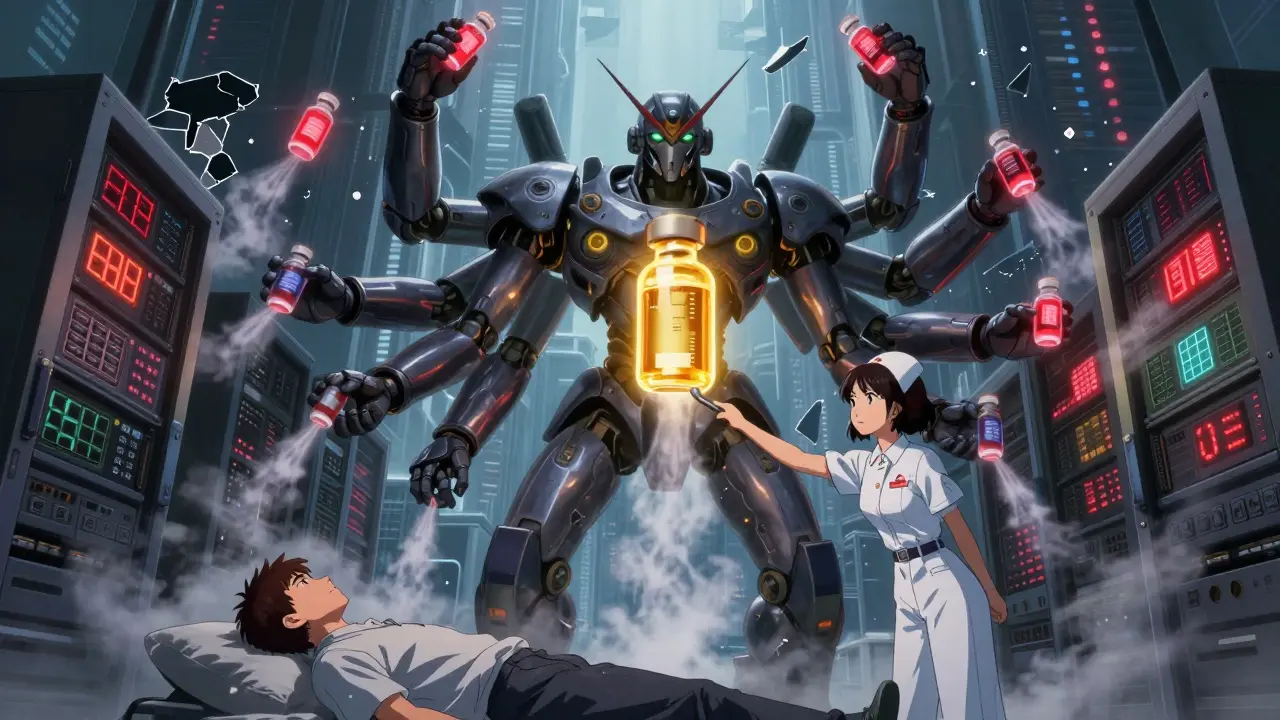
Training That Actually Works
Most hospitals give new staff a 2-hour orientation on medication safety. Then they’re thrown into the deep end. That’s not training. That’s negligence.
The Agency for Healthcare Research and Quality (AHRQ) recommends 16 to 24 hours of initial training - not lectures, but simulations. Role-play a code where the IV pump beeps wrong. Practice reconciling meds for a 78-year-old on 12 drugs. Run a mock error report with your team - no blame, just learning.
Annual refresher training? Eight hours minimum. And it has to be hands-on. No more videos. No more quizzes. Real scenarios. Real stakes.
At Johns Hopkins, embedding pharmacists directly into ICU teams cut medication errors by 81%. Why? Because the pharmacist was there - not in the pharmacy, not on a call, but right there, watching, asking, double-checking. That’s the gold standard.
Training isn’t about memorizing policies. It’s about building habits. The habit of scanning the barcode. The habit of saying, "Wait, why is this dose so high?" The habit of speaking up when something feels off - even if the doctor is the chief of staff.
The Culture That Makes Safety Possible
Technology helps. Training helps. But without the right culture, nothing sticks.
Top-performing hospitals score in the 75th percentile or higher on the AHRQ Hospital Survey on Patient Safety Culture. What does that mean? It means staff feel safe reporting mistakes. It means teams talk to each other across departments. It means leadership doesn’t punish errors - they investigate them.
Dr. Tejal Gandhi from the National Patient Safety Foundation says it best: "A nonpunitive approach to error reporting encourages transparency, facilitates root cause analysis, and promotes continuous learning."
That’s the opposite of what most places still do. Nurses fear getting written up. Pharmacists get yelled at for "delaying" a med. Doctors resent being "checked." That’s why workarounds happen. Why BCMA gets bypassed during emergencies. Why people override alerts.
Change starts with leadership. When the CEO says, "We’re not here to punish mistakes - we’re here to fix the system," things shift. When error reports are reviewed in team huddles - not HR meetings - people start talking.
What’s Missing in Most Hospitals
Most medication safety programs are incomplete. They focus on tech and training - but forget the basics.
Here’s what’s still missing in 80% of facilities:
- Medication reconciliation: Only 32% of primary care offices have a formal process to compare a patient’s home meds with what’s being prescribed in the hospital. That’s a recipe for disaster.
- Legible orders: The American College of Obstetricians and Gynecologists still says orders must include the drug name, dose, route, frequency, and reason. Handwritten? Unacceptable. Typed? Still often incomplete.
- Up-to-date policies: A 2021 survey found 31% of hospital medication safety policies hadn’t been updated in three or more years. That’s like using a 2012 GPS to drive in 2026.
- Integration: Your EHR should talk to your pharmacy system, your lab results, your allergy database. Too many systems are islands. Alerts don’t know the patient’s creatinine level. Dose calculators don’t know they’re treating a 90-pound elderly woman.
And then there’s the cost. A full BCMA system can run $250,000 to $1.2 million for a 300-bed hospital. Annual maintenance? Another 15-20%. That’s why small clinics and rural hospitals lag behind. But skipping safety because it’s expensive is like skipping seatbelts because they cost $300.
The Future Is Here - And It’s Not Perfect
By 2027, the global market for patient safety software will hit $4.3 billion. Why? Because regulators are finally demanding change.
The Joint Commission requires accurate medication lists across care settings. Medicare penalizes hospitals with high error rates - up to a 1% payment cut. That’s real money.
New ISMP guidelines for 2024-2025 now include telehealth safety and AI-assisted prescribing. WHO extended its "Medication Without Harm" campaign through 2027, with new focus on older adults on multiple drugs and digital health risks.
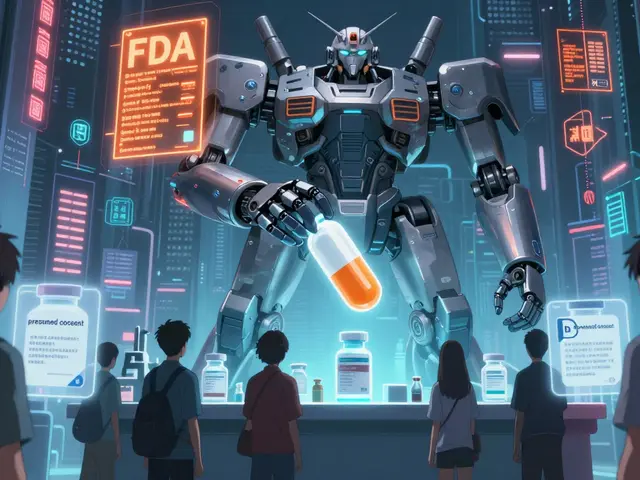
But here’s the danger: people think AI will fix everything. It won’t. The FDA reported 214 adverse events linked to EHR usability in 2022 - up 37% from 2021. Tech can make things worse if it’s poorly designed. A nurse once gave a 10x overdose because the system auto-filled a "10 mg" dose into a field meant for "1 mg." The alert didn’t trigger. The system thought it was normal.
The future isn’t about more tech. It’s about smarter tech - and better people.
What You Can Do Right Now
You don’t need a $1 million system to start improving safety.
Here’s what works today:
- Start with one high-alert drug. Pick insulin, heparin, or potassium. Map every step from order to administration. Where does it break? Fix that first.
- Require full medication reconciliation at every transition. No exceptions. Even if it takes 10 extra minutes.
- Hold monthly safety huddles. No blame. Just: "What went wrong last week? What did we learn?"
- Train with simulations. Use real patient cases. Don’t just talk about them - act them out.
- Turn off irrelevant alerts. If your system gives 20 alerts per patient, you’re training people to ignore them. Work with IT to tune it.
Medication safety isn’t a project. It’s a daily practice. It’s the nurse who asks, "Why is this dose 10 times higher than usual?" It’s the pharmacist who double-checks the allergy list. It’s the doctor who writes the reason on the order.
It’s not about being perfect. It’s about being vigilant.
Frequently Asked Questions
What are the most common causes of medication errors in hospitals?
The top causes are poor communication between providers, illegible or incomplete orders, incorrect dosing due to EHR defaults, and failure to reconcile medications when patients move between units or facilities. Alert fatigue and workarounds to bypass safety systems also play a major role.
How effective is barcode medication administration (BCMA)?
BCMA reduces medication administration errors by 41.1% when used correctly. Studies show it’s most effective when scanning is mandatory and staff are trained not to bypass the system. Hospitals with 100% compliance see the biggest drops in errors.
Why do healthcare workers override medication alerts?
Most alerts are irrelevant or redundant. Clinicians may see 20-40 alerts per patient, with up to 96% being false positives. Over time, this leads to alert fatigue - where staff stop paying attention, even to critical warnings. Smart systems reduce alerts by 50-70% by filtering based on patient history and context.
What’s the difference between CPOE and EHR?
EHR (Electronic Health Record) is the overall digital patient record. CPOE (Computerized Provider Order Entry) is a specific feature within EHRs that lets providers electronically enter orders for medications, labs, and imaging. CPOE is the tool that directly prevents prescribing errors by checking for interactions and incorrect doses.
How often should medication safety training be done?
New staff need 16-24 hours of initial training using simulations. All staff should receive at least 8 hours of annual refresher training. Training must be hands-on - not passive lectures. Real-world scenarios, team-based debriefs, and feedback loops are essential.
Are electronic prescribing systems safer than handwritten ones?
Yes. Electronic prescribing reduces medication errors by 48% compared to handwritten orders. However, errors still occur - especially during system transitions or when users select the wrong drug from a dropdown menu. The key is not just using e-prescribing, but using it well - with alerts tuned to the patient’s profile.
What are high-alert medications, and why are they dangerous?
High-alert medications have a higher risk of causing serious harm if used incorrectly. Examples include insulin, heparin, IV potassium chloride, opioids, and sodium chloride injections. Even small dosing errors can lead to death. That’s why safety systems require hard stops - like blocking daily methotrexate orders - and why staff must be trained specifically on these drugs.
Tiffany Channell
January 2, 2026 AT 07:29Neela Sharma
January 4, 2026 AT 01:25Shruti Badhwar
January 4, 2026 AT 04:52Brittany Wallace
January 4, 2026 AT 08:31Michael Burgess
January 5, 2026 AT 11:18Liam Tanner
January 6, 2026 AT 09:24Palesa Makuru
January 7, 2026 AT 01:13Hank Pannell
January 8, 2026 AT 07:26Sarah Little
January 9, 2026 AT 07:55innocent massawe
January 10, 2026 AT 09:25veronica guillen giles
January 11, 2026 AT 07:51erica yabut
January 13, 2026 AT 00:06Michael Burgess
January 13, 2026 AT 04:41