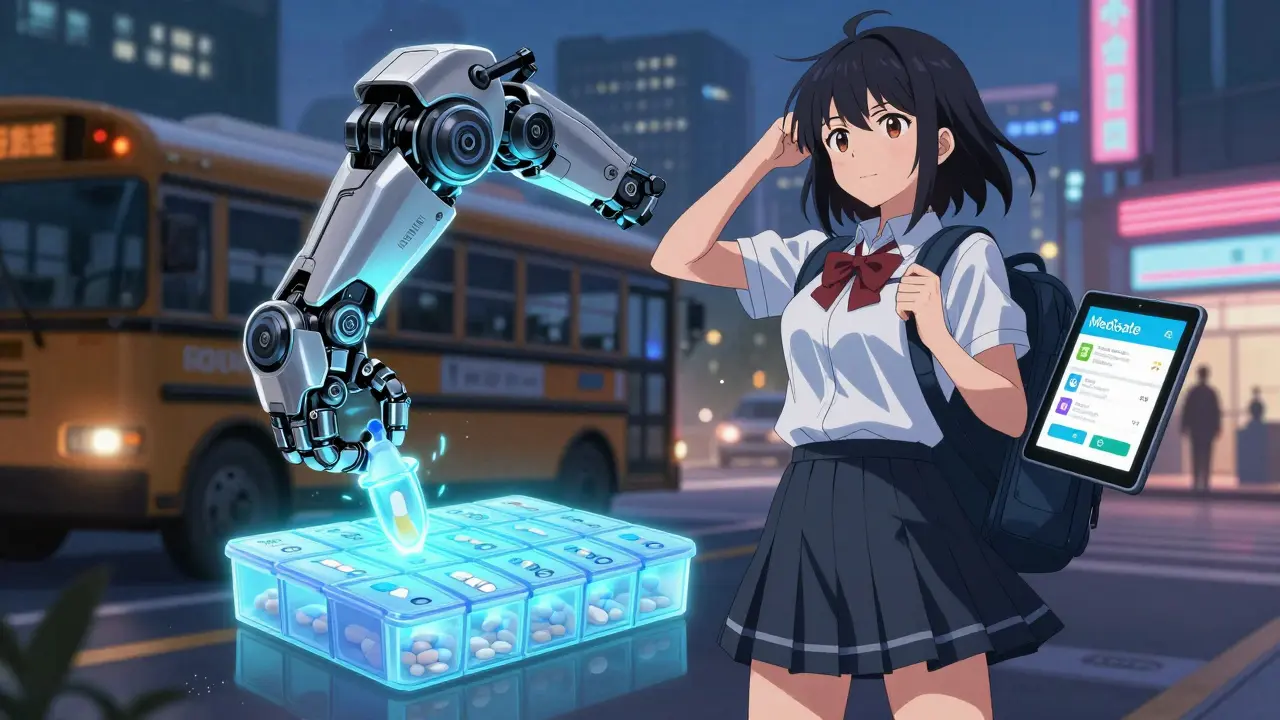
Teens are growing up fast. One day they’re asking you to remind them to take their asthma inhaler; the next, they’re heading off to college with a full prescription schedule and no one around to watch over them. If your teen is on medication-whether for ADHD, anxiety, asthma, seizures, or chronic pain-it’s not enough to just hand them the bottle and say, "Don’t forget." They need real skills. And the clock is ticking. The teen medication management transition doesn’t wait until graduation. It starts now.
Why This Isn’t Just About Remembering to Take Pills
Managing medication isn’t about memory. It’s about responsibility, awareness, and safety. A 2022 study from Monitoring the Future found that 14% of high school seniors have misused prescription drugs at least once. That’s not just about partying-it’s often about not understanding what they’re taking, how it works, or what happens when they skip doses or take extra. Teens who don’t know how to manage their meds are at risk for overdose, addiction, hospitalization, and even death. The DEA says prescription drug misuse is the second most common form of illegal drug use among teens, right after marijuana. And here’s the scary part: 70% of teens believe prescription drugs are safer than street drugs. They’re wrong.Start Early-No Later Than 10th Grade
Waiting until senior year is too late. Experts from the Child Mind Institute and the American Academy of Pediatrics agree: begin teaching medication skills by 10th grade. That’s when teens are developing the cognitive ability to understand cause and effect, plan ahead, and handle consequences. In 10th grade, focus on basics: What is this medicine for? Why do I need it? What happens if I skip it? Don’t assume they know. Ask them to explain it back to you in their own words. If they can’t, go back to the doctor together and have them ask the questions.Teach Them to Read the Label-Like a Pro
Most teens never read the label on their pill bottle. They see the name, grab it, and go. That’s dangerous. Teach them to read every line:- Drug name (brand and generic)
- Dosage (how many milligrams)
- How often (once daily? After meals?)
- Purpose (e.g., "for blood pressure," "for focus")
- Side effects (especially drowsiness, dizziness, or mood changes)
- Warnings (e.g., "Do not drink alcohol," "May cause drowsiness")
Build a Routine That Sticks
The best way to remember something is to tie it to something you already do every day. Brushing your teeth? Taking your vitamins? That’s your anchor. Pair medication with that habit. If your teen takes a pill every morning after brushing their teeth, they’re 37% more likely to remember it, according to the University of Rochester Medical Center. Same for bedtime meds-link them to washing their face or changing into pajamas. Use alarms. Not just one. Set two or three on their phone, spaced 15 minutes apart. Label them clearly: "ADHD Med - 7:30 AM - AFTER BREAKFAST." Test the alarm. Make sure it’s loud enough. Silence it? That’s a red flag.Use Tools-Not Just Your Memory
Pill organizers work. Not the fancy ones with 7 compartments. Just a simple 7-day box with morning/afternoon/evening slots. Buy a few. Keep one at home, one in their backpack, one at school if needed. Check in once a week to see if the pills are gone where they should be. Apps help too. Medisafe and MyMeds are two of the few teen-tested apps with real data behind them. Studies show teens using these apps improve adherence by 28%. But here’s the catch: only 22% of medication apps on the market have been clinically validated. Stick to the ones doctors and pharmacists actually recommend.
Controlled Substances Need Locks-Not Trust
If your teen is on opioids, stimulants like Adderall, or benzodiazepines, treat them like cash. Store them in a locked box-preferably one with a combination or key you control. Aetna’s 2021 guidelines say: "Even responsible teens should not be allowed to control their painkillers." Why? Because these drugs are highly addictive, and teens are especially vulnerable. The DEA reports that ADHD meds are among the most commonly misused prescriptions. A teen might think, "I’ll just take one to study," but that one pill can lead to dependence. Keep a count. Every time a new prescription comes in, write down the number of pills. Check monthly. If pills are disappearing faster than they should, talk to your doctor. Don’t accuse. Just say, "I noticed the count is off. Can we talk about why?"Teach Them to Talk to Doctors-Alone
One of the biggest mistakes parents make? Never letting teens be alone with their doctor. But teens won’t tell the truth if you’re in the room. They’ll say they’re taking their meds when they’re not. They’ll hide side effects. Schedule one appointment a year where you wait in the lobby. Tell your teen, "I trust you to be honest with your doctor. I’ll ask you about it afterward." Practice role-playing first. Have them pretend to tell the doctor: "I’ve been skipping my anxiety pill because it makes me feel weird." Or, "I ran out of my inhaler last week and didn’t know how to refill it." This builds communication skills they’ll need for the rest of their life.Involve Their Friends-Safely
Teens listen to each other. If they have a friend who also takes medication, pair them up. Create a "med buddy" system. They text each other reminders. They check in: "Did you take yours?" Research in the Journal of Adolescent Health shows teens with a medication partner have 22% higher adherence. It’s not about peer pressure-it’s about peer support. Avoid letting them share meds. Ever. Even if their friend "needs it for a test." That’s illegal and dangerous.Dispose of Unused Meds-Right Away
Empty bottles sitting in the medicine cabinet are invitations to misuse. The DEA says 14,000 pharmacies across the U.S. offer free take-back programs. Use them. Don’t flush pills. Don’t throw them in the trash. Take them to a pharmacy drop box. If your teen has leftover painkillers after surgery, get rid of them the same day they’re no longer needed.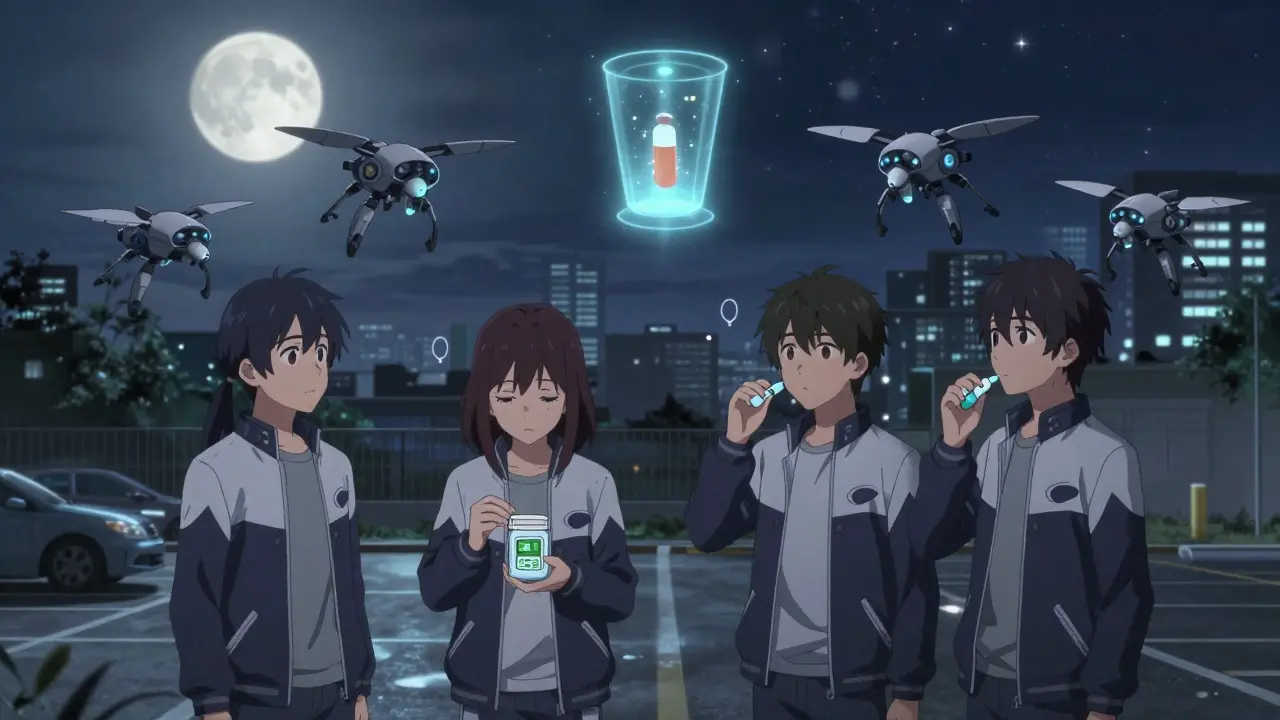
Check In-Then Back Off
Start with daily check-ins. "Did you take your meds?" Then move to weekly text reminders: "Just checking in. How’s your med routine going?" By 12th grade, if they’ve shown responsibility, reduce it to once a month. The goal isn’t control. It’s independence. Use a simple log. A printed sheet or a note in their phone. Check off each dose. If they miss three in a row, talk. Don’t punish. Ask: "What’s getting in the way?" Maybe the pill makes them nauseous. Maybe they’re embarrassed to take it at school. Maybe they’re scared of side effects. Listen. Then work on solutions together.Know the Signs of Trouble
Watch for:- Running out of pills too early
- Changes in mood, sleep, or appetite
- Secretive behavior around meds
- Missing school or skipping appointments
- Using phrases like "I need it to function" or "I can’t study without it"
It’s Not Just About Health-It’s About Trust
Teaching teens to manage their own meds isn’t a chore. It’s a rite of passage. It says: "I believe you can handle this." When they take responsibility, they gain confidence. When they make a mistake, they learn. When they succeed, they feel capable. This isn’t about being a perfect parent. It’s about being a steady one. You won’t get it right every time. You’ll forget to check the pill box. You’ll yell when you find a missing pill. That’s okay. What matters is that you keep showing up. Keep asking. Keep guiding. Keep trusting.What Comes Next?
By the time they leave for college, your teen should be able to:- Explain every medication they take and why
- Set alarms and refill prescriptions without help
- Know where to get help if something goes wrong
- Refuse offers to share or misuse meds
- Keep their meds safe and secure
At what age should I start teaching my teen about their medications?
Start in 10th grade-around age 15 or 16. That’s when teens develop the ability to understand cause and effect, plan ahead, and handle responsibility. Waiting until senior year leaves too little time to build real skills before they leave home.
What if my teen refuses to take their medication?
Don’t force it. Ask why. Is it side effects? Embarrassment? Fear? Talk to their doctor together. Sometimes switching to a different pill, changing the time of day, or using a liquid form helps. Never shame them. Instead, say, "I want to understand what’s hard for you. Let’s fix this together."
Are medication apps safe and reliable for teens?
Only some are. Apps like Medisafe and MyMeds have been tested and shown to improve teen adherence. But 78% of medication apps on the market haven’t been clinically validated. Stick to ones recommended by your pharmacist or doctor. Avoid apps that promise quick fixes or don’t explain how they work.
How do I know if my teen is misusing their prescription?
Watch for: running out of pills early, mood swings, secrecy around meds, skipping school, or saying things like "I need it to feel normal." If you suspect misuse, don’t confront them alone. Call their doctor. Ask for a referral to a teen counselor or substance use specialist. Early help makes a huge difference.
Should I let my teen carry their meds to school?
Yes-if it’s medically necessary. But check your school’s policy. Many require meds to be stored in the nurse’s office. If your teen needs to carry them (like an EpiPen or inhaler), make sure they know how to use it correctly and have a doctor’s note. Teach them to keep it locked in their backpack, not in their pocket.
What should I do with leftover pills after surgery or treatment?
Dispose of them immediately. Take them to a pharmacy with a drug take-back drop box-there are over 14,000 across the U.S. Don’t flush them or throw them in the trash. Unused pills are a major source of teen misuse. Getting rid of them fast protects your teen and others.



kabir das
January 28, 2026 AT 13:41Oh my GOD, this is so true!!! I mean, like, my cousin took her Adderall and then just… forgot? For three days? And then showed up at the ER with a panic attack?? And her mom was like, "I thought you knew how to take it!" NO, MOM, I THOUGHT YOU’D REMIND ME!!! WHY DIDN’T YOU JUST PUT A NOTE ON MY FRIDGE?? I NEED VISUAL CUES, NOT JUST WORDS!!!
DHARMAN CHELLANI
January 30, 2026 AT 12:5010th grade? Too late. You’re already f*cked if they’re not managing meds by 13. My bro was on antidepressants at 12. Mom kept hiding them in his cereal. He found out. Stopped. Got hospitalized. Lesson? Trust no one. Not even parents. Teach ‘em to read labels before they can tie shoes.
Keith Oliver
January 31, 2026 AT 11:01Look, I’m a neurologist and I’ve seen this play out 87 times. The real issue isn’t the pills-it’s the cultural myth that teens are "responsible enough" at 16. They’re not. Their prefrontal cortex isn’t even fully myelinated until 25. You think an alarm is enough? Please. You need a biometric lockbox synced to their phone, GPS-tracked refill alerts, and mandatory monthly telehealth check-ins with a pharmacist. If you’re not doing that, you’re just gambling with their life.
Kacey Yates
February 1, 2026 AT 22:53Use Medisafe. It works. My 17yo uses it and actually takes his meds. Also stop calling it "meds" like it’s a chore. Call it "health tech." Teens respond to that. And if they miss a dose? Don’t freak out. Just say "I noticed you skipped yesterday. Want to tweak the alarm?" No guilt. No shame. Just problem solving. Also, I typed this on my phone so sorry for typos.
Laura Arnal
February 2, 2026 AT 09:27This is so beautiful 😊 I’m a nurse and I’ve seen so many teens struggle with this. The moment a kid says "I can do this on my own"? That’s the moment you start backing off. Not because they’re perfect-but because you believe in them. And that belief? It’s the most powerful medicine of all. 💪❤️
Jasneet Minhas
February 3, 2026 AT 18:39Dear Author, Your article exhibits a commendable level of pedagogical awareness. However, one must question the efficacy of pill organizers in the context of Indian urban teens who live in 120 sq. ft. apartments with 7 siblings. The concept of "one at home, one at school, one in backpack" is a Western luxury. Perhaps a cloud-based reminder system synced to WhatsApp would be more culturally adaptive. Also, emojis are mandatory for engagement. 📱💊
Eli In
February 3, 2026 AT 23:11I’m from Nigeria but I live in Chicago now. I’ve seen how teens here treat meds like candy-and how their parents just give up. But in my village, kids as young as 10 manage their mom’s diabetes meds. Why? Because it’s normal. Not a chore. Not a punishment. Just part of life. Maybe we need to stop treating teen medication like a crisis and start treating it like a rite of passage. 🌍✨
Megan Brooks
February 4, 2026 AT 02:07The emotional weight of this topic cannot be overstated. While the practical strategies outlined are sound, the underlying ethical framework-trust as a scaffold for autonomy-is what truly matters. The parent who checks in, then steps back, is not relinquishing control; they are transferring agency. This is not parenting as management. It is parenting as mentorship. And it is profoundly human.
rajaneesh s rajan
February 4, 2026 AT 03:55Y’all are overcomplicating this. My 15yo takes his meds every day because I said "if you don’t take it, no TikTok for a week." Worked like a charm. Also, he’s on Adderall. He doesn’t need a fancy app. He needs a locked box and a dad who says "no" sometimes. The rest is just noise. 🤷♂️
Pawan Kumar
February 5, 2026 AT 12:40Let me guess-the government is pushing this so they can track teens’ medication use via apps. Medisafe? MyMeds? Those are just front organizations for the CDC’s biometric surveillance program. They’re collecting data on every dose. Soon, insurance companies will deny coverage if you miss a pill. And don’t get me started on the pharmaceutical lobby. They want teens dependent. Always. Always.
ryan Sifontes
February 6, 2026 AT 15:28lol i read all this. too much. just put the pills in a drawer and hope they dont die. i mean, my kid takes his asthma inhaler like 3x a week. its fine. theyll figure it out. or they wont. either way, im tired.