
You might have heard the term "generic drugs" a thousand times-those affordable versions of brand-name pills that save patients and governments billions. But here is a cold hard truth: there is no such thing as a true vaccine generics market. If you are waiting for a "generic" version of a life-saving vaccine to suddenly drop in price the way a blood pressure medication does, you are waiting for something that biologically cannot happen. Vaccines aren't simple chemical formulas; they are complex biological entities, and that distinction is exactly why some parts of the world are still struggling to get basic shots while others have surpluses.
Why You Can't Just "Copy" a Vaccine
To understand why we don't have generic vaccines, we have to look at what they actually are. Most generic drugs are small-molecule chemicals. If you have the recipe, you can recreate the molecule in a lab, prove it's the same as the original, and get it approved quickly. This is known as the Abbreviated New Drug Application (ANDA) process in the U.S.
Vaccines, however, are Biologics is medicines made from living organisms, such as proteins, antibodies, or viruses. Because they are grown in living cells, you can't just "copy" them. Even a tiny change in the temperature of a bioreactor or a different batch of nutrient media can change the final product. Because of this, regulators don't allow a simplified "generic" pathway. To bring a similar vaccine to market, a company must submit a full biological license application, proving from scratch that the product is safe and effective. It's not a shortcut; it's a marathon.
The Massive Cost of Entry
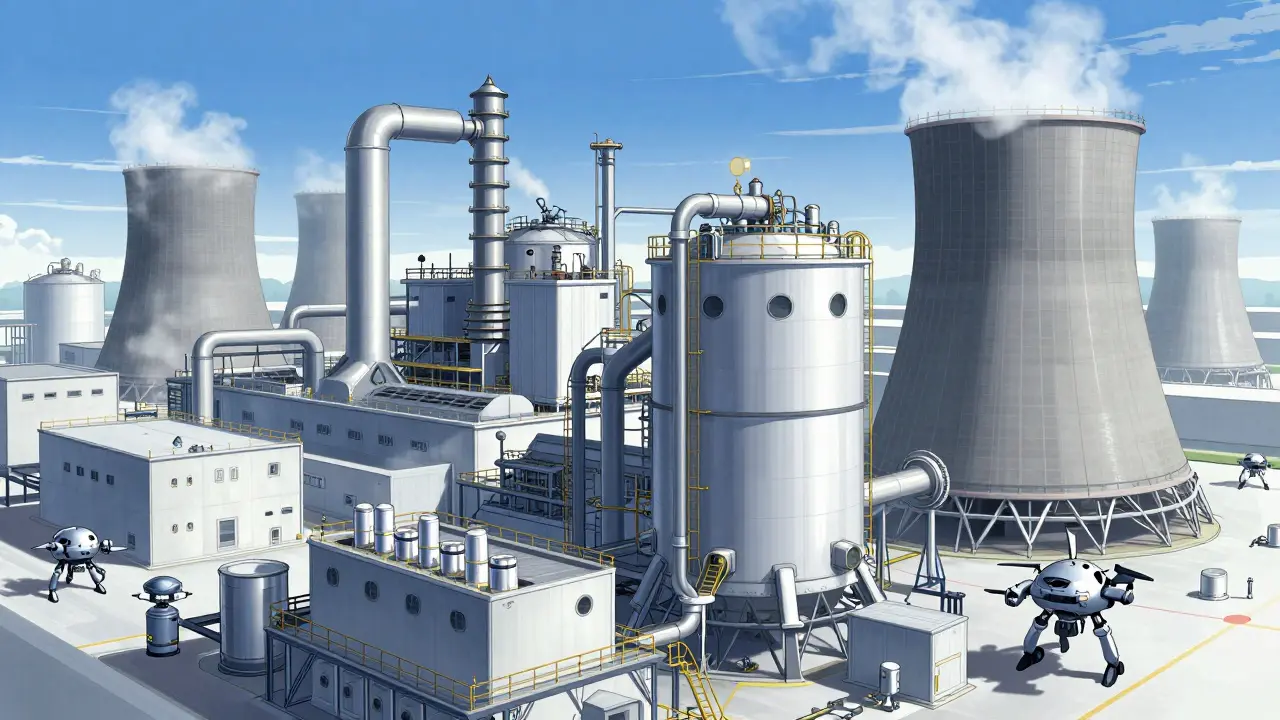
Building a vaccine plant isn't like opening a standard pharmaceutical warehouse. The capital requirements are staggering. A single manufacturing line can cost upwards of $500 million. You need Biosafety Level 2 or 3 containment, ultra-cold storage (some mRNA vaccines need to stay at -70°C), and a level of quality control that would make a Swiss watchmaker blush.
Consider the Serum Institute of India is the world's largest vaccine manufacturer by volume, producing billions of doses annually. Even with their massive scale-operating 11 facilities across four sites-they couldn't keep up when the world suddenly needed 11 billion doses of a COVID-19 vaccine. When the barrier to entry is a half-billion-dollar factory and a 5-to-7-year build time, only a few giants can play the game.
| Feature | Generic Small-Molecule Drugs | Vaccines (Biologics) |
|---|---|---|
| Approval Pathway | Abbreviated (ANDA) | Full Biological License |
| Manufacturing | Chemical Synthesis | Cell Culture / Biological Growth |
| Price Drop | Can drop 80-90% with competition | Slow decline; often "take-it-or-leave-it" |
| Setup Cost | Moderate | Extremely High ($200M - $500M+) |
The Bottleneck: Supply Chains and Raw Materials
Even if a country has the money to build a factory, they might not have the "ingredients." Vaccine production relies on a tiny handful of global suppliers for critical raw materials. For mRNA vaccines, the most critical components are lipid nanoparticles. There are only about 5 to 7 suppliers globally capable of making these. If those suppliers stop shipping, production stops everywhere.
We saw this fragility during the pandemic. India produces a huge chunk of the world's vaccines-supplying up to 90% of the WHO's demand for measles vaccines. Yet, India still imports about 70% of its vaccine-related raw materials from China. This creates a dangerous dependency. If a trade war breaks out or a pandemic hits, the entire global supply chain can snap in a week. When the U.S. imposed export restrictions on raw materials during India's second COVID wave, it threatened to slash global production by half.
The Access Gap: Why Africa Imports 99% of Its Vaccines
If you live in Africa, the "production issue" isn't just a technical detail-it's a life-or-death reality. Despite the continent's growing pharmaceutical market, Africa imports roughly 99% of its vaccines. Local manufacturing capacity covers less than 2% of the continent's needs. While high-income countries were securing 86% of the initial COVID-19 doses, many African nations had vaccinated less than 2% of their people.
It's not just about making the vaccine; it's about getting it into arms. In the Democratic Republic of Congo, health workers have reported receiving doses that expire in two weeks, only to find they have no "cold chain" (refrigerated transport) to move them from the airport to the village. A vaccine that spoils in the sun is as useless as no vaccine at all.
Breaking the Monopoly: Technology Transfer
So, how do we fix this? The answer lies in Technology Transfer is the process of sharing technical knowledge, blueprints, and manufacturing secrets from a developer to a local producer. The WHO launched an mRNA technology transfer hub in South Africa to help the region produce its own shots. It's a start, but it's slow. The hub faced an 18-month delay just trying to source the right equipment. By September 2023, they managed to produce vaccines, but the capacity was only 100 million doses a year-less than 1% of what the world actually needs.
The African Union has a more ambitious goal: the Pharmaceutical Manufacturing Plan for Africa. They want to hit 60% self-sufficiency by 2040. This will require an estimated $4 billion in investment and a decade of hard work. It's a long-term play, but it's the only way to stop the "vaccine nationalism" where rich countries hoard doses while poor countries wait for charity.
The Future of Vaccine Equity
We are seeing some shifts. The U.S. FDA is trying to incentivize domestic manufacturing of generics to reduce reliance on China and India, which is a nod to national security. Meanwhile, organizations like Gavi are pushing for differential pricing to make vaccines cheaper for low-income countries. But as long as the production of biologics remains concentrated in the hands of a few firms like Pfizer, Sanofi, and GSK, the power dynamic won't change much.
The real victory won't be a "generic" vaccine, but a decentralized network of factories across the Global South. When a country can produce its own biologics, it doesn't have to negotiate for leftovers. It can prioritize its own people and respond to local outbreaks in real-time.
Why aren't there generic vaccines like there are generic pills?
Vaccines are biologics, meaning they are made from living organisms, not simple chemicals. Because the manufacturing process is so complex and sensitive, you cannot simply "copy" a vaccine. Every new version requires a full, expensive clinical trial and a new biological license application to ensure it is safe and effective.
Who are the biggest players in the global vaccine market?
The market is highly concentrated. A few multinational companies, including GSK, Merck, Sanofi, and Pfizer, have historically controlled about 70% of the global market. However, the Serum Institute of India is the largest producer by volume, providing a massive amount of the world's essential vaccines.
What is a "cold chain" and why does it matter?
A cold chain is a temperature-controlled supply chain. Because vaccines are biological products, they can break down or become ineffective if they get too warm. This requires a network of specialized refrigerators and freezers from the factory all the way to the patient. Without this, vaccines delivered to remote areas often expire or spoil.
How does India contribute to global vaccine access?
India is a global powerhouse in vaccine production, supplying about 60% of the world's vaccines by volume. They provide the vast majority of WHO's demand for vaccines like measles and BCG. However, they still rely heavily on other countries, particularly China, for the raw materials needed to make those vaccines.
Can technology transfer solve the vaccine gap?
Yes, but it is incredibly difficult. Technology transfer involves sharing the "recipe" and the technical know-how to build the factories. While the WHO's mRNA hub in South Africa is a positive step, it requires massive investment in equipment and training before it can reach a scale that truly impacts global health.



Steve Grayson
April 29, 2026 AT 06:18The point about the cold chain is spot on. In many parts of Nigeria, the struggle isn't just getting the vials to the airport, but keeping them cold until they reach the rural clinics. Local manufacturing would definitely help cut down that transit time.
Abhishek Charan
April 29, 2026 AT 23:29Actually!!! The focus on China is way too much... 🙄 Many other regions are stepping up their game too!!! 🌍 Why act like it's just a two-way street between India and China??? 🇮🇳🇨🇳 Too simplistic!!!
Aubrey Johnson
May 1, 2026 AT 10:39Most people simply lack the intellect to grasp the difference between a chemical compound and a biological entity. It is quite tedious when the masses expect pharmaceutical miracles without understanding basic molecular biology.
Ryan Wilson
May 1, 2026 AT 23:08This whole system is a parasitic circus. The Big Pharma ghouls are basically holding the Global South hostage with their patented alchemy while pretending to care about equity. It's a grotesque display of corporate greed masquerading as "complex biology." We're talking about life and death, yet these suits are treating human survival like a luxury subscription service. The absolute gall of these companies to prioritize quarterly dividends over actual human lives is a moral stain on the entire industry. The "barrier to entry" is just a convenient excuse to keep the monopoly tight. It's an absolute bloodbath of ethics when the only thing that matters is the bottom line of a few CEOs in New York and Basel. We are witnessing a global heist of public health in real-time, and everyone is just nodding along like it's an inevitable law of physics. Truly disgusting.
prince king
May 3, 2026 AT 10:32I love the idea of a decentralized network of factories! 🌟 It feels like the only way to actually balance the scales and give everyone a fair shot at health. Let's keep pushing for that knowledge sharing! ✨
Trish Perry
May 3, 2026 AT 22:39It makes you wonder if our current definition of "property" should even apply to things that save millions of lives. Maybe the biological complexity is real, but the greed is the actual bottleneck here.
Justin Crice
May 5, 2026 AT 17:19The mention of lipid nanoparticles is pertinent. The stoichiometry and encapsulation efficiency in these delivery vehicles are the primary drivers of the high CAPEX in these facilities. Without the specific proprietary lipids, the mRNA sequence remains an inert polyanion unable to cross the cellular membrane.
Peter Minto
May 7, 2026 AT 06:07USA needs to stop shipping all this stuff away and just keep it here! we dont need to be helping every single country build factories when we gotta look after our own first. make it in america or dont make it at all!!
Michael Yoste
May 8, 2026 AT 22:36You're totally right about the struggle, but maybe look at this as a chance for these nations to grow stronger by building their own systems from the ground up! 😊