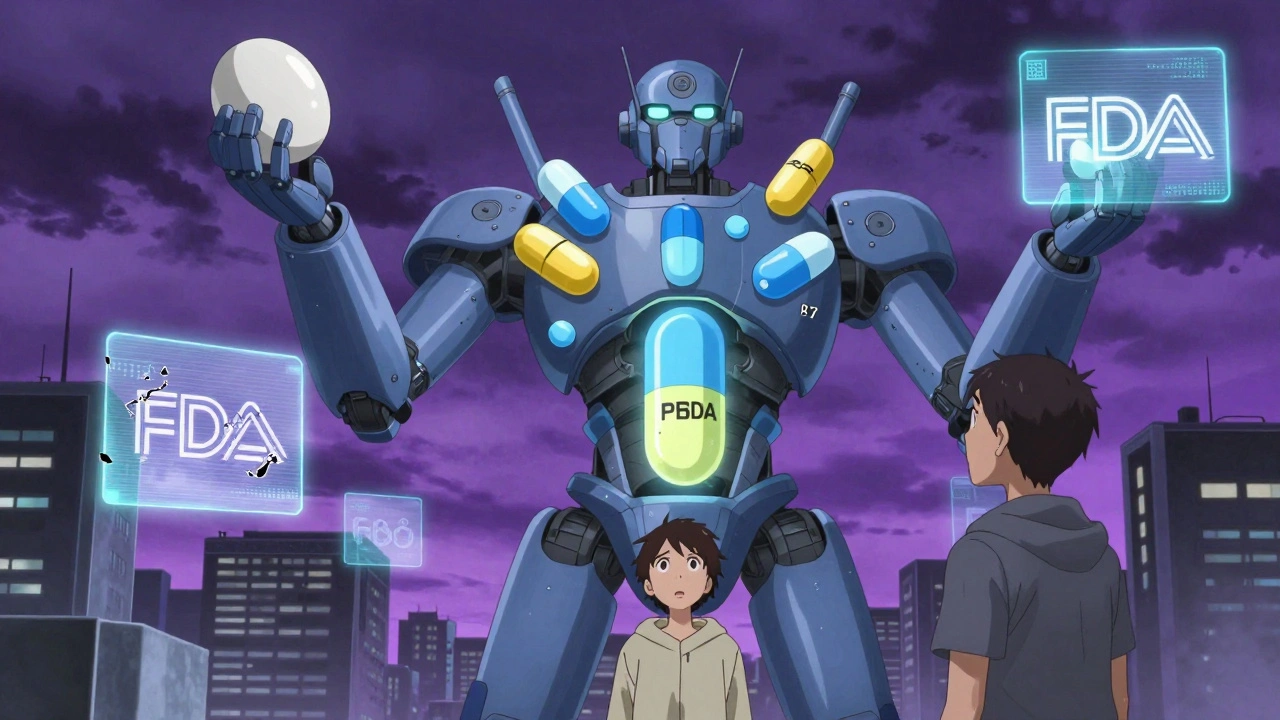
Have you ever opened a new bottle of your generic medication and stared at it, confused? Generic pills don’t look the same as they did last month - maybe they’re white instead of pink, round instead of oval, or have a different marking on them. You’re not imagining it. And you’re not alone.
Every year, millions of Americans refill their prescriptions only to find their pills have changed. It’s not a mistake. It’s not a counterfeit. It’s the law. And it’s causing real problems.
Why Do Generic Pills Look Different?
Generic drugs are required by the FDA to contain the same active ingredient, strength, and dosage form as the brand-name version. That means they work the same way. But here’s the catch: U.S. trademark law says they can’t look the same.
When Pfizer made Lipitor, they trademarked its pink, oval shape. So when a generic version of atorvastatin comes out, it can’t be pink or oval. It has to be different - maybe white and round, or pale yellow and oblong. This rule applies to every brand-name drug and every generic version. It’s not about safety. It’s about protecting corporate logos.
The FDA allows this under the Hatch-Waxman Act of 1984, which created the pathway for generic drugs to enter the market faster and cheaper. But they never intended for patients to be confused by the changes. Now, they’re starting to admit it’s a problem.
What Exactly Changes About the Pills?
It’s not just color. Four things can change between refills:
- Color: One manufacturer uses white, another uses blue, another uses light yellow. There’s no standard. Even Pantone color codes are used in manufacturing - but not for consistency, just to meet trademark rules.
- Shape: Round, oval, caplet, oblong - all legal. A pill that was oval for years might suddenly become round when your pharmacy switches suppliers.
- Size: Pills can range from 3mm to 20mm in diameter. A pill that used to fit easily in your palm might now feel too big or too small.
- Markings: Letters, numbers, or lines stamped on the pill can change completely. One version might say "ATV 20," another might say "102," and another might have no marking at all.
These changes happen because different generic manufacturers make the same drug. And when your pharmacy switches suppliers - which happens often to save money - your pill changes too.
How Often Do Pills Change Appearance?
It’s more common than you think. A 2022 study in the American Journal of Managed Care found that 32.7% of patients refilling prescriptions for chronic conditions like high blood pressure or diabetes saw their pills change shape or color at least once.
For people taking multiple medications, it’s worse. If you’re on five or six pills a day, and one of them changes every few months, you’re constantly relearning what your meds look like. That’s cognitive overload - and it’s dangerous.
One patient on Reddit said: "My blood pressure med changed from white oval to blue round last refill. I almost didn’t take it. I thought it was something else. Scared me half to death."
Why This Matters: Safety and Adherence
Doctors and pharmacists will tell you: "It doesn’t matter what it looks like. It’s the same drug." But patients don’t care about that. They care about what they see in their hand.
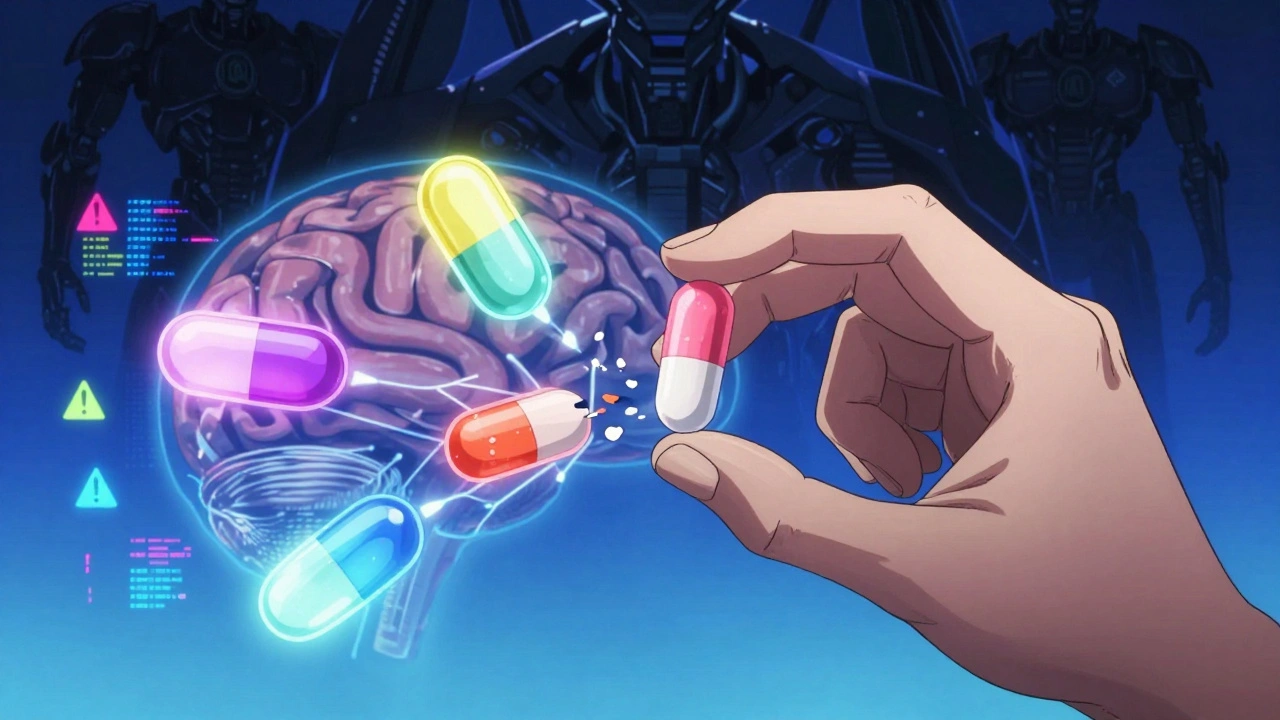
Harvard Medical School researchers studied 38,507 patients taking heart medications. When the pill changed appearance, those patients were 34% more likely to stop taking their medicine. That’s not a small number. It’s life-threatening.
Another study found that 14.7% of patients skipped doses because they didn’t recognize their pill. That’s one in seven people. And 28.4% said they were "very concerned" when their pill changed.
Older adults are hit hardest. The AARP found that 37% of adults over 65 had trouble recognizing their meds after a change - compared to 22% of younger adults. Vision changes, memory issues, and taking multiple pills make this risk even higher.
What Happens When You Stop Taking Your Meds?
Stopping your blood pressure, cholesterol, or diabetes meds because you didn’t recognize the pill isn’t just inconvenient - it’s expensive and deadly.
High blood pressure that goes untreated can lead to stroke. Uncontrolled diabetes can cause nerve damage, kidney failure, or amputations. High cholesterol can cause heart attacks.
The Generic Pharmaceutical Association estimates that appearance-related medication errors and non-adherence cost the U.S. healthcare system $1.3 billion every year. That’s money spent on emergency rooms, hospital stays, and complications that could have been avoided.
What Can You Do?
You can’t stop the system. But you can protect yourself.
- Take a photo of your pill when you get a new prescription. Save it in your phone. Next time it changes, you’ll know it’s the same drug.
- Ask your pharmacist to show you the pill before you leave. Many now have digital pill libraries you can view on a screen.
- Use a pill organizer with labeled compartments. Don’t rely on memory. Write the name and dose on the container.
- Call your pharmacy if you see a change. Ask: "Is this the same medication?" They’re trained to answer that.
- Ask your insurer if you can stick with one generic manufacturer. Some formularies let you request a specific brand. It’s not guaranteed, but it’s worth asking.
Johns Hopkins found that patients who kept photos of their pills reduced medication errors by 27%. That’s a huge win for safety.
Is Anything Being Done?
Yes - slowly.
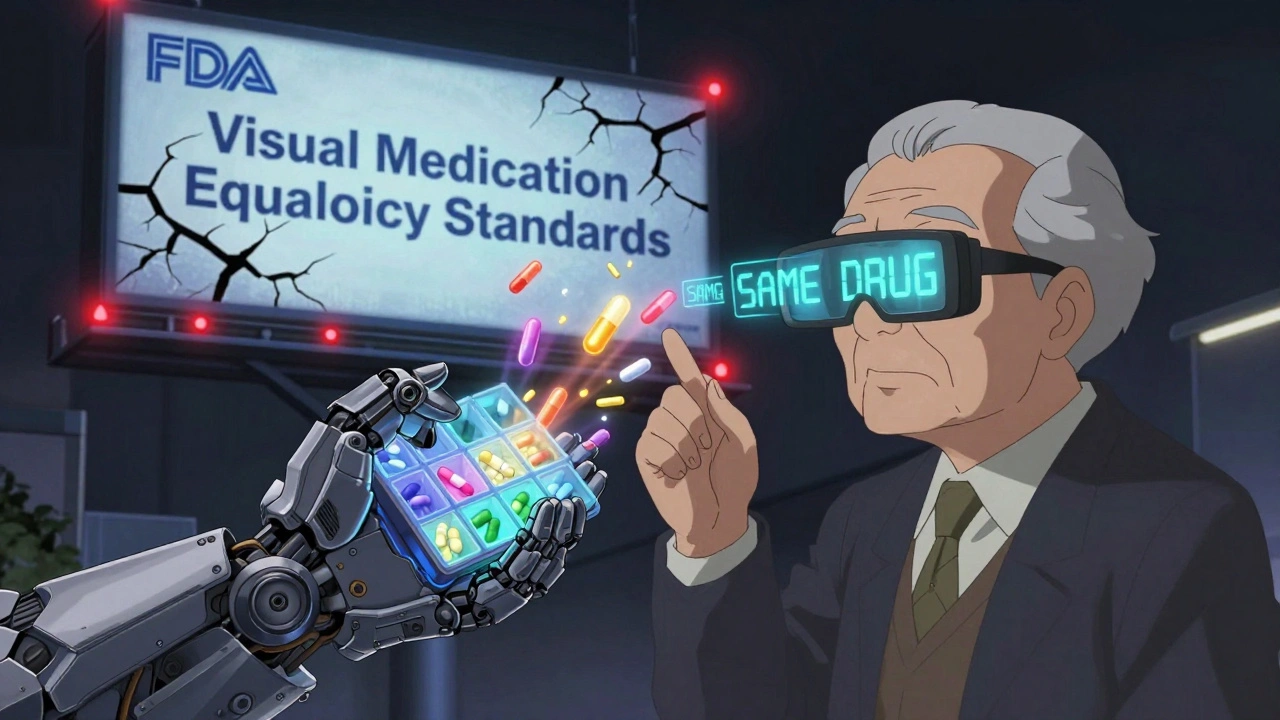
The FDA has been paying attention. In 2016, they released guidance saying manufacturers should consider pill appearance when developing generics. In 2023, they launched a new initiative called "Visual Medication Equivalence Standards" - and draft guidelines are expected in 2024.
The European Union already requires generic pills to look similar to the brand version when possible. That cut medication errors by nearly 20%. The U.S. is lagging, but pressure is growing.
Some generic manufacturers are starting to voluntarily match appearance for high-risk drugs - like those for epilepsy, thyroid disease, or blood thinners. In 2023, only 32% of new generics did this. By 2028, that number could jump to 75%.
But until then, the burden falls on you.
Bottom Line: Your Pill Can Change - But You Don’t Have to Be Confused
Generic drugs save billions of dollars every year. That’s good. But they shouldn’t put your health at risk because of a trademark law designed for corporations, not patients.
Don’t assume your pill is safe just because it’s generic. Don’t assume it’s the same just because your doctor says so. Your body doesn’t care about legal documents - it only cares if you take the right medicine, at the right dose, every day.
Take a photo. Ask questions. Keep a list. Talk to your pharmacist. These small steps don’t fix the system - but they keep you alive while we wait for it to change.




Anna Roh
December 8, 2025 AT 22:25Ugh, I just got my blood pressure meds and they’re blue now? I thought I was hallucinating. Took me 20 minutes to convince myself it wasn’t poison.
Iris Carmen
December 10, 2025 AT 19:19i literally took a pic of my pills last week because i was scared to take them again. same script, same pharmacy, same doctor. why does this keep happening??
Andrea DeWinter
December 10, 2025 AT 23:35As a pharmacist for 18 years, I’ve seen this wreck lives. Older patients skip doses because they think the pill is wrong. We have digital pill libraries now - ask for them. It’s not hard. It’s just not standard yet.
Also - write the drug name on your pill organizer with a Sharpie. Even if you’re ‘too old’ for tech, this saves you.
Morgan Tait
December 11, 2025 AT 06:35They’re doing this on purpose. Big Pharma doesn’t want you to feel safe with generics - they want you to panic and go back to the $500 brand name. The FDA? They’re owned. The EU doesn’t do this. Why? Because they care about people. We care about profit margins.
Next time your pill changes, call your senator. And your pharmacy. And your insurance. And then post it online. Let them know you’re watching.
They think we’re dumb. We’re not.
They think we won’t fight. We will.
Simran Chettiar
December 11, 2025 AT 17:36It is not merely a matter of pharmaceutical logistics, but a profound metaphysical rupture in the patient’s relationship with their own body. The pill, once a familiar artifact of daily ritual, becomes an alien object - a symbol of systemic betrayal. We are conditioned to trust our medicine, yet the state, in its bureaucratic absurdity, enforces a visual dissonance that fractures our very sense of continuity. Is this not the essence of late-stage capitalism? To commodify even the most intimate acts of self-preservation, and then to render them unrecognizable? We are not just taking pills - we are negotiating with a system that has forgotten that human beings require consistency to survive. The FDA’s silence is not neutrality - it is complicity. And yet, we still swallow. We still trust. We still hope. Perhaps that is the most tragic act of all.
Angela R. Cartes
December 13, 2025 AT 13:03Wow. This is why I pay $400 for my brand-name meds. At least I know what I’m getting. Why should I risk my life because some CEO wants to trademark a color? 🤦♀️
Ryan Brady
December 13, 2025 AT 13:09USA = best country in the world, but our drug laws are a joke. Other countries don’t make you play pill roulette. Fix it or get left behind. 🇺🇸🔥
Sabrina Thurn
December 14, 2025 AT 15:39From a clinical pharmacology standpoint, the lack of visual standardization in generics introduces significant cognitive load, especially in polypharmacy populations. The visual mismatch triggers perceptual dissonance, which correlates directly with non-adherence metrics. The FDA’s 2023 initiative is a step, but we need binding guidelines - not just draft proposals. Color, shape, and imprint should be harmonized where pharmacologically feasible, particularly for high-risk agents like anticoagulants, antiepileptics, and insulin sensitizers. This isn’t about branding - it’s about reducing preventable morbidity.
Also - if you’re on >3 meds, use a QR code app that scans your pill and pulls up the manufacturer’s image. I’ve built one. Free. DM me.
Tejas Bubane
December 16, 2025 AT 00:14People are so dramatic. It’s the same damn drug. If you can’t tell the difference between a white oval and a blue round, maybe you shouldn’t be managing your own meds. My grandma takes 12 pills a day and never misses one. She doesn’t need photos or apps. She has a brain.
Arun Kumar Raut
December 17, 2025 AT 20:26My uncle in India had the same problem. He stopped his diabetes meds for a week because the pill turned green. He ended up in the hospital. I told him to always ask the pharmacist. He said, 'But they never tell me.' So now I write the name on his pill box with a marker. Simple. Free. Works.
We don’t need big changes. We just need people to care enough to help.
Evelyn Pastrana
December 18, 2025 AT 23:18So basically, we’re paying for medicine but getting a surprise egg every month. 🥚💸 At least with eggs, you know it’s an egg. With my pills? Could be a rock. Could be magic. Could be a government experiment. 😅
Shubham Mathur
December 20, 2025 AT 01:21Look I’ve been on the same generic for 8 years and it changed 5 times. I don’t care if it’s the same chemical. I care that I can’t trust my own eyes. This isn’t a ‘patient education’ problem - it’s a corporate greed problem. The FDA should mandate that generics match brand appearance unless there’s a medical reason not to. Period. No more excuses. No more trademark nonsense. People’s lives are on the line. Stop hiding behind legal jargon.
And if you’re a pharmacist - stop saying ‘it’s the same.’ Say ‘here’s what changed, here’s why, here’s how to confirm.’ That’s your job.
Larry Lieberman
December 21, 2025 AT 12:49Just downloaded a pill ID app. Took a pic of my new blue pill. It said: ‘Atorvastatin 20mg - Manufacturer: Teva.’ So it’s legit. But still… why does it look like a Lego piece? 😅
Also - I now take a photo every time I refill. Even if it looks the same. Because next time? It won’t.