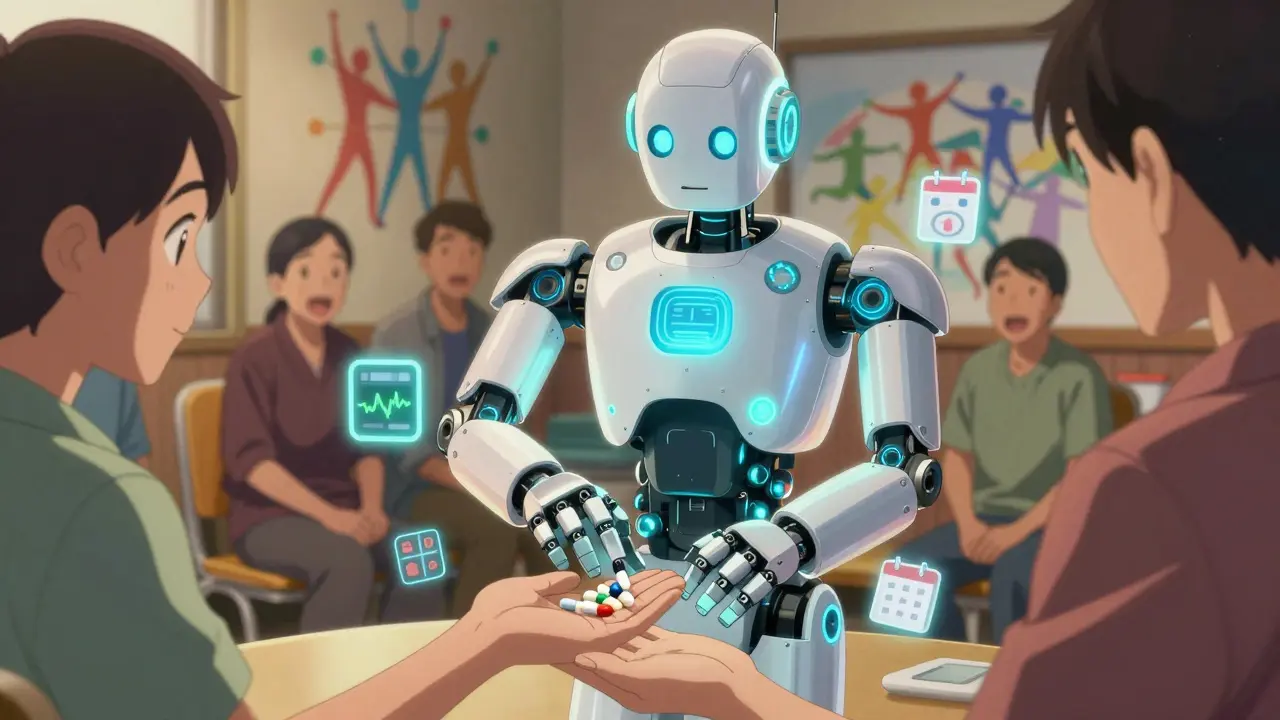
When you’re told to take a pill every day - sometimes twice, sometimes three times - it sounds simple. But for nearly half of all people with chronic conditions, sticking to that schedule is a daily struggle. The World Health Organization says medication non-adherence is one of the biggest hidden problems in healthcare. It doesn’t just mean missed doses. It means more hospital visits, worse health outcomes, and billions in avoidable costs. The good news? medication adherence doesn’t have to be a solo battle. Support groups and community programs are proving they can make a real difference.
Why Do People Miss Their Medications?
It’s not laziness. It’s not ignorance. It’s rarely about willpower. People miss doses for reasons that are deeply human: side effects that feel worse than the disease, confusing schedules, cost, fear of dependency, or just plain exhaustion. A diabetic might skip insulin because they’re tired of the finger pricks. Someone with high blood pressure might stop their pills because they feel fine. A person with depression might forget because getting out of bed feels impossible. Traditional doctor’s visits and pamphlets don’t fix this. You can’t educate someone into adherence. You have to connect with them.How Support Groups Actually Work
Peer-led support groups aren’t therapy sessions. They’re not lectures. They’re real people sharing real strategies. Imagine a group of six people with diabetes meeting every Tuesday at a community center. One person talks about how they use a pill organizer with alarms. Another says they keep their meds next to their toothbrush so they remember after brushing. Someone else shares how they called their pharmacy to switch from four pills a day to two - and the pharmacist helped them do it. No one is judging. No one is lecturing. Just people who get it. Research shows these groups work. A 2020 review found peer-led interventions improved medication adherence with an effect size of 0.40 - more than double the impact of just handing out educational brochures. People who joined these groups were 15% to 30% less likely to be hospitalized. That’s not magic. That’s human connection.The Different Types of Programs
Not all support programs are the same. Here’s what’s actually out there:- Group meetings: Usually 8-12 people, held weekly or biweekly. Facilitated by trained peers - people who’ve been managing their condition for at least two years. The Veterans Health Administration runs these across 140 facilities, helping 250,000 veterans each year.
- Home visits by community health workers: Trained locals (often from the same neighborhood or cultural background) come to your house over 3-6 months. They check in, help you organize meds, and even call your pharmacy if you’re struggling to afford them. This model works especially well in rural areas and among older adults.
- Digital peer platforms: Apps and online forums where people share tips, ask questions, and celebrate small wins. PatientsLikeMe surveyed over 12,000 users and found 78% improved their adherence after joining condition-specific groups. The most helpful part? Hearing how others handle side effects.
One standout example is the American Heart Association’s Heart360 program. It pairs people with heart disease with peer mentors who’ve successfully managed their own condition. Biweekly virtual meetings include practical advice, emotional support, and accountability. Participants saw measurable improvements in medication tracking and lifestyle habits.

Why Peer Support Beats Just Getting Info
You’ve probably been told: “Take your meds.” But that’s not enough. What changes behavior is seeing someone like you do it. A 2023 study in Frontiers in Pharmacology found face-to-face peer groups had 28% higher long-term adherence than mobile apps alone. Why? Because apps can remind you. But a person can say: “I felt the same way. Here’s what helped me.” Family involvement makes an even bigger difference. A 2021 study found 11 out of 14 studies showed strong links between family support and better adherence. When a spouse helps set up pill boxes or reminds you to take your blood pressure meds, it’s not nagging - it’s partnership.What Makes These Programs Actually Work
Not every group succeeds. Many fail because they’re poorly run. Here’s what separates the effective ones:- Trained facilitators: Programs with less than 20 hours of training for leaders were 37% less effective. The best ones require 40+ hours of certification - covering active listening, medication basics, and cultural sensitivity.
- Cultural matching: A 2022 study found African American participants in hypertension groups were 35% more satisfied when facilitators shared their background. Language matters. Trust matters.
- Combination approach: The most successful programs don’t rely on just one tool. They combine peer support with pharmacist input, simplified dosing, and text reminders. One study showed combining in-person meetings with app alerts boosted adherence by 34%.
- Measuring results: Only 38% of community programs use validated tools like the Morisky Medication Adherence Scale. If you can’t measure it, you can’t improve it.
The Real Cost - And the Real Payoff
The U.S. spends $528 billion a year on avoidable costs from people not taking their meds. But these programs pay for themselves. A 2022 study in JAMA Network Open found a diabetes support program had an 18:1 return on investment. For every dollar spent, it saved $18 in hospital costs. That’s why Medicare Advantage plans now cover 63% of them. The CDC, CMS, and even the FDA are backing these models. The FDA approved the first digital therapeutic for adherence in 2021 - one that blends app reminders with live peer coaching.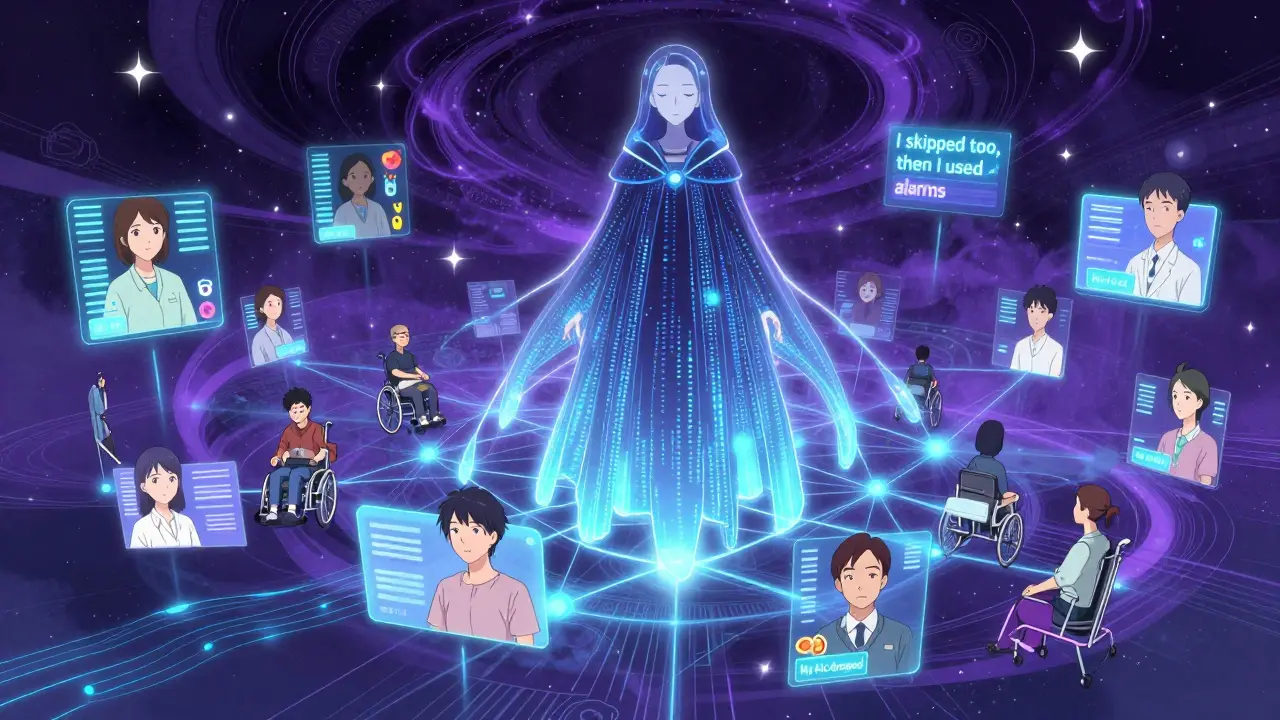
Where These Programs Fall Short
They’re not perfect. Rural areas have 47% fewer programs than cities. Only 22% offer non-English support, even though 25% of Americans have limited English proficiency. Some people hate group settings. Others can’t make the time. A 2021 survey found 42% of participants dropped out due to scheduling conflicts. And 27% complained about lack of medical oversight - which is fair. These aren’t replacements for doctors. They’re complements.What People Really Say
On Reddit, a user named DiabetesWarrior87 wrote: “Attending weekly support groups cut my missed doses from 3-4 per week to less than 1. My A1c dropped from 8.5% to 6.9% in six months.” On HealthUnlocked, 68% of users said they felt “less alone.” 57% said they learned practical tips they couldn’t get from a doctor. But 39% complained about inconsistent meeting times. That’s a fixable problem. It’s not about the idea - it’s about the execution.How to Find or Start One
If you’re looking for a group:- Ask your pharmacist. Many now run or know of local programs.
- Check with local hospitals - especially those with chronic disease clinics.
- Search for nonprofit organizations like the American Diabetes Association or National Alliance on Mental Illness. They often host or fund peer groups.
- Try apps like PatientsLikeMe or HealthUnlocked if in-person isn’t possible.
If you’re a community leader or clinician:
- Start small. Pilot with 15-20 people over 2 months.
- Train facilitators properly - 40+ hours, not 10.
- Partner with a pharmacist. They’re key. 73% of successful programs include them.
- Use simple tools like text reminders to reduce dropout rates by 15%.
- Measure adherence with the Morisky scale. It’s free and validated.
Medication compliance isn’t about discipline. It’s about design. It’s about removing barriers - not just the ones on the pill bottle, but the ones in your life. Support groups don’t tell you what to do. They show you someone else did it. And that’s how change happens.
Do support groups replace my doctor’s advice?
No. Support groups complement - they don’t replace - medical care. They help you stick to the plan your doctor gave you. A peer can remind you to take your pills, but only a doctor can adjust your dosage or diagnose complications. The best programs include pharmacists or nurses who can answer clinical questions during or after sessions.
Are these programs free?
Most community-based peer support groups are free for participants. They’re usually funded through grants, nonprofit donations, or partnerships with hospitals and health systems. Hospital-run programs may charge the healthcare system $200-$500 per patient per year, but patients typically pay nothing. Some digital platforms offer free access, while others require insurance or subscription - always ask before joining.
Can I join if I don’t speak English?
It depends on the program. Only 22% of U.S. programs currently offer non-English support, even though 25% of Americans have limited English proficiency. Look for groups led by community health workers from your cultural background - they’re more likely to offer translation or bilingual facilitation. Ask your local clinic or pharmacy if they know of any culturally matched options.
What if I hate group settings?
You’re not alone - 29% of people feel uncomfortable in groups. That’s why digital options exist. Apps like PatientsLikeMe or text-based peer networks let you connect anonymously. Home visits by community health workers are another great alternative. One-on-one support can be just as powerful as group meetings, especially if the person helping you shares your background or language.
How long does it take to see results?
Many people notice improvements in 3-6 months. For example, participants in diabetes support groups often see their A1c drop within six months. But adherence is a habit, not a one-time fix. The real benefit comes from staying involved long-term. Programs that keep people engaged beyond six months see the biggest drop in hospital visits. Consistency matters more than speed.
Can family members join too?
Yes - and they should. Family involvement is one of the strongest predictors of adherence. Many programs now invite spouses, caregivers, or adult children to join sessions. They learn how to help without nagging, how to recognize warning signs, and how to support medication routines. It turns a personal struggle into a shared mission.




Paul Cuccurullo
March 20, 2026 AT 23:36Let me tell you something that changed everything for my uncle with Type 2 diabetes. He was down to 4 missed doses a week. Depressed. Isolated. Then he found a peer-led group at his local VA center. Not a lecture. Not a pamphlet. Just six guys in a circle, sharing how they hide insulin in their coffee mugs so they don't forget. One guy said he sets his alarm to play his daughter's voice saying, 'Dad, don't skip today.' That’s not compliance. That’s love made practical. I’ve seen A1c drop from 9.2 to 6.8 in six months. This isn’t healthcare. This is human restoration.
Natali Shevchenko
March 21, 2026 AT 19:19It’s fascinating how we’ve built an entire medical infrastructure around the assumption that people need to be told what to do, rather than shown that they’re capable of doing it. The real breakthrough here isn’t the pill organizers or the apps or even the trained facilitators-it’s the quiet, radical act of treating someone as an equal, not a patient. When you stop trying to fix someone and start listening to how they’re already surviving, that’s when change happens. I’ve watched people who were convinced they were failures turn into mentors. The system didn’t change them. The community did. And that’s the only kind of change that lasts.
Johny Prayogi
March 22, 2026 AT 12:03OMG this is the most important thing I’ve read all year 🙌 I’ve been on meds for 8 years and I used to feel like a monster for forgetting. Then I joined a Facebook group for hypertensives and someone posted a pic of their fridge with sticky notes: 'Take pill. Eat avocado. Breathe.' I cried. I’m not alone. I’m not broken. I’m just human. Let’s fund these programs everywhere. Like, now. 💪❤️
Casey Tenney
March 23, 2026 AT 04:18People miss meds because they’re lazy. No amount of peer groups changes that. You don’t need a circle of strangers to remember a pill. You need discipline. This whole thing is just another excuse for society to coddle people instead of teaching them responsibility.
Sandy Wells
March 23, 2026 AT 09:43I’ve seen too many of these programs. They’re expensive. They’re poorly tracked. They sound nice on paper. But if you can’t even measure adherence properly with a validated scale then why are we pouring money into this? Half the groups I’ve reviewed had facilitators with 3 hours of training. That’s not peer support. That’s babysitting with a badge.
Bryan Woody
March 24, 2026 AT 21:41Oh sweet mercy. Another feel-good article pretending that empathy is a substitute for structure. Let’s be real. The 18:1 ROI? Sure. But that’s because these programs reduce hospitalizations - not because people suddenly became responsible. They still need reminders, simplified regimens, and pharmacists who actually call them. The peer group? That’s the cherry on top. The real MVPs are the community health workers showing up at 7 AM with a pill organizer and a bag of groceries. Those are the unsung heroes. Stop romanticizing circles. Fund the logistics.
Chris Dwyer
March 26, 2026 AT 02:14My mom had CHF. She missed her diuretics every other day. We tried alarms, apps, pill boxes - nothing stuck. Then her local clinic paired her with a peer mentor - a retired nurse who’d also had heart failure. They met once a week over Zoom. No pressure. Just: 'How’d the water pills go today?' And my mom started saying yes. Not because she was inspired. Because she was heard. And then one day she said, 'I don’t want to be a burden anymore.' That’s when the pills stopped being a chore. They became a promise. To herself. To her mentor. To the life she still wanted. You can’t measure that with a scale. But you can feel it.
Jackie Tucker
March 26, 2026 AT 17:17How quaint. A group of people sharing how they remember to take their pills like it’s some profound revelation. We’ve had pill dispensers since the 1970s. We’ve had behavioral psychology for decades. This isn’t innovation. It’s a Band-Aid on a hemorrhage. And let’s not pretend these programs are scalable. Only 22% offer non-English support? Then why are we celebrating this as a solution? It’s not compassion. It’s performative care.