
When your doctor prescribes a brand-name medication and your insurance denies it, it’s not just a paperwork problem-it’s a health risk. Maybe you’ve tried the generic version and had bad reactions. Maybe your condition is unstable, and switching meds could mean hospital visits. You’re not alone. In 2022, nearly 18% of prior authorization requests for specialty drugs were denied, and over 60% of those were for brand-name medications. Insurance companies say it’s about cost. But for you, it’s about survival.
Why Your Insurance Denies Brand-Name Drugs
Insurance plans keep lists called formularies. These lists decide what drugs they’ll pay for. Brand-name drugs are expensive. Generics cost less. So insurers push generics-even when they don’t work for you. They’ll say, "The generic is just as good." But that’s not always true. For people with epilepsy, autoimmune diseases, or type 1 diabetes, generics can trigger seizures, flare-ups, or dangerous blood sugar swings. A 2023 GoodRx analysis of 1,200 cases found that when patients had documented failures with generics, their appeal success rate jumped to over 70%. The problem? Most people don’t know how to prove it. Insurers also delay approvals by requiring prior authorization. That means your doctor has to jump through hoops before you even get the prescription filled. Some plans require five or more forms. One physician in South Carolina told me she spends over 13 hours a week just fighting insurance for her patients’ meds. That’s not medicine. That’s bureaucracy.What You Need to Do Right Away
The moment you get a denial letter, act. Don’t wait. You have 180 days to file an internal appeal-but the clock starts ticking the day you get the notice. Most people wait too long. Then they miss deadlines and lose their rights. First, find your Explanation of Benefits (EOB). It’s the document your insurer sends after denying coverage. Look for the reason. It might say: "Generic equivalent available," "Not medically necessary," or "Prior authorization not submitted." Write that reason down. You’ll need it. Next, call your doctor’s office. Ask for a letter of medical necessity. This isn’t just a note. It’s a detailed clinical argument. The best letters include:- Your diagnosis and how the brand-name drug treats it
- Specific failures with generic versions (e.g., "Patient experienced three hypoglycemic episodes in 6 weeks on generic insulin")
- Lab results or doctor’s notes showing instability
- How the drug affects your daily life (ability to work, care for children, etc.)
- Reference numbers: prior auth ID, CPT codes, ICD-10 diagnosis codes
Filing the Internal Appeal
Now you write your appeal letter. Use this structure:- Your full name, date of birth, insurance ID number
- Policy number and group number (found on your insurance card)
- Date of denial and denial reference number
- Exact reason for denial from your EOB
- Summary of your medical history and why the brand-name drug is necessary
- Attachment of the physician’s letter and any supporting records
- Clear request: "I am requesting coverage for [drug name] as prescribed by [doctor’s name]"
What If They Say No Again?
If your internal appeal is denied, you move to the external review. This is where things change. External reviewers are independent. They don’t work for your insurer. And they’re more likely to side with you. For most private plans (non-ERISA), you contact your state’s insurance department. For employer-based plans (ERISA-which covers 61% of Americans), you file with the U.S. Department of Health and Human Services. The process takes 30 to 60 days. Here’s the key: external reviews succeed in 58% of brand-name medication cases, according to the National Association of Insurance Commissioners. That’s nearly double the internal appeal success rate of 39%. Why? Because they see the full clinical picture. And they’re not paid to save the insurer money. If you’re dealing with insulin, epilepsy meds, or other urgent treatments, request an expedited review. You can do this verbally, but follow up with a letter. Insurers must respond within 4 business days for urgent cases. If they don’t, escalate immediately.When to Get a Lawyer
You don’t need a lawyer for every appeal. But if you’re fighting an ERISA plan-and you probably are-your odds go up dramatically with legal help. Kantor & Kantor’s research found that appeals drafted by attorneys had a 47% higher success rate than self-filed ones. Why? Because insurers use legal language to trap people. They’ll deny based on technicalities: "Form not signed in blue ink," "Missing code 2024-01," "Appeal filed 181 days late." Attorneys know how to counter those tactics. Don’t wait until you’re denied twice. If your condition is serious and the insurer is stalling, call a patient advocate or health law attorney early. Many offer free consultations. Some nonprofits like the Patient Advocate Foundation will help you for free.Real Stories, Real Results
One father in Ohio appealed Humalog insulin denial after his 8-year-old had three diabetic emergencies in two weeks on a generic version. He submitted lab results, ER records, and his doctor’s letter. Approval came in 11 days. Another woman in Florida spent six months fighting for a brand-name migraine drug. Her insurer kept saying, "Try three generics first." She tried them all. Each made her worse. She hired a lawyer. The external review approved her drug within 30 days. These aren’t rare. They’re common. But they only happen when people fight back.
What You Can Do While You Wait
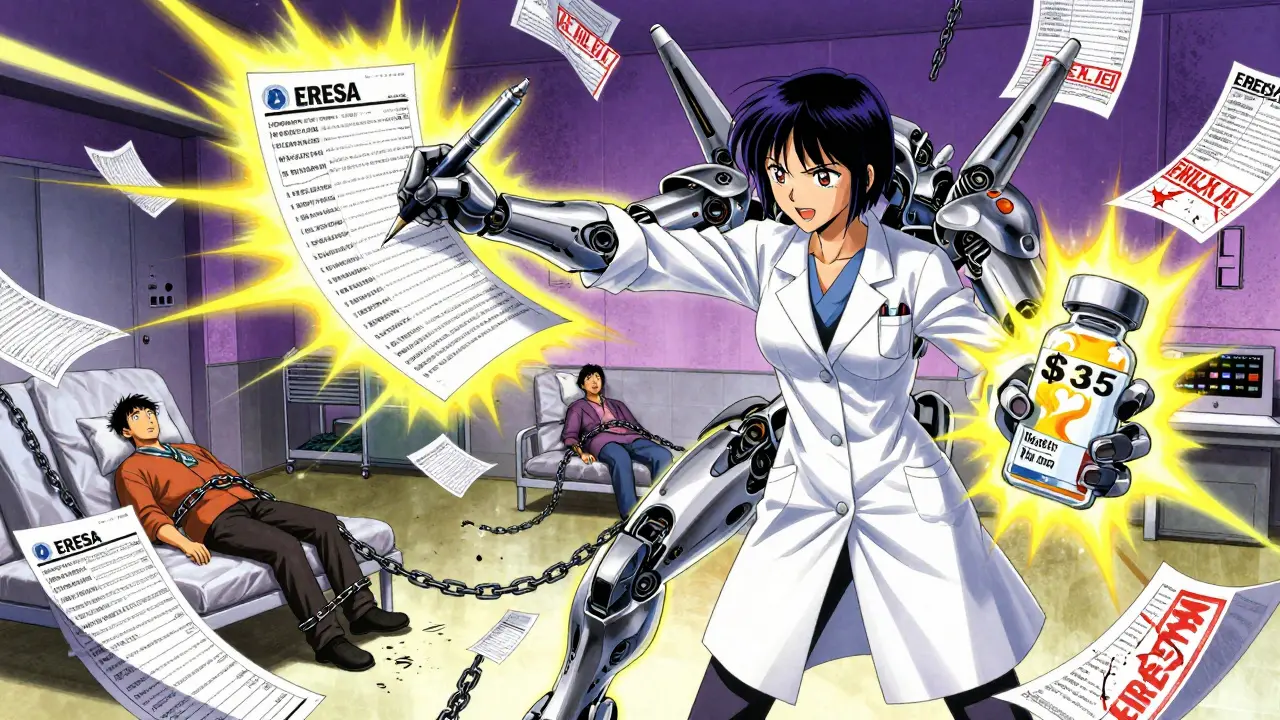
You don’t have to go without meds while you appeal. Many drugmakers have patient assistance programs. Eli Lilly’s Insulin Value Program gives brand-name insulin for $35/month to anyone with commercial insurance. Novo Nordisk and Sanofi have similar programs. Call the manufacturer directly. You don’t need to be poor to qualify. Also, check if your pharmacy offers a bridge program. Some will give you a 30-day supply while your appeal is pending. Ask your pharmacist. They know the ropes.What’s Changing in 2025
New rules are coming. The Biden administration’s 2023 Executive Order forced CMS to simplify external reviews. Medicare Part D plans now have real-time tools that show if a drug is covered before you even leave the doctor’s office. That’s reducing denials by 15-20%. But ERISA plans still operate in a legal gray zone. Federal judges hear appeals without juries. And insurers still have the upper hand. That’s why documentation and timing matter more than ever.Final Advice: Don’t Give Up
Insurance companies count on you giving up. They know the process is confusing. They know you’re tired. They know you might think, "It’s not worth the fight." But it is. You’re not asking for luxury. You’re asking for the medicine your doctor says you need. And you have the right to it. The system is broken-but it’s not unbeatable. Every successful appeal changes the rules a little more. And your fight helps others after you. Start today. Get the letter. Call your doctor. File the appeal. Track every call. Keep every document. You’ve already survived the diagnosis. Don’t let bureaucracy steal your treatment.What should I do if my insurance denies my brand-name medication?
First, read your Explanation of Benefits (EOB) to find the exact reason for denial. Then contact your prescribing doctor immediately to request a letter of medical necessity. File your internal appeal within 180 days using certified mail. Follow up with the insurer every few days. If denied, move to an external review with your state’s insurance department or HHS (for ERISA plans).
How long does an insurance appeal take?
Internal appeals take 30 days for new prescriptions and 60 days for ongoing treatments. For urgent cases, insurers must respond in 4 business days. External reviews take 30 to 60 days. Expedited reviews for life-threatening conditions must be decided within 72 hours in most states.
Can I get my medication while waiting for an appeal?
Yes. Many drug manufacturers offer patient assistance programs-for example, Eli Lilly’s Insulin Value Program provides brand-name insulin for $35/month. Some pharmacies also offer 30-day bridge supplies. Contact the drugmaker directly or ask your pharmacist. You don’t need to be low-income to qualify.
Why do insurers deny brand-name drugs even when generics don’t work?
Insurers prioritize cost over clinical outcomes. Brand-name drugs cost 5-10 times more than generics. Even if generics cause side effects or fail, insurers often assume they’re interchangeable. But for conditions like epilepsy, diabetes, or autoimmune disorders, this assumption is dangerous-and medically incorrect. The system is designed to push cost-saving, not patient-centered care.
Do I need a lawyer to appeal a denial?
Not always, but if your plan is governed by ERISA (which covers most employer-based insurance), your chances of success increase by 47% with legal help. Insurers use complex legal language to deny claims. An attorney knows how to counter those tactics. For non-ERISA plans, patient advocates can often help for free.
What’s the success rate for appeals?
Internal appeals succeed in about 39% of brand-name drug cases. External reviews succeed in 58%. For urgent conditions like type 1 diabetes, external review success jumps to 72%. The key factor? Detailed clinical documentation from your doctor. Appeals without it are rarely approved.
Can I appeal if I’m on Medicare or Medicaid?
Yes. Medicare Part D has a 60-day appeal window and an external review option. Medicaid timelines vary by state, but all states must offer appeals. Medicare Advantage plans now have real-time coverage check tools to reduce denials. Always request a written denial notice and follow the specific instructions in your plan’s member handbook.



Janette Martens
December 29, 2025 AT 06:42Marie-Pierre Gonzalez
December 30, 2025 AT 14:44Louis Paré
December 31, 2025 AT 04:53Samantha Hobbs
January 1, 2026 AT 22:33Nicole Beasley
January 2, 2026 AT 09:41sonam gupta
January 3, 2026 AT 09:39Julius Hader
January 3, 2026 AT 20:30Vu L
January 4, 2026 AT 13:51James Hilton
January 5, 2026 AT 04:14Mimi Bos
January 5, 2026 AT 05:48Payton Daily
January 6, 2026 AT 12:39Kelsey Youmans
January 7, 2026 AT 19:19Sydney Lee
January 9, 2026 AT 13:34oluwarotimi w alaka
January 11, 2026 AT 07:05