The FDA is the U.S. Food and Drug Administration, the federal agency responsible for ensuring the safety, efficacy, and quality of pharmaceutical products sold in the United States. When it comes to generic drugs, the FDA doesn’t just give them a pass because they’re cheaper. It holds them to the same high bar as brand-name drugs - just with a smarter, faster process. This is all done through the Abbreviated New Drug Application (ANDA) pathway, created by the Hatch-Waxman Act of 1984. The goal? Let safe, effective generic drugs reach patients faster and at a fraction of the cost.
What Makes a Generic Drug Approved?
It’s not enough for a generic drug to look like the brand-name version. It has to work the same way. The FDA requires four key things:
- Identical active ingredient - same chemical compound, same dose.
- Same strength, dosage form (pill, injection, patch, etc.), and route of administration (oral, topical, IV).
- Same intended use - same medical conditions it treats.
- Identical bioavailability - meaning the body absorbs it at the same rate and to the same extent.
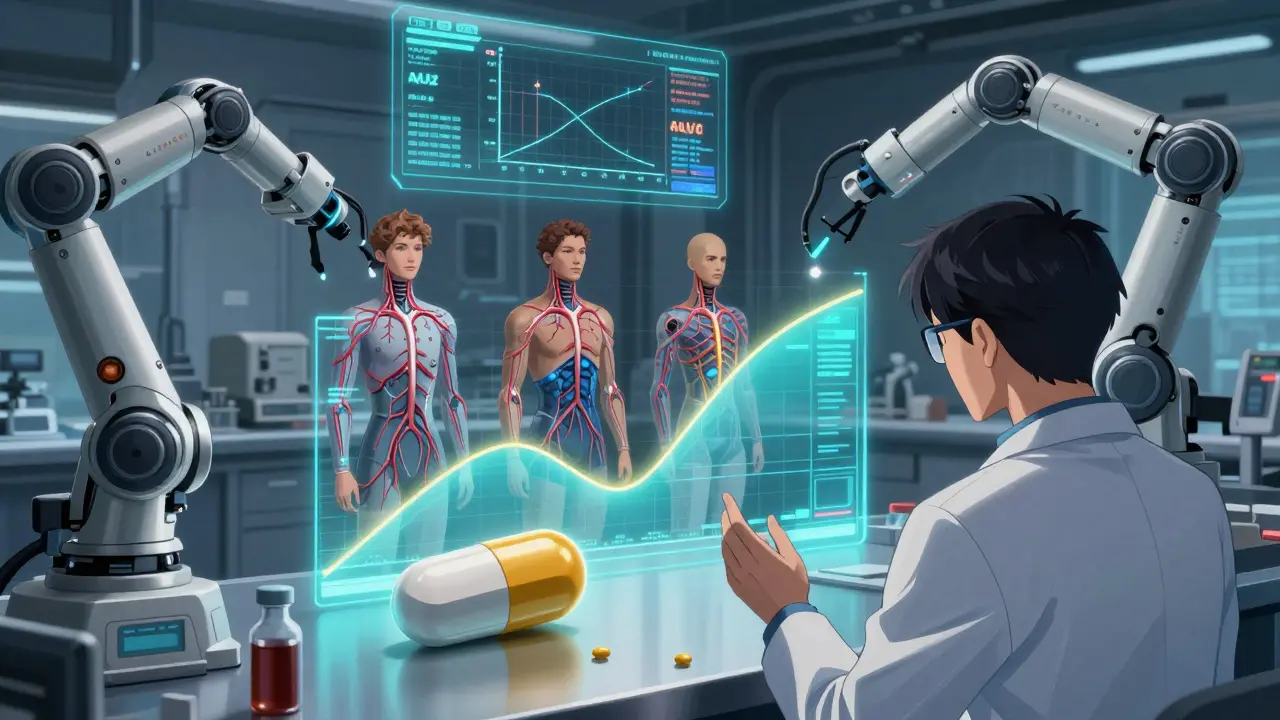
The last one - bioequivalence - is where science gets real. Manufacturers must prove their generic drug performs like the brand-name drug in healthy volunteers. How? Through pharmacokinetic studies. These tests measure how quickly and how much of the drug enters the bloodstream. The FDA’s rule? The 90% confidence interval for two key measurements - AUC (total exposure) and Cmax (peak concentration) - must fall between 80% and 125% of the brand-name drug’s numbers. That’s not a guess. It’s a scientifically proven threshold for therapeutic equivalence.
The ANDA Process: Step by Step
Submitting an ANDA isn’t just filling out a form. It’s a complex, multi-stage review. Here’s how it works:
- Filing Review: The FDA checks if the application is complete. In 2022, about 15.3% of submissions were rejected outright for missing key data - mostly in chemistry, manufacturing, and controls (CMC) sections. No paperwork? No review.
- Substantive Review: Once filed, the application goes to scientists who dig into every detail: manufacturing processes, stability data, bioequivalence results. The standard review clock is 10 months. If it’s a first generic or a drug in shortage, it gets priority: 8 months.
- Facility Inspection: The factory where the drug is made must pass a Current Good Manufacturing Practice (CGMP) inspection. In 2023, the FDA inspected 82.7% of generic drug facilities. No clean inspection? No approval.
- Approval or Response: If everything checks out, the drug gets approved. If not, the FDA issues a complete response letter - 14.8% of applications in 2022 got one, mostly due to flawed bioequivalence studies.
Each ANDA submission is massive - 15,000 to 20,000 pages of data. To help, the FDA’s Electronic Submission Template and Resource Center (eSTaR) cut formatting errors by over 60%. Still, it takes a skilled team. Successful applicants usually have 8-12 specialists: regulatory experts, pharmaceutical scientists, and clinical pharmacologists. First-time applicants often spend 18-24 months learning the ropes.
Cost and Speed: Why Generics Are So Much Cheaper
Brand-name drug development costs around $2.6 billion on average, according to the Tufts Center for the Study of Drug Development. That includes years of clinical trials to prove safety and effectiveness. Generic manufacturers don’t need to repeat those trials. That’s the whole point of ANDA.
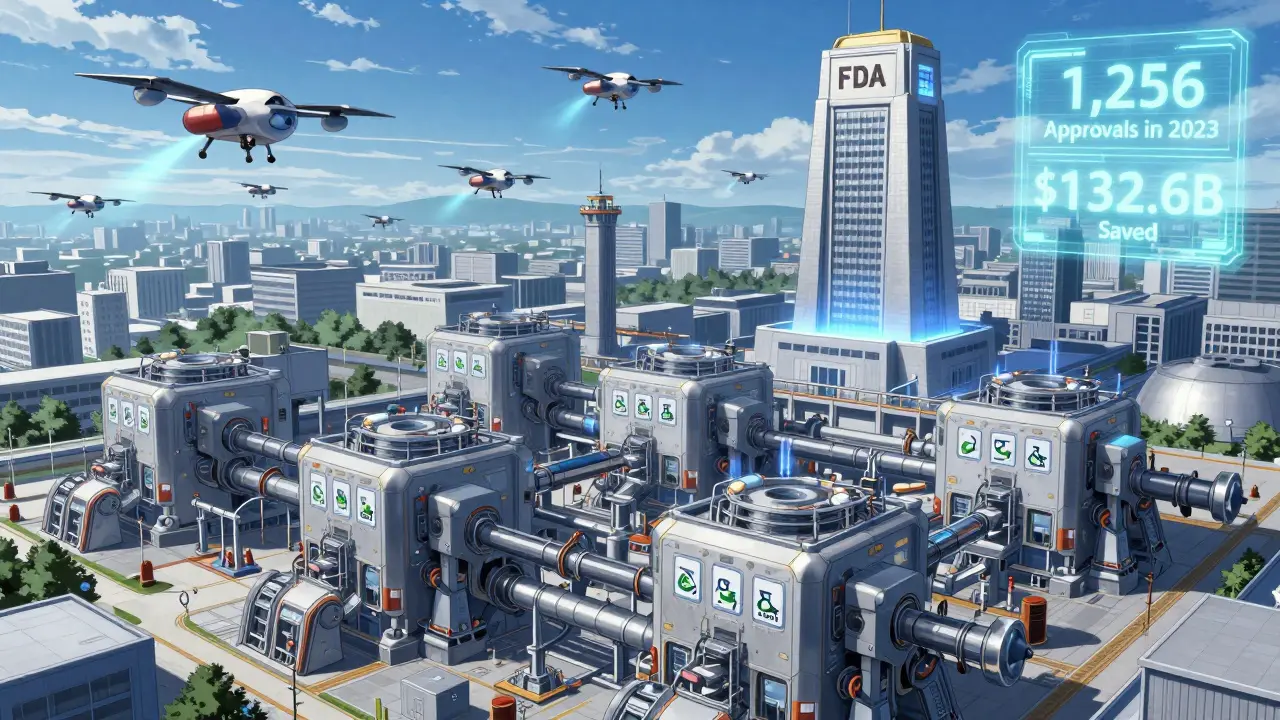
Instead, they spend $2.4 million to $6.3 million - a fraction of the cost. That savings gets passed on. In 2023, generics made up 9 out of every 10 prescriptions filled in the U.S. But they only accounted for 23% of total drug spending. The result? $132.6 billion in savings for patients and the healthcare system.
And it’s getting faster. The FDA’s Drug Competition Action Plan, started in 2017, cut approval times for first generics from 42.1 months to 26.4 months by 2023. In 2025, a new pilot program will speed things up even more - cutting review times by 30% for companies making drugs in the U.S.
Complex Drugs: The New Frontier
Not all generics are created equal. Simple pills? Easy. Inhalers? Creams? Extended-release tablets? Those are complex. They don’t dissolve the same way. Their absorption can’t be measured with simple blood tests. The FDA has been pushing hard to improve approval of these.
In 2018, only 22.1% of approved generics were complex. By 2023, that jumped to 37.5%. The FDA’s Complex Generic Drugs Initiative and increased funding under GDUFA IV (a $2.1 billion commitment through 2027) are helping. The goal? Use real-world evidence and even artificial intelligence to speed up reviews - with 12% of ANDAs already being pilot-tested with AI tools in late 2024.
How the FDA Compares to the Rest of the World
The U.S. system is unique. The European Medicines Agency (EMA) sometimes requires additional clinical trials for generics - even if the drug is well-studied. Japan demands in vivo bioequivalence studies for every single product, no matter how simple.
The FDA’s ANDA approach is more efficient. It’s why the U.S. leads the world in generic approvals. In 2023, the FDA approved 1,256 ANDAs - up from 1,116 in 2022. That’s more than 3 per day, every day.
Myths vs. Reality: Do Generics Really Work?
Some patients worry: "If it’s cheaper, is it less effective?" The data says otherwise.
According to the 2023 CVS Health Generics Perception Survey, 78.4% of patients trusted FDA-approved generics. 63.2% said they noticed no difference in effectiveness compared to brand-name drugs.
Even the FDA’s own adverse event database - FAERS - shows only 7.7% of reports involving generics cited efficacy issues. And after investigation, 92.3% of those cases were due to the patient’s underlying condition worsening - not the drug.
One Reddit user shared a real story: "My patient’s insulin dropped from $390/month to $98 after the FDA approved Semglee." That’s not an outlier. The National Community Pharmacists Association found that 89% of pharmacists see patients save 80-85% on out-of-pocket costs with generics.
Challenges and Criticisms
It’s not perfect. In 2022, Senator Bernie Sanders’ report found 1,842 ANDAs still waiting for review - 317 of them over 36 months. The FDA admitted resource limits were a factor.
Supply chain risks are real too. 78% of active ingredients for generics come from outside the U.S. The FDA’s 2023 Supply Chain Resilience Assessment flagged this as a vulnerability.
And while patent challenges are common - 34.7 on average per branded drug facing generic competition - the FDA is working with the FTC to reduce delays from litigation.
What’s Next for Generic Approval?
The future is focused on speed, complexity, and resilience.
- GDUFA IV (2025-2027) allocates $412 million specifically for complex generics.
- The FDA aims to use real-world evidence in 25% of complex generic approvals by 2026.
- AI-assisted review is expanding - with pilot programs already underway.
- Over 2,147 first-generic applications are pending as of early 2024.
By 2027, experts predict the FDA will approve 1,500-1,700 generic applications annually. The Congressional Budget Office estimates these drugs will save $1.9 trillion over the next decade.
The system isn’t flawless. But it’s working. For patients, it means access. For the system, it means savings. For the FDA, it means balancing speed with science - and getting it right, every time.
How long does it take for the FDA to approve a generic drug?
The standard review time for an ANDA is 10 months. For priority applications - like first generics or drugs in shortage - the target is 8 months. But delays can happen. In 2022, over 300 applications waited more than 3 years for review due to backlogs. New initiatives, including AI tools and faster review pathways, aim to cut these delays significantly by 2026.
Are generic drugs as safe as brand-name drugs?
Yes. The FDA requires generics to have the same active ingredient, strength, dosage form, and bioequivalence as the brand-name version. Manufacturing facilities are held to the same CGMP standards. The FDA’s own analysis of adverse event reports from 2020-2023 found that 92.3% of concerns about generic effectiveness were actually due to disease progression, not the drug itself.
What’s the difference between an ANDA and an NDA?
An NDA (New Drug Application) is for brand-name drugs and requires full clinical trials to prove safety and effectiveness - costing up to $2.6 billion. An ANDA (Abbreviated New Drug Application) is for generics and skips those trials. Instead, it must prove bioequivalence to an already-approved brand-name drug, cutting costs to $2-6 million and approval time from 10-15 years to 3-4 years.
Why do some generic drugs get refused by the FDA?
The most common reason is incomplete or flawed chemistry, manufacturing, and controls (CMC) data - cited in 41.7% of Refuse-to-Receive letters in 2022. Other top reasons include poorly designed bioequivalence studies (28.3%) and failure to meet CGMP standards. Many of these issues come from first-time applicants unfamiliar with the detailed requirements.
Do all generic drugs have the same inactive ingredients as the brand-name version?
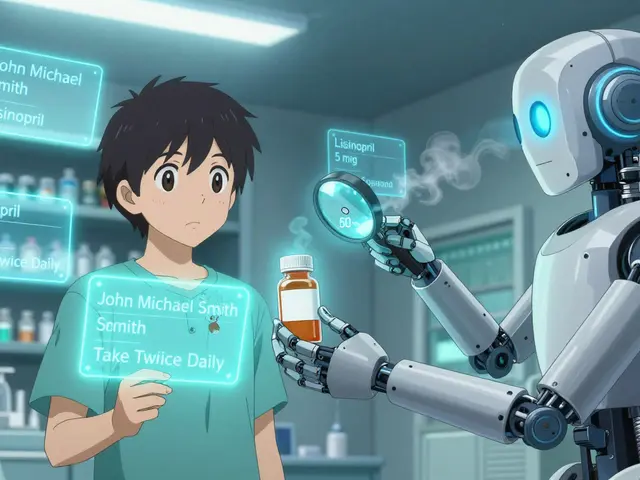
No. The FDA only requires the active ingredient to be identical. Inactive ingredients - like fillers, dyes, or preservatives - can differ. These changes are usually harmless, but in rare cases, they can affect patients with allergies or sensitivities. That’s why pharmacists are trained to alert patients if a generic switch might cause a reaction.

Nicholas Gama
March 10, 2026 AT 04:06Let’s be real - this whole ANDA system is a joke. They approve generics based on a 80-125% bioequivalence window? That’s not science, that’s a casino. I’ve seen patients crash after switching. The FDA doesn’t care as long as the numbers look good on paper.
And don’t get me started on the 78% of API coming from India and China. You think your ‘generic’ insulin is safe? Wake up.
Mary Beth Brook
March 11, 2026 AT 20:33US leads the world in generic approvals because we don’t waste time on European overregulation or Japanese overtesting. ANDA is the gold standard. CMC compliance? Check. Bioequivalence? Check. CGMP? Check. Anyone who questions this system is either ignorant or anti-American innovation.
Neeti Rustagi
March 13, 2026 AT 13:04Dear colleagues, I must express my profound appreciation for the rigorous scientific framework underpinning the FDA’s ANDA pathway. The bioequivalence thresholds of 80–125% are not arbitrary; they are derived from decades of pharmacokinetic research and validated through international consensus.
While challenges persist - particularly in supply chain resilience - the structural integrity of this system remains exemplary. Let us not confuse affordability with compromise.
Dan Mayer
March 14, 2026 AT 12:07so uhm like the FDA approves generics but like... what if the pill is just a little bit different? like i read somewhere that inactive ingredients can cause issues?? and like the factory in china might be using different chemicals?? idk man i just dont trust it anymore lol
Janelle Pearl
March 16, 2026 AT 02:30I’ve worked in pharmacy for 18 years. I’ve seen patients switch from brand to generic and live better lives because they can finally afford their meds.
Yes, there are rare cases where someone reacts to a dye or filler - and we tell them. But 99% of the time? It’s the same drug. Same results.
If you’re scared, talk to your pharmacist. We’re here to help, not scare you.
Ray Foret Jr.
March 17, 2026 AT 17:45Love this breakdown! 🙌 The 132.6B in savings? That’s life-changing for so many families.
And AI helping review? YES PLEASE. I’ve got a cousin on insulin - paid $400/mo, now pays $98. That’s not magic. That’s smart policy.
Keep pushing forward, FDA. You’re doing God’s work. 🙏
Samantha Fierro
March 19, 2026 AT 03:13The data presented here is both comprehensive and compelling. The FDA’s adherence to evidence-based standards - particularly in bioequivalence and CGMP compliance - demonstrates an institutional commitment to public health over profit.
It is imperative that public discourse reflect this nuance. Generic drugs are not inferior; they are intelligently optimized.
Robert Bliss
March 19, 2026 AT 14:22So if generics are so good, why do some people say they don’t work as well?
I get that it’s mostly placebo or underlying health stuff... but still. It’s weird.
Maybe we need better education? Just saying. 🤔
Peter Kovac
March 20, 2026 AT 19:38The FDA’s approval metrics are statistically inadequate. The 80–125% bioequivalence range permits clinically significant variation. A 20% deviation in Cmax can alter therapeutic outcomes in narrow-therapeutic-index drugs such as warfarin or levothyroxine.
Furthermore, the reliance on single-dose studies in healthy volunteers ignores chronic pharmacokinetic behavior in comorbid populations.
This system is not science - it is regulatory arbitrage.
APRIL HARRINGTON
March 21, 2026 AT 07:28OMG I JUST READ THIS AND I CRIED LIKE A BABY 🥹
132 BILLION DOLLARS SAVED??
MY DAD WAS ON THAT INSULIN AND HE COULDN’T AFFORD IT BEFORE
THE FDA IS A HERO
WHOEVER WROTE THIS I LOVE YOU
PLS TAKE MY MONEY
AND MY SOUL
Leon Hallal
March 22, 2026 AT 12:52They’re just making us dependent on cheap drugs so we don’t question the system. The real drug companies own the FDA. They let generics in so they can control the market even tighter. You think that’s coincidence? Wake up.
They’re poisoning us slowly. I’ve seen it. I know.
Judith Manzano
March 23, 2026 AT 07:29This is so fascinating. I had no idea the ANDA process was this detailed. I always thought generics were just knockoffs.
But now I see - it’s like reverse-engineering a car to make sure every part works the same, even if the paint is different.
Can someone explain how they test absorption in healthy volunteers? Is it ethical? Just curious 😊
rafeq khlo
March 23, 2026 AT 21:30Let me be blunt - the FDA is a corporate puppet. The 15000 page ANDA submissions are designed to exclude small manufacturers. Only big pharma can afford this. The so-called savings? They’re illusions. The real cost is in supply chain vulnerability and compromised quality.
India and China are not safe. They are not regulated. This is a house of cards.
Tom Sanders
March 24, 2026 AT 08:34Wow. So much text. I just wanted to know if generics are safe.
Can someone just tell me yes or no? And if yes, why do I feel weird after switching?
Too much info. My brain is tired.
Jazminn Jones
March 25, 2026 AT 01:02While the statistics presented appear robust, they are fundamentally misleading. The FDA’s approval rate has increased not due to improved science, but due to regulatory capture and GDUFA funding incentives.
The 37.5% complex generic approval rate is a façade - these are not equivalent. The lack of long-term clinical outcomes data renders these approvals speculative at best.
This is not innovation. It is institutional decay.