
Your eyes feel gritty, burning, or oddly watery all day. You blink, but the relief doesn’t last. This isn't just "tired eyes." It’s likely Dry Eye Syndrome (DES), a condition affecting millions of adults worldwide. Despite the name, your eyes might actually be producing too many tears-but they are the wrong kind.
Understanding why this happens is the first step to fixing it. Most people assume dry eye means their glands aren't making enough water. In reality, for most patients, the problem is evaporation. The good news? Simple changes in how you use artificial tears lubricating eye drops designed to mimic natural tears can provide significant relief if you know which type to pick and how to apply them correctly.
The Two Main Types of Dry Eye
To treat dry eye effectively, you need to know which type you have. Think of your tear film as a three-layered shield protecting your cornea. If any layer fails, the shield breaks.
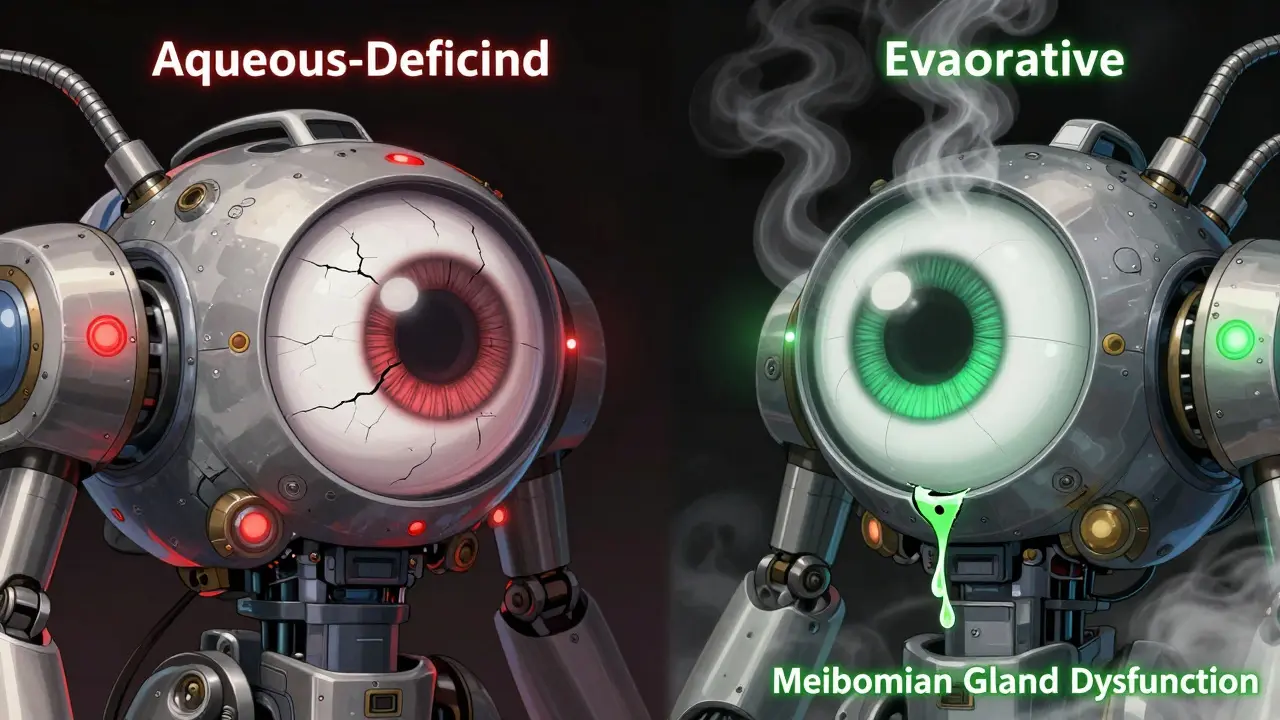
- Aqueous Tear-Deficient Dry Eye (ADDE): Your lacrimal glands simply don't produce enough of the watery component of tears. This accounts for about 10-15% of cases. It is often linked to aging, autoimmune conditions like Sjogren's syndrome, or side effects from medications like antihistamines.
- Evaporative Dry Eye (EDE): This is the culprit in roughly 86% of cases. Here, your eyes make enough water, but it evaporates too quickly because the oily lipid layer on top is defective. This is usually caused by Meibomian Gland Dysfunction (MGD), where the tiny oil glands in your eyelids get clogged or blocked.
If you have EDE, standard watery drops might wash away what little oil you have left, making things worse temporarily. Recognizing this difference changes everything about your treatment plan.
How Artificial Tears Actually Work
Artificial tears over-the-counter lubricants that supplement the eye's natural tear film are the first line of defense for mild to moderate dry eye. They work by physically coating the eye, reducing friction between the eyelid and the cornea, and diluting inflammatory proteins that cause pain.
Not all drops are created equal. They generally fall into two categories based on their ingredients:
- Preserved Drops: These contain preservatives like benzalkonium chloride (BAK) to prevent bacterial growth in multi-dose bottles. While convenient, BAK can damage the delicate surface cells of your eye if used more than four times a day. It causes toxicity over time, worsening the very inflammation you're trying to soothe.
- Preservative-Free Drops: These come in single-use vials or special pump bottles. They lack harsh chemicals, making them safer for frequent use. Studies show they provide better long-term symptom improvement for severe cases, though they cost more and expire quickly after opening.
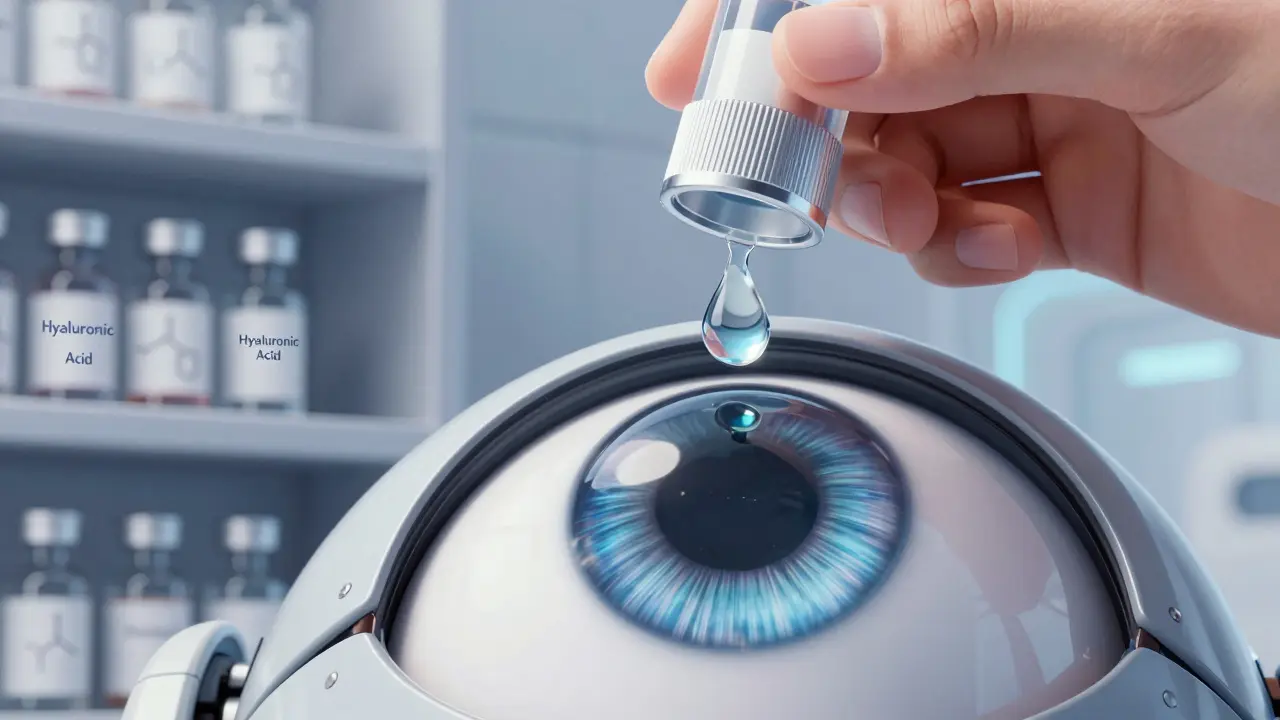
Look for viscosity agents like hyaluronic acid or carboxymethylcellulose. Hyaluronic acid, in particular, binds water well and can keep your eyes feeling moist for longer periods compared to simple saline solutions.
| Feature | Preserved Drops | Preservative-Free Drops |
|---|---|---|
| Best For | Mild dryness, occasional use (<4x/day) | Moderate-severe dryness, frequent use (>4x/day) |
| Cost | Lower ($10-$20/bottle) | Higher ($30-$50/month) |
| Safety Profile | Risk of toxicity with heavy use | Safe for long-term daily use |
| Shelf Life | Months after opening | Single-use or short duration |
Proper Application Technique Matters
You might be using drops correctly, but small mistakes reduce their effectiveness. Many users report blurred vision or irritation not because the product is bad, but because of how it's applied.
- Tilt and Pull: Tilt your head back slightly and pull down your lower eyelid to create a pocket.
- Distance is Key: Hold the bottle about an inch away from your eye. Never let the tip touch your eye or lashes. This prevents contamination and accidental corneal scratches.
- One Drop is Enough: Your eye can only hold one drop at a time. Adding more just spills out, wasting money and potentially washing away natural oils.
- Wait Between Meds: If you use prescription anti-inflammatory drops (like Restasis or Xiidra) alongside artificial tears, wait at least 5-10 minutes between applications so they don't dilute each other.
A pro tip from optometrists: refrigerate your preservative-free drops. The cold temperature increases the viscosity slightly, providing a soothing sensation and helping the drop stay on the eye surface a bit longer.
When Drops Aren't Enough
If you are using artificial tears five or more times a day and still experiencing pain, light sensitivity, or fluctuating vision, it’s time to escalate treatment. Artificial tears address symptoms, not the root cause of inflammation.
For persistent cases, doctors may prescribe:
- Anti-inflammatory Drops: Medications like cyclosporine (Restasis) or lifitegrast (Xiidra) target the immune response driving dry eye damage. They take weeks to months to show full effect.
- Lipid-Based Supplements: Omega-3 fatty acids (specifically EPA and DHA) can improve the quality of oil produced by your meibomian glands, addressing evaporative dry eye from the inside out.
- Punctal Plugs: Tiny inserts placed in your tear ducts to block drainage, keeping your natural tears on the eye surface longer.
Don't ignore severe symptoms. Untreated chronic dry eye can lead to corneal scarring and permanent vision loss in a small percentage of cases. If over-the-counter drops fail after 4-6 weeks, see an ophthalmologist who specializes in ocular surface disease.
Lifestyle Changes to Reduce Evaporation
Treatment isn't just about what you put in your eyes. Your environment plays a huge role, especially for evaporative dry eye.
- Humidify Your Space: Dry air accelerates tear evaporation. Use a humidifier in your bedroom and office, especially in winter when heating systems dry out the air.
- Blink More: Digital screens reduce our blink rate by up to 60%. Incomplete blinks fail to spread the oil layer across the eye. Practice conscious blinking: close your eyes gently, squeeze shut, then open. Repeat every hour.
- Warm Compresses: Apply a warm compress to closed eyelids for 10 minutes daily. This melts the thickened oil in clogged meibomian glands, allowing them to flow freely again.
- Avoid Direct Airflow: Position computer monitors below eye level so you look down slightly, narrowing your eye opening. Avoid sitting directly under air conditioning vents or fans.
Why do my eyes water when they are dry?
This is a common paradox in evaporative dry eye. When your eyes detect irritation from instability or inflammation, they trigger a reflex to flood the eye with watery tears. However, these reflex tears lack the necessary oil and mucin layers, so they evaporate instantly, leaving your eyes drier and more irritated than before.
Can I use artificial tears with contact lenses?
Yes, but you must choose drops labeled "for use with contact lenses." Standard artificial tears often contain preservatives or polymers that can bind to soft lenses, causing deposits and discomfort. Preservative-free saline or specific multipurpose solution rewetting drops are safest.
How long does it take for artificial tears to work?
Artificial tears provide immediate physical lubrication within seconds. However, if you are using them to manage underlying inflammation, consistent use over several weeks is needed to see a reduction in baseline symptoms. For severe cases, they may only provide temporary relief lasting 1-2 hours.
Are redness-relief drops safe for dry eye?
No. Redness relievers (vasoconstrictors like tetrahydrozoline) shrink blood vessels to mask redness but do not treat dryness. Long-term use can cause "rebound redness," where your eyes become redder once the medication wears off, creating a dependency cycle.
Does age affect dry eye severity?
Yes. Prevalence increases significantly with age. Hormonal changes during menopause can reduce tear production in women, while older adults often experience reduced gland function and increased exposure to drying environments. People over 50 are at much higher risk for both aqueous-deficient and evaporative types.



Tumble Farm
June 22, 2026 AT 10:41I've been dealing with MGD for years and the warm compress advice is genuinely life-changing. Most people skip it because they think drops are enough, but if your oil glands are clogged, you're just watering a desert. I use a specific heated mask that keeps the temperature consistent for 10 minutes, which melts the meibum much better than a washcloth that cools down in two minutes. It took about three weeks of daily consistency before my eyes stopped burning by mid-afternoon.
Stephanie Cree
June 24, 2026 AT 03:31Oh, please. You really believe that little plastic masks work? 😒 It's all about discipline and proper hygiene, not buying expensive gadgets. If you can't manage to keep your eyelids clean without a device, you have bigger problems. Also, stop using those preservative-laden drops; they are literally poisoning your corneal epithelium. Benzalkonium chloride is toxic! 🚫 You need to take responsibility for your own health instead of relying on Big Pharma's quick fixes. It's quite embarrassing how many people ignore basic biology.
Bruno Sarri
June 25, 2026 AT 23:46Hey there, I totally get where you're coming from regarding the preservatives, but let's not be too harsh on people trying to find relief. Everyone's journey with dry eye is different, and sometimes those heated masks provide the comfort needed to stick with the routine. I found that combining the mask with gentle lid massage made a huge difference for me. It's okay to use tools that help us feel better while we work on long-term solutions. We should support each other through this frustrating condition rather than judging the methods people choose.
KESHAV KUMAR
June 27, 2026 AT 01:59Sure, buy the mask. Spend $40 on a gadget to do what a hot towel does for free. Classic consumerism trap. But hey, if it makes you feel productive, go ahead. I just blink less when I'm gaming and drink more water. Works fine for me. Or maybe I just don't care as much as you guys do. Your choice.
Hafiz Omeiza
June 27, 2026 AT 12:45It is imperative to understand the physiological mechanisms at play here. The distinction between aqueous-deficient and evaporative dry eye is not merely semantic; it dictates the entire therapeutic protocol. Many individuals erroneously assume that increased tear production resolves their symptoms, yet they fail to recognize that their lipid layer is compromised. Consequently, the aqueous tears evaporate rapidly, leading to osmotic stress on the ocular surface. One must consult a specialist to determine the exact etiology before embarking on any treatment regimen. Self-diagnosis is fraught with peril and often leads to prolonged suffering due to inappropriate management strategies.
Amy Bogdahn
June 27, 2026 AT 18:28Boring. Just get the prescription drops. Restasis or Xiidra. Stop whining about OTC stuff. If you're reading this post, you're already doing it wrong. Go see a doctor. Now.
Ashley Jacelyn
June 29, 2026 AT 11:28I know exactly how frustrating this is! I was so relieved to find out that refrigerating my preservative-free drops actually helped soothe the burning sensation. It feels like such a small trick, but the coolness provides immediate comfort. I also started using a humidifier in my bedroom since the winter air was killing my eyes. Little changes really do add up over time. Hang in there, you will find what works for you!
Dez Johnston
June 30, 2026 AT 21:49I appreciate the detailed breakdown of the application technique. I used to hold the bottle too close and accidentally touch my eye, which caused more irritation than the dryness itself. Learning to create that pocket with the lower eyelid changed everything for me. It’s one of those things that seems obvious once you know it, but hard to figure out on your own. Thanks for sharing these practical tips.
Alex Johnston
July 2, 2026 AT 08:57They don't want you to know that artificial tears are just a band-aid designed to keep you dependent on the medical industrial complex. The real cause is electromagnetic radiation from your devices and the fluoride in your water supply damaging your glandular function. Wake up! 🤡 They profit from your blindness. Use olive oil and pray.
Koushiki Behera
July 2, 2026 AT 21:32There is a profound connection between our inner peace and our physical well-being. When we are stressed, our blink rate decreases, and our bodies tense up, affecting even the smallest glands in our eyes. 🧘♀️ I practice mindful blinking exercises throughout the day, closing my eyes gently and visualizing warmth spreading across my face. It helps to treat the body with compassion and patience. Dry eye can be a signal from our soul to slow down and breathe. 🌿✨
Sam Dudgeon
July 4, 2026 AT 20:27why do you people make it so complicated. just stop looking at screens. seriously. its that simple. but no you gotta have your phone and computer and whatever else. then you cry about your eyes. pathetic. i dont have dry eye because i live outside. try it.
Kimberly Maten-ao
July 6, 2026 AT 13:18I have a question about the omega-3 supplements mentioned. Does the source matter significantly? I've seen conflicting information about fish oil versus algae-based DHA/EPA. I want to make sure I'm getting the right ratio for meibomian gland dysfunction specifically. Any insights would be appreciated.
Sonam Norbu
July 8, 2026 AT 03:01This article is weak. Real men don't complain about dry eyes. You need to toughen up. In my country, we deal with actual problems, not imaginary grit in your eyes. Stop being soft and get back to work. This nonsense about 'empathy' and 'comfort' is destroying our productivity. Fix your posture and stop staring at screens like a coward.