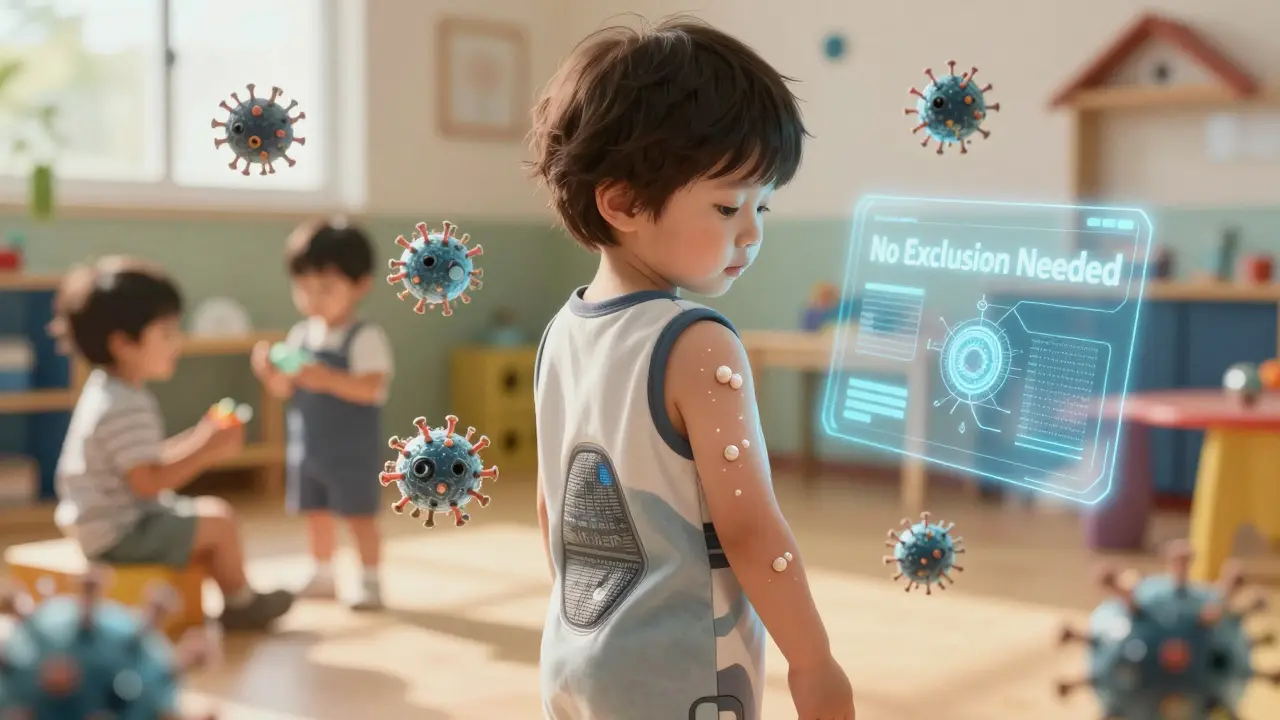
Molluscum contagiosum is a common viral skin infection that shows up as small, round, flesh-colored or pearly bumps. They’re usually painless but can be itchy, and they often appear in clusters. You’ll see them most often on a child’s face, arms, or legs - but adults can get them too, especially on the genitals, inner thighs, or lower abdomen from sexual contact. The bumps aren’t dangerous, but they’re contagious, and they can stick around for months or even years. The good news? Most cases clear up on their own without treatment. The tricky part? Knowing when to wait and when to act.
What Do Molluscum Bumps Actually Look Like?
These bumps are tiny - usually between 2 and 6 millimeters across, about the size of a pencil eraser. They’re smooth, dome-shaped, and have a distinctive dip or dot in the center, like a tiny belly button. That’s called an umbilication, and it’s a key sign doctors use to tell molluscum apart from other skin issues. The color can vary: white, pink, or matching your skin tone. Sometimes they look shiny or waxy, almost like beads. In kids, they often show up in places where skin rubs together - armpits, behind the knees, or around the neck. In adults, genital molluscum is common and can be mistaken for an STI.How Do You Get It?
The virus spreads easily through direct skin contact. A child might pick it up at daycare by sharing a towel, grabbing a toy, or hugging a friend with bumps. Adults often get it through sexual contact. It can also spread in water - swimming pools, hot tubs, and even bathwater if someone with molluscum is in it. The virus lives on surfaces like towels, clothing, and gym equipment. If you scratch or pick at a bump, you can spread it to other parts of your own skin. That’s why one bump can turn into ten or twenty over time.Who’s Most at Risk?
Children between ages 1 and 10 are the most common group affected. Kids with eczema are especially prone - studies show they’re 30% more likely to get molluscum because their skin barrier is already damaged. Adults with weakened immune systems - like those with HIV, cancer treatment, or long-term steroid use - can develop large, widespread outbreaks that last years. Even healthy adults can get it, especially if they’re sexually active or share personal items. Climate matters too. Warm, humid places like Durban, where I live, see higher rates because the virus thrives in moisture.How Is It Different From Other Skin Problems?
It’s easy to confuse molluscum with warts, chickenpox, or even acne. Warts are rough, hard, and lack the central dimple. Chickenpox blisters are filled with fluid, appear all over the body, and are itchy and painful. Acne is red, inflamed, and often has pus. Molluscum is firm, not tender, and doesn’t turn red unless it gets infected. If you’re unsure, a dermatologist can confirm it with a quick visual exam - sometimes using a dermatoscope, a small magnifying tool. Biopsies are rarely needed.
Do You Need to Treat It?
For most healthy kids and adults, the answer is no. The American Academy of Dermatology says observation is the best first step. In immunocompetent people, 92% of cases clear up within 18 months without any treatment. No scarring. No long-term damage. The bumps just go away. But waiting isn’t always easy. If the bumps are on the face, they can cause teasing at school. If they’re in the genital area, they can cause anxiety about dating or sex. That’s why some parents and adults choose to treat them - not because they’re dangerous, but because they’re bothersome.What Treatments Actually Work?
There’s no magic cure, and many popular options do more harm than good. Here’s what the data says:- Cantharidin - A blistering agent applied by a doctor. It causes a small blister to form over the bump, which lifts the virus out. Studies show it clears lesions in about 73% of cases after 12 weeks. It’s safe for kids and doesn’t usually scar.
- Topical potassium hydroxide (KOH) - Found in over-the-counter products like MolluDab. Used daily, it breaks down the bump over 4-8 weeks. About 63% of users report full clearance. It’s cheap, easy to use at home, and less painful than freezing.
- Cryotherapy (freezing) - Liquid nitrogen is applied to freeze the bump. It’s common, but not ideal for kids. It’s painful, can cause blisters, and often leaves white spots or scars - especially on the face. Many parents regret choosing this after seeing the side effects.
- Laser treatment - Used rarely, mostly for stubborn cases in adults. Expensive and not covered by insurance.
- Home remedies - Tea tree oil, apple cider vinegar, duct tape - no strong evidence they work. Some people swear by them, but they’re hit or miss and can irritate the skin.
One thing to avoid: picking, scratching, or squeezing the bumps. That doesn’t speed up healing - it spreads the virus. And never use sharp tools to cut them off. That’s how infections start.
How to Prevent Spreading
If you or your child has molluscum, here’s how to stop it from spreading:- Don’t share towels, clothing, or bath toys.
- Keep lesions covered with clothing or waterproof bandages during swimming or contact sports.
- Wash hands often, especially after touching the bumps.
- Avoid scratching. Keep nails short and consider mittens for young kids at night.
- Use separate washcloths and soap for affected areas.
- Disinfect surfaces like doorknobs, toys, and gym equipment regularly.
According to CDC data, covering lesions during swimming reduces household spread by 57%. And not scratching cuts the chance of new bumps by 300%. Simple steps, but they make a huge difference.
When to See a Doctor
You don’t need to rush to the clinic for every bump. But call a dermatologist if:- The bumps are growing rapidly or spreading all over the body.
- You have a weakened immune system (HIV, chemotherapy, etc.).
- The bumps become red, swollen, oozing, or painful - signs of a bacterial infection.
- They’re on the eyelids or genitals and causing distress.
- You’ve tried home treatments for 3 months with no improvement.
For kids with eczema and molluscum, a dermatologist might recommend a combination approach - treating the eczema first, then the molluscum. The two conditions feed off each other, so managing one helps the other.
What About School and Swimming?
The CDC updated its guidelines in January 2023 to say: no child should be excluded from school or swimming because of molluscum. That’s a big change from just a few years ago. Schools can’t require kids to stay home. Swimming pools can’t ban them - as long as lesions are covered. This is based on evidence that the risk of transmission in these settings is low if basic hygiene is followed. The focus is on education, not isolation.What’s on the Horizon?
There’s new hope. A phase 2 clinical trial in 2023 tested a topical immunomodulator that cleared lesions in 82% of patients - far better than older treatments. It’s not available yet, but it’s a sign that better, gentler options are coming. For now, the best tools are patience, hygiene, and avoiding unnecessary treatments that scar or hurt more than they help.Real Stories, Real Choices
On parenting forums, 78% of parents choose to do nothing. They wait it out. One mom in Ohio wrote: "My son had 15 bumps on his cheek. We watched them for 11 months. They faded without a trace. No pain, no scars. Why rush?" But adults with genital molluscum tell a different story. One man on Reddit shared: "I had lesions on my penis for 14 months. I avoided dating, felt ashamed. I finally got cantharidin - cleared in 6 weeks. The anxiety was worse than the bumps." The message? There’s no one-size-fits-all. What’s right for a 5-year-old with a few bumps on their arm isn’t right for a 30-year-old with genital lesions. Listen to your body, not the pressure.Bottom Line
Molluscum contagiosum is annoying, not alarming. It’s not dangerous. It doesn’t cause cancer. It doesn’t leave scars in healthy people. The goal isn’t to eliminate it as fast as possible - it’s to manage it without making things worse. For most, the best treatment is time, good hygiene, and avoiding scratching. For others - especially those with visible or painful lesions - targeted treatments like cantharidin or potassium hydroxide can help. Skip the freezing, skip the cutting, and skip the fear. It will go away. And when it does, you won’t even remember it was there.Is molluscum contagiosum an STI?
In adults, molluscum on the genitals, inner thighs, or lower abdomen is usually spread through sexual contact, so it’s considered a sexually transmitted infection in that context. But in children, it’s spread through casual skin contact - not sex. The virus is the same; how it spreads depends on the person and the location.
Can molluscum come back after it clears?
Yes, but it’s rare. Once your body clears the virus, you usually develop immunity. However, you can get infected again if you’re exposed to a different strain of the virus - especially if your immune system is weakened. Most people who’ve had it don’t get it a second time.
Does molluscum leave scars?
Not if it’s left alone. In healthy people, the bumps fade without scarring. But aggressive treatments like cryotherapy, picking, or scratching can cause permanent white spots or scars. The key is avoiding unnecessary interventions, especially on the face.
How long does molluscum last?
Most cases last 6 to 18 months. Some clear in 3 months. Others can hang on for up to 4 years, especially in people with eczema or weakened immune systems. But it’s always temporary. No one lives with it forever.
Should I keep my child out of swimming lessons?
No. The CDC says children with molluscum can swim as long as the bumps are covered with waterproof bandages. The risk of spreading in water is low. Keeping kids out of activities because of molluscum causes more harm - socially and emotionally - than the condition itself.
Can adults get molluscum from kids?
Yes. Adults can catch it from kids through casual contact - sharing towels, hugging, or touching infected skin. That’s why parents often get it on their hands or arms after changing diapers or applying lotion. It’s not rare - it’s common. Wash your hands after touching the bumps.
Is there a vaccine for molluscum?
No. There’s no vaccine available for molluscum contagiosum. Prevention relies on avoiding contact with infected skin and not sharing personal items. Research is ongoing, but no vaccine is close to approval.
What’s the best over-the-counter treatment?
Potassium hydroxide (KOH) creams, like MolluDab, are the most effective OTC option. They work slowly but safely, with about 63% of users reporting full clearance in 8 weeks. Avoid products with harsh chemicals, acids, or unknown ingredients - they can irritate skin and make things worse.



Priya Patel
January 10, 2026 AT 14:51Okay but can we talk about how wild it is that kids with eczema are 30% more likely to get this? My niece had both and it was like a perfect storm of itchy, bumpy chaos. We just kept her nails short and used a gentle moisturizer daily-no treatments, no drama. Bumps vanished in 8 months. Honestly? The fear around it is way worse than the actual thing.
Alfred Schmidt
January 10, 2026 AT 20:05STOP. STOP. STOP. People are STILL using cryotherapy on kids?!?! Are you serious?!?! Liquid nitrogen on a 4-year-old’s cheek?!?! That’s not treatment-that’s torture! And then you get white scars that last forever?!?! I’ve seen it. I’ve seen the tears. I’ve seen the moms crying in the dermatologist’s office. Just let it go. Let. It. Go. The body knows what to do. Stop being so desperate to ‘fix’ everything!
Jason Shriner
January 11, 2026 AT 05:53so like… if you’re an adult and you get it on your penis… is that just… nature’s way of saying ‘you touched something you shouldn’t have’? like… congrats? you’ve officially become a walking viral meme? 🤡
Sean Feng
January 11, 2026 AT 11:37the CDC says you can swim with it covered so why are we even talking about this
Priscilla Kraft
January 11, 2026 AT 20:04Thank you for writing this so clearly!! 🙏 I’m a nurse and I see so many parents panicked about these bumps-like they’re contagious like the plague. The fact that 92% clear on their own is HUGE. I always tell them: ‘Don’t scratch, don’t share towels, and breathe. This is not a crisis. It’s a phase.’ And honestly? The KOH cream (MolluDab) is way underused. Cheap, safe, and works better than half the stuff doctors push. 🌿
Vincent Clarizio
January 13, 2026 AT 13:09Let’s be real-molluscum is the universe’s way of testing our patience, our parenting instincts, and our ability to not panic when your kid comes home from daycare looking like a walking pearl necklace. It’s not a disease, it’s a philosophical riddle wrapped in a dermal enigma. The fact that we’ve spent decades treating it like a medical emergency while ignoring the simple truth-that our skin is a living ecosystem that heals itself-is a reflection of our collective medical anxiety. We want to fix, control, eradicate. But nature doesn’t work that way. Sometimes, the most radical act is to do nothing. And that’s why I believe the real cure isn’t cantharidin or KOH-it’s surrender.
Sam Davies
January 14, 2026 AT 03:49Of course the CDC says it’s fine to swim with it covered. Because they’re not the ones whose kid got banned from the YMCA last summer while the other parents side-eyed like he had leprosy. Meanwhile, the guy who actually had herpes was swimming with no issues. Classic.
Jennifer Littler
January 14, 2026 AT 09:02As a dermatology PA, I see this weekly. The real issue isn’t the virus-it’s the misinformation. Parents Google ‘molluscum’ and come out convinced they need laser surgery. Meanwhile, the most effective treatment is time + barrier hygiene. I’ve had patients who came in after 18 months of trying every OTC product under the sun-only to find the lesions had already resolved. The worst outcomes? Scarring from picking or cryo. The best outcomes? Kids who never knew they had it because their parents didn’t panic. The data is clear. The fear is not.
Alfred Schmidt
January 15, 2026 AT 19:04And now I’m reading this comment from the PA and I’m crying. You just said everything I’ve been screaming into the void for years. WHY DO WE DO THIS TO OURSELVES?!?!