
When you pick up a prescription, you might not think twice about whether it’s a brand-name drug or a generic. After all, the label says the same thing: levodopa, warfarin, or levothyroxine. But what’s inside the pill - beyond the active ingredient - can make a real difference for some people. While generics are designed to work just like the originals, the hidden ingredients in them, called excipients, can trigger side effects you never had before.
What Are Excipients, Really?
Excipients are the non-active parts of a pill. They don’t treat your condition. Instead, they help the medicine stay together, dissolve properly, or look a certain way. Think of them like the glue, filler, dye, or flavoring in a cake. You don’t eat them for nutrition - you need them so the cake holds shape and tastes okay. In brand-name drugs, manufacturers pick excipients based on years of testing and patient feedback. But when the patent runs out and generics enter the market, companies can choose different fillers, binders, or coatings. Common excipients include:- Lactose (a milk sugar)
- Croscarmellose sodium (a tablet disintegrant)
- FD&C dyes (coloring agents like Red 40 or Blue 1)
- Starches (corn, potato, wheat)
- Preservatives like parabens or benzalkonium chloride
- Talc or magnesium stearate (lubricants)
Why Do Generics Cost So Much Less?
Generic drugs save patients and insurers billions every year. In the U.S., generics make up 90% of prescriptions but only 23% of drug spending. A typical brand-name medication might cost $150 a month. The generic? Often $5. That savings comes from skipping the costs of original research, clinical trials, and marketing. But here’s the catch: the FDA doesn’t require generics to use the same excipients. They only need to prove the active ingredient behaves the same way in your body - meaning the same amount reaches your bloodstream at the same speed. For most drugs, that’s enough. But for medications with a narrow therapeutic index (NTI), even small changes matter. These include:- Levothyroxine (for thyroid disease)
- Warfarin (a blood thinner)
- Phenytoin and carbamazepine (anti-seizure drugs)
- Cyclosporine and tacrolimus (immunosuppressants)
- Levodopa (for Parkinson’s)

Real Stories: When Generics Go Wrong
A 68-year-old woman in Ohio switched from branded levothyroxine to a generic. Her TSH levels jumped from 2.1 to 7.8 - a sign her thyroid wasn’t getting enough hormone. She had no symptoms before. After switching, she felt cold all the time, gained 12 pounds, and struggled to concentrate. When she switched back, her numbers normalized in six weeks. Another case: a man with Parkinson’s switched from Sinemet (brand) to a generic version. He started experiencing severe nausea and tremors during “off” periods. He checked the pill’s ingredients - the generic used a different binder that slowed absorption. After switching back, his symptoms vanished. These aren’t rare. A 2023 survey by the Michael J. Fox Foundation found that 18% of 5,247 Parkinson’s patients had worse symptoms after switching to generic levodopa. On Reddit’s r/Parkinsons forum, dozens describe similar stories - sudden dizziness, confusion, or muscle stiffness after a pharmacy substitution. Even allergies can be triggered. One patient with autoimmune disease developed hives and abdominal pain after switching to a generic thyroid pill. The culprit? Lactose. She’d never had issues with the brand because it used a lactose-free filler.How to Protect Yourself
You can’t always avoid generics - they’re cheaper, widely available, and safe for most people. But if you’ve had a bad reaction, or you’re on a narrow therapeutic index drug, here’s what to do:- Ask your pharmacist - they have access to the full ingredient list. Ask: “Is this generic the same excipient profile as the brand?”
- Check the pill - brand-name pills often have unique shapes, colors, or imprints. If yours suddenly looks different, ask why.
- Request “Do Not Substitute” - if your doctor agrees, they can write this on your prescription. It legally prevents the pharmacy from switching you.
- Keep a medication diary - note when you switch, what symptoms appear, and when they improve. This helps your doctor spot patterns.
- Stick with one generic manufacturer - if you’re on a generic, try to refill from the same pharmacy. Different manufacturers use different excipients.
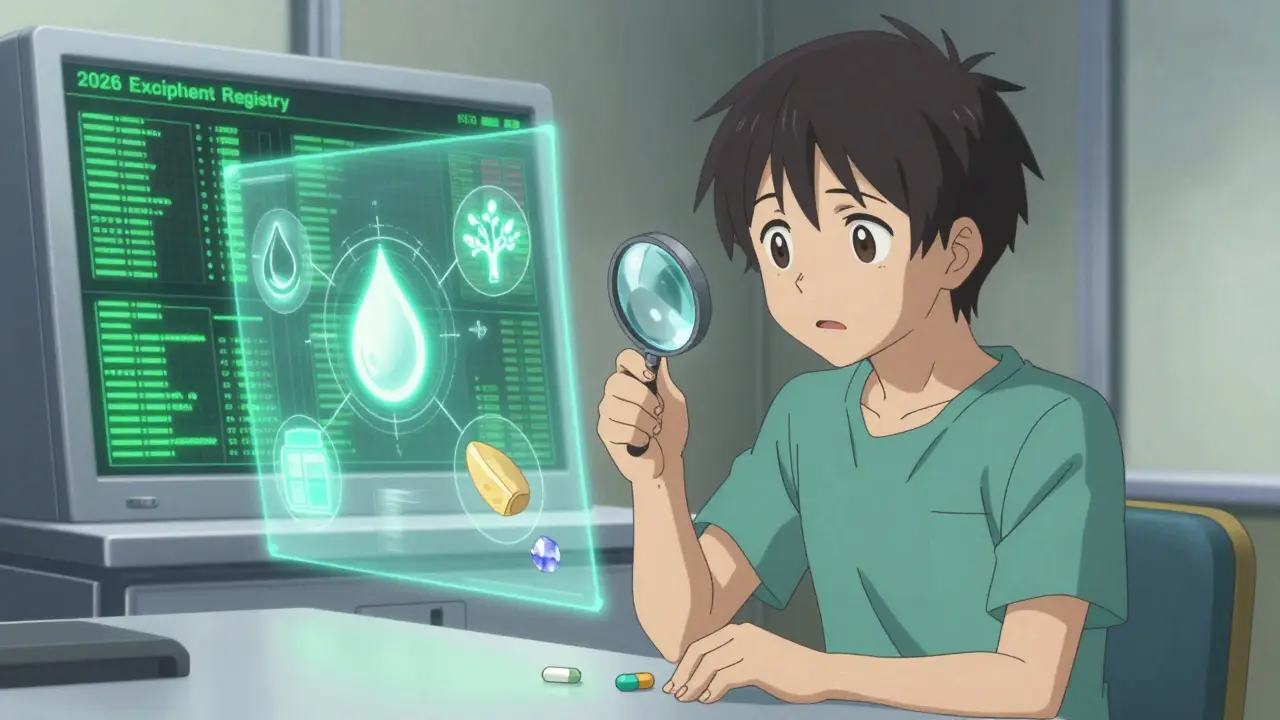
What’s Changing in 2026?
The FDA is starting to take excipient issues more seriously. In early 2024, they launched a pilot program to create a public database showing exactly which excipients are in every brand and generic drug. This will help patients with allergies or sensitivities make informed choices. Some generic manufacturers are already responding. A few now label their products as “lactose-free” or “dye-free,” especially for NTI drugs. By 2030, experts predict “clean excipient profile” will become a selling point - just like “organic” or “gluten-free” on food. Meanwhile, research continues. A March 2024 study found that 68% of side effects from generic switches could be predicted if doctors screened for known excipient intolerances before changing medications.Bottom Line: Generics Are Great - But Not Always the Same
For most people, generics work just as well as brand-name drugs. They’re safe, effective, and save money. But if you’ve noticed new side effects after switching - nausea, dizziness, fatigue, or worsening symptoms - don’t brush it off. It might not be your body rejecting the medicine. It could be the filler. Talk to your pharmacist. Ask your doctor to write “Do Not Substitute.” Keep track of changes. Your health isn’t just about the active ingredient - it’s about everything else in the pill, too.Can generic medications cause side effects that the brand-name version doesn’t?
Yes. While the active ingredient is identical, differences in excipients - such as lactose, dyes, or binders - can trigger allergic reactions, digestive upset, or altered drug absorption in sensitive individuals. These issues are rare but well-documented, especially with narrow therapeutic index drugs like levothyroxine, warfarin, or levodopa.
How do I know if my generic medication has different ingredients?
Check the package insert or ask your pharmacist for the full ingredient list. Brand-name drugs often have consistent formulations, but generics can vary by manufacturer. If your pill looks different (color, shape, imprint) or you’ve noticed new side effects after switching, it’s worth investigating the excipients.
Are all generic drugs the same?
No. While all generics must contain the same active ingredient and meet FDA bioequivalence standards, they can be made by different companies using different excipients. Two generics of the same drug may have different fillers, coatings, or binders - which can affect how quickly the drug dissolves or how your body reacts to it.
Should I avoid generics if I have allergies?
If you have known allergies to common excipients - like lactose, corn starch, or artificial dyes - you should be cautious. Ask your pharmacist to verify the excipient profile before filling a generic prescription. For high-risk medications, your doctor can write “Do Not Substitute” to ensure you get the brand or a specific generic.
What should I do if I think a generic is causing side effects?
Don’t stop taking the medication without consulting your doctor. Instead, contact your pharmacist to identify the manufacturer of the generic you received. Keep a symptom log, noting when the side effects started and what changed in your medication. Your doctor can request a return to the brand or a different generic formulation.
Can I request the brand-name drug even if it’s more expensive?
Yes. If your doctor believes the brand is medically necessary - due to excipient sensitivities, narrow therapeutic index, or prior adverse reactions - they can write “Dispense as Written” or “Do Not Substitute” on your prescription. Insurance may still cover it, especially if you provide documentation of prior issues with generics.




Susan Kwan
February 9, 2026 AT 08:40So let me get this straight - we’re telling people to trust a system that lets Big Pharma charge $150 for a pill, then lets some factory in India slap on a different filler and call it ‘equivalent’? I’ve been on levothyroxine for 12 years. Switched generics once. Felt like my brain got wrapped in saran wrap and left in the freezer. Took three months to convince my doctor to write ‘Do Not Substitute.’ Worth every penny of the $90/month extra. Don’t let them gaslight you into thinking your symptoms are ‘in your head.’ They’re in the lactose.
Random Guy
February 9, 2026 AT 14:56bro i switched to generic warfarin and woke up one morning with my arm looking like a crime scene. i thought i got mugged. turns out my blood was just… leakin. pharmacist said ‘it’s the same thing’ like i’m five. i’m now on brand. and i’m not sorry. also the generic looked like a glowstick had a baby with a tic tac. gross.
Tom Forwood
February 9, 2026 AT 18:36As someone who moved from Nigeria to the US and had to navigate this whole system - wow. In Lagos, we just got whatever was cheapest. Here, I found out my thyroid med had lactose in it and I’d been having bloating for years. I didn’t even know I was lactose intolerant until I switched back to brand. Now I ask my pharmacist for the pill’s ‘ingredient sheet’ like it’s a food label. It’s wild that this isn’t standard. Also - shoutout to the FDA pilot. Long overdue. We need this database. ASAP.
John Sonnenberg
February 11, 2026 AT 11:24Here’s the thing nobody says: the FDA doesn’t even test excipient interactions. Zero. Nada. They just say ‘bioequivalent’ - meaning, ‘we checked that it dissolves in a beaker at 37°C in 15 minutes.’ That’s it. They don’t care if you’re allergic to Red 40 or if your gut screams every time you swallow a tablet made with corn starch. And yet we’re supposed to be grateful for the savings? I’ll take my $150 pill and my peace of mind, thanks.
Joshua Smith
February 11, 2026 AT 13:53I’ve been on carbamazepine for epilepsy since I was 16. Switched generics once - had a seizure. Not a minor one. The kind where you wake up on the floor with your tongue bleeding. I didn’t even realize the pill looked different. Now I take a picture of every bottle before I take it. My neurologist says I’m ‘overcautious.’ But I’m alive. So I’ll keep being overcautious.
Jessica Klaar
February 12, 2026 AT 07:44My mom has Parkinson’s. She switched to generic levodopa and went from walking her dog daily to needing a cane. We didn’t connect it until we saw the pill was made by a different company. She went back to Sinemet. Her tremors vanished in 48 hours. I wish this was common knowledge. People think side effects = ‘your condition is getting worse.’ No. Sometimes it’s just the dye.
PAUL MCQUEEN
February 13, 2026 AT 04:21Why are we even having this conversation? The answer is simple: stop being lazy. If you’re sensitive to something, get the brand. If you can’t afford it, apply for patient assistance programs. Don’t blame the system. Blame yourself for not doing your homework. Also - lactose? In a pill? That’s like complaining about sugar in toothpaste. Grow up.
glenn mendoza
February 14, 2026 AT 04:53It is with profound respect for the integrity of pharmaceutical science and the dignity of patient autonomy that I must commend the author for this meticulously researched and profoundly necessary exposition. The ethical imperative to safeguard individual physiological integrity against the commodification of therapeutic equivalence cannot be overstated. The FDA's forthcoming database represents not merely a regulatory adjustment, but a moral reckoning - one that acknowledges the sanctity of the human body over the efficiency of the supply chain.
Randy Harkins
February 14, 2026 AT 19:35Thank you for this. I’ve been on cyclosporine since my transplant. Switched generics once. My kidney numbers went haywire. I cried. I didn’t know why. Then I checked the pill - different color, different imprint. I called my pharmacy. They didn’t even know the manufacturer changed. Now I only refill at one place. And I take a picture of the pill every time. It’s not paranoia. It’s survival.
Chima Ifeanyi
February 15, 2026 AT 09:41Let’s deconstruct this performative victimhood. Excipients are inert by definition. If your body is reacting to starch or magnesium stearate, you’re either hypochondriacal or nutritionally compromised. The bioequivalence threshold is 80-125% - that’s not a loophole, it’s a standard. Your anecdote is not data. Your fear is not a clinical trial. Stop weaponizing personal anecdotes to undermine public health economics. We can’t all get bespoke pills. Some of us have to live in the real world.
THANGAVEL PARASAKTHI
February 15, 2026 AT 23:20bro i never knew this! i was on generic warfarin and i thought i was just tired. now i check the pill every time. i even google the imprint. my pharmacist thinks i’m weird. i say: ‘better weird than dead.’ also, if you’re from india, we use different fillers here. sometimes it’s tapioca. sometimes it’s rice flour. never assume. ask.
Chelsea Deflyss
February 16, 2026 AT 13:09OMG I DID THIS. I switched to generic levothyroxine and gained 20lbs. I thought I was just ‘getting older.’ Then I read this. I went back. Lost it all in 3 weeks. My doctor said ‘it’s probably not the med.’ I said ‘you’re wrong.’ Now I print out the excipient list and tape it to my fridge. #woke
Scott Conner
February 17, 2026 AT 22:39Wait - so if I’m allergic to corn, and my generic uses corn starch, how do I know? Is there a list somewhere? Or do I have to call every pharmacy? This feels like a game of Russian roulette with my health. I just want to take my pill without a PhD in pharmaceutical chemistry.
Alex Ogle
February 19, 2026 AT 15:38I’ve been on levodopa for 18 years. I’ve switched generics six times. Each time, it’s been a different kind of hell. One time I couldn’t walk for three days. Another time I hallucinated my cat was talking to me in Spanish. I don’t even know what’s worse - the symptoms, or the silence from doctors who say ‘it’s all in your head.’ I keep a binder. Each pill. Each date. Each symptom. I’ve got 14 pages. I’ve got more data than most clinical trials. And still, no one listens. So I’ll keep documenting. Because if no one else will, I will.
Brandon Osborne
February 20, 2026 AT 08:49THIS IS WHY AMERICA IS BROKEN. YOU PEOPLE AREN’T EVEN TRYING. YOU LET CORPORATIONS ROB YOU, THEN YOU CRY WHEN THE FILLER MAKES YOU SICK. YOU THINK YOU’RE SMART FOR ASKING FOR BRAND? YOU’RE JUST ANOTHER SHEEP. YOU WANT TO LIVE? STOP BEING A VICTIM. BUY THE BRAND. PAY THE PRICE. OR STOP COMPLAINING. YOUR BODY ISN’T SPECIAL. THE SYSTEM ISN’T OUT TO GET YOU. YOU’RE JUST WEAK.