
When an alert goes off-whether it’s a security warning, a drug safety notice, or a system failure-you don’t have time to think. Your heart pounds. Your breath gets shallow. Your mind locks up. This isn’t weakness. It’s biology. The moment your brain detects a threat, the amygdala takes over. The part of your brain that handles logic, reasoning, and long-term planning-the prefrontal cortex-goes quiet. That’s why, in those first few seconds after an alert, you’re not thinking. You’re reacting. And reactions like running, shouting, or making rash choices often make things worse.
The good news? You can train your brain to respond differently. Not by ignoring the alert. Not by hoping it’ll go away. But by learning how to interrupt panic and return to clear thinking. This isn’t about being calm. It’s about being functional. And it’s possible-even if you’ve panicked before.
What Happens in Your Body During an Alert
When an alert triggers your stress response, your body shifts into survival mode. Your heart rate jumps from 70 to over 110 beats per minute. Your breathing speeds up to 20-30 breaths per minute (normal is 12-20). Blood rushes away from your brain and into your muscles. Your vision narrows. You stop noticing details. You fixate on one thing-the alert itself-and ignore everything else. This is called cognitive tunneling. It’s why people miss obvious clues during emergencies. They’re not dumb. They’re biologically overwhelmed.
Studies show that during these moments, your ability to evaluate options drops by up to 67%. You can’t weigh risks. You can’t read instructions. You can’t even remember what you were supposed to do. That’s not failure. It’s a neurological shutdown. And it’s why so many people make mistakes after alerts-they’re not thinking. They’re reacting.
The First Step: Stop the Physical Reaction
You can’t fix your thinking until you calm your body. The fastest way to do that? Use TIPP skills-four simple, physical techniques backed by clinical research.
- Temperature: Splash cold water (10-15°C) on your face. Hold it for 15-30 seconds. The shock triggers your body’s dive reflex, which instantly slows your heart rate. This isn’t magic. It’s biology. Your body responds to cold water by conserving energy-and that includes calming your nervous system.
- Intense Exercise: Do 30 seconds of jumping jacks, running in place, or even vigorous arm swings. This burns off the adrenaline flooding your system. You’re not trying to get fit. You’re trying to reset your nervous system.
- Paced Breathing: Try the 4-7-8 method: Breathe in for 4 seconds, hold for 7, then exhale slowly for 8. Repeat three times. This signals your brain: “We’re not in danger.” Studies show this drops heart rate from 110+ to 70-85 bpm in under 90 seconds.
- Paired Muscle Relaxation: Tense your fists for 5 seconds, then release. Do the same with your shoulders, then your jaw, then your feet. Each tension-and-release cycle tells your body: “It’s safe to relax.”
These aren’t suggestions. They’re biological overrides. Use one-or all-immediately after an alert. You’ll feel the difference within seconds.
Regain Control: The 5-4-3-2-1 Grounding Technique
Once your body calms down, your mind still races. You’re thinking about worst-case scenarios. You’re replaying the alert. You’re afraid you missed something. That’s when you need grounding.
The 5-4-3-2-1 method forces your brain to switch from panic mode to present-moment awareness. It works because your brain can’t focus on fear and sensory input at the same time.
- Look around. Name 5 things you can see. The monitor. The coffee cup. The window. The chair. The pen.
- Reach out. Touch 4 things. The keyboard. Your shirt. The desk. Your phone.
- List 3 sounds you hear. The fan. Distant traffic. Your own breath.
- Notice 2 smells. Coffee. Mint gum. Clean air.
- Find 1 thing you can taste. The leftover toothpaste. The water you just drank.
Do this out loud if you can. Say each item as you notice it. This takes 60 seconds. Afterward, you’ll feel less foggy. More present. More in control.

Make a Better Decision: Use a Simple Framework
Now that you’re calm and grounded, it’s time to act. But not blindly. Use a decision filter that works under stress.
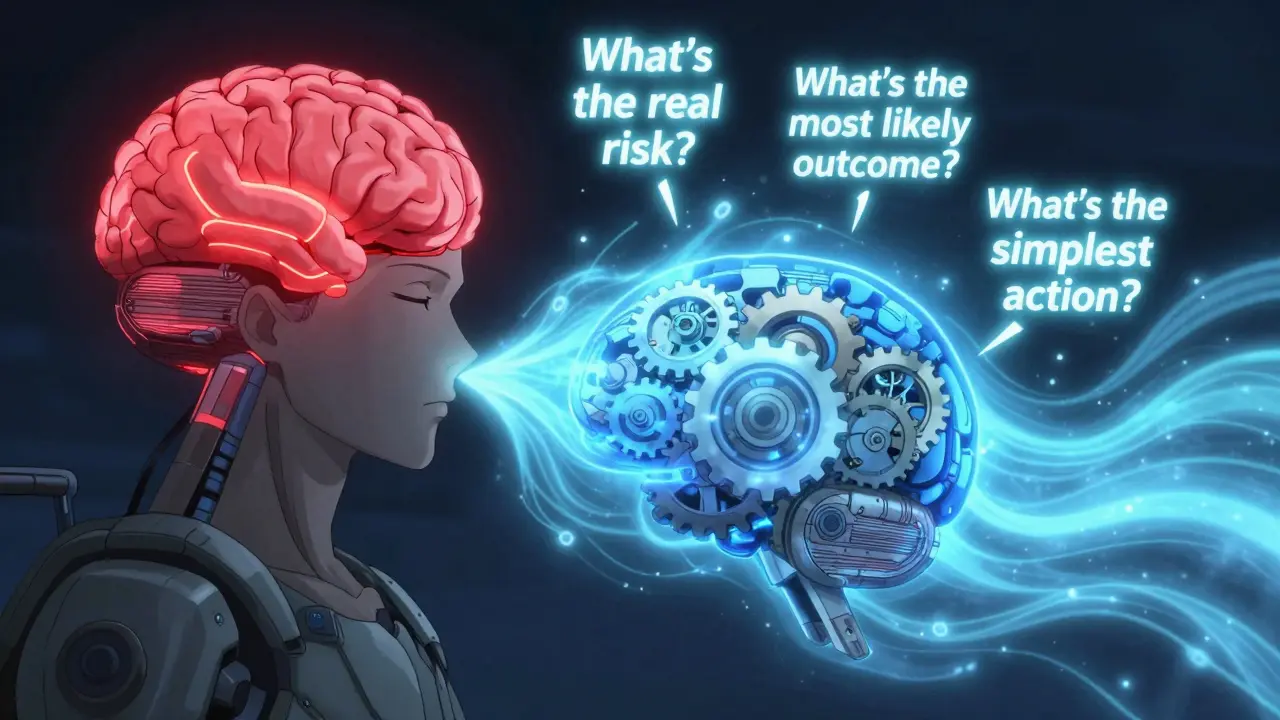
Ask yourself three questions:
- What’s the real risk? Is this alert about a life-threatening reaction? Or a minor side effect? Check the source. Look at the alert code. Don’t assume. Verify.
- What’s the most likely outcome? Panic makes you imagine the worst. Reality is usually less dramatic. Most alerts are false positives or low-risk events. Look at the data. Not your fear.
- What’s the simplest action? Don’t overcomplicate. If the alert says “monitor symptoms,” then monitor. Don’t call three people. Don’t cancel plans. Don’t panic-buy meds. Just do the next small thing.
These questions don’t require deep analysis. They just need you to pause. And that pause? That’s the difference between a good decision and a regrettable one.
Preparation Is the Key to Calm
The biggest mistake people make? Waiting until the alert happens to learn what to do. That’s like learning to swim during a tsunami.
Real control comes from practice. Here’s how to build it:
- Practice daily: Spend 10 minutes a day doing paced breathing or the 5-4-3-2-1 technique. Not when you’re stressed. When you’re calm. This rewires your brain over time. Studies show that after 30 days of daily practice, your brain responds 83% faster to real alerts.
- Build a kit: Keep a small box near your workspace with: a textured stone, mint gum, a printed copy of the 4-7-8 breathing guide, and a simple flowchart: “Alert → Breathe → Ground → Verify → Act.” Touching physical objects during stress helps anchor you.
- Track your triggers: Keep a short journal. Write down: What alert happened? How did you feel? What helped? Over time, you’ll notice patterns. You’ll learn what works for you.
- Limit stress boosters: Caffeine over 200mg a day? Poor sleep? Skipping exercise? These raise your baseline anxiety. Reducing them cuts your overall stress by 41%, according to clinical trials.
Real Stories, Real Results
A nurse in Cape Town got a drug alert during a night shift. Instead of calling the pharmacy immediately, she used the 4-7-8 breath. Then she did 5-4-3-2-1. She checked the alert code. It was a false alarm. She didn’t disrupt the unit. She didn’t waste time. She stayed calm and kept caring for patients.
A cybersecurity analyst in Johannesburg got a system breach alert at 2 a.m. His heart raced. He stood up, did 30 seconds of jumping jacks, then splashed cold water on his face. He opened the alert report. It was a glitch. He reset the system. No panic. No overtime. No errors.
These aren’t lucky breaks. They’re trained responses. And they’re repeatable.
The Bigger Picture
This isn’t just about drugs or alerts. It’s about living in a world that never stops warning you. Phones buzz. Systems ping. News flashes. Alerts are everywhere. And if you react to every one with panic, you’ll burn out.
The future belongs to people who can stay clear-headed under pressure. That’s why hospitals now train staff. Why financial firms require panic management courses. Why the EU’s Digital Operational Resilience Act now demands it. It’s not about being fearless. It’s about being capable.
You don’t need to be perfect. You just need to be prepared. And you can start today-with one breath. One pause. One question: What’s the next small thing I need to do?
What should I do immediately after receiving an alert?
Pause. Don’t act. Use a physical grounding technique like TIPP (Temperature, Intense Exercise, Paced Breathing, Paired Muscle Relaxation) to calm your body. This takes 30-90 seconds. Once your heart rate drops and your breathing slows, your brain will regain control. Only then should you check the alert source and decide on action.
Can breathing really help me think better during an alert?
Yes. Controlled breathing activates the vagus nerve, which tells your body you’re safe. This lowers your heart rate from 110-130 bpm to 70-85 bpm in under 90 seconds. Studies show this restores 90% of your prefrontal cortex function-the part of your brain needed for clear thinking. The 4-7-8 breathing method is proven to reduce panic-induced decision errors by over 50%.
Why do I forget what to do when I’m panicking?
When panic hits, your brain shuts down non-essential functions-including memory retrieval. That’s why you can’t recall instructions. The solution isn’t memorizing more steps. It’s practicing the techniques when you’re calm. Regular practice builds automatic responses. After 30 days of daily 10-minute drills, your brain will trigger the right response without thinking.
Is this only for healthcare workers?
No. Anyone who receives alerts-whether it’s a drug safety notice, a cybersecurity warning, a financial system alert, or even a home security notification-can benefit. The brain’s panic response is the same regardless of context. These techniques work for nurses, traders, IT staff, parents, and students alike.
How long does it take to see results?
You’ll feel calmer after the first use of TIPP or 5-4-3-2-1. But real change takes practice. Most people notice a major improvement in response time and decision quality after 2-3 weeks of daily 10-minute sessions. After 30 days, your brain rewires itself to respond automatically-reducing panic duration by over 60%.
Should I rely on apps or wearables to manage panic?
Tech can help, but it shouldn’t replace skills. Wearables that detect elevated heart rate and trigger breathing prompts are useful. But if your device dies, or the app crashes, you’re stuck. The most reliable tools are the ones you carry inside you: your breath, your senses, your body. Use tech as a backup-not your primary defense.
Can these techniques help with chronic anxiety too?
Yes. These methods are rooted in Cognitive Behavioral Therapy (CBT) and Dialectical Behavior Therapy (DBT), which are gold-standard treatments for anxiety disorders. Practicing them daily doesn’t just help with alerts-it reduces overall anxiety, improves sleep, and builds emotional resilience. The same skills that help you respond to a drug alert also help you handle traffic, arguments, or work pressure.
Alerts aren’t going away. But your response to them can change. Start small. Breathe. Ground. Verify. Act. Repeat. Over time, you won’t just survive alerts-you’ll handle them better than most.




Kenneth Jones
March 23, 2026 AT 15:14Grace Kusta Nasralla
March 24, 2026 AT 23:59Korn Deno
March 26, 2026 AT 22:00Aaron Sims
March 28, 2026 AT 09:35Stephen Alabi
March 30, 2026 AT 10:07Agbogla Bischof
March 30, 2026 AT 16:45Pat Fur
March 31, 2026 AT 13:10Anil Arekar
April 2, 2026 AT 00:54Elaine Parra
April 3, 2026 AT 12:01Natasha Rodríguez Lara
April 3, 2026 AT 17:02Amber Gray
April 4, 2026 AT 23:58Danielle Arnold
April 5, 2026 AT 18:34James Moreau
April 6, 2026 AT 23:03