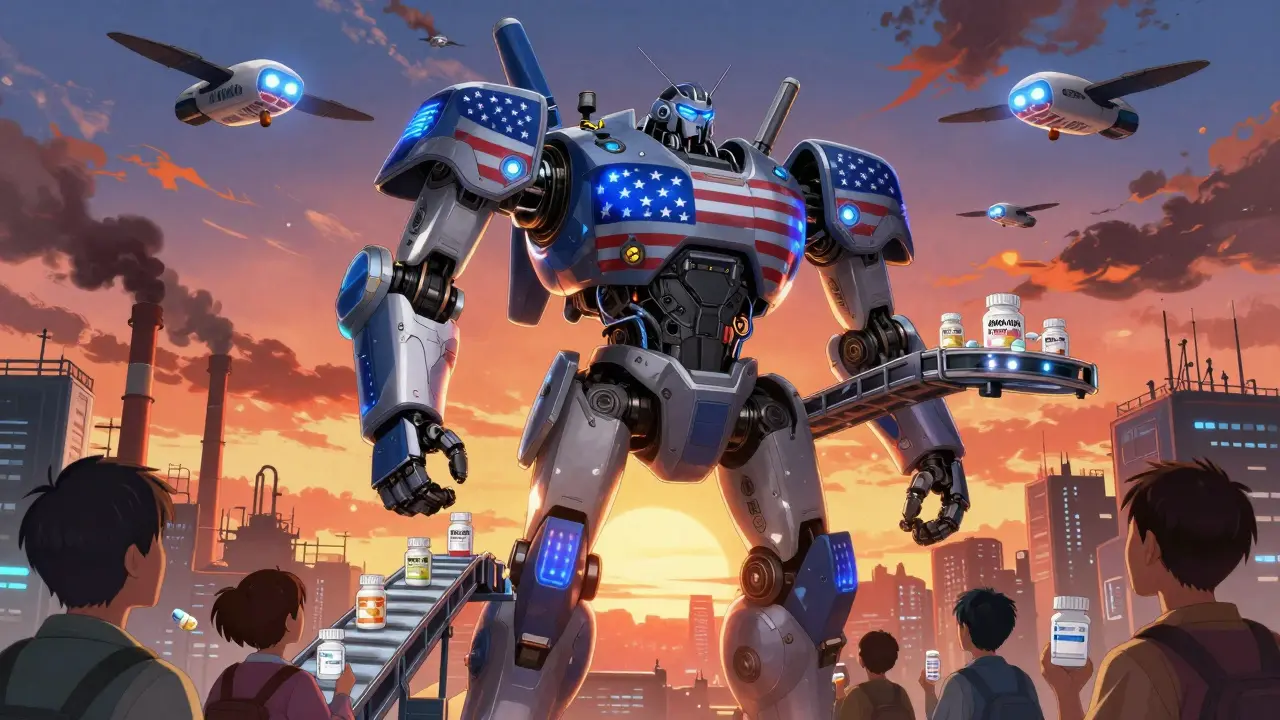
The U.S. generic drug market is changing faster than most people realize. If you’ve noticed some medications becoming more available-or more expensive-it’s not random. Between 2023 and 2025, the FDA overhauled how generic drugs get approved, and the impact is already being felt on pharmacy shelves, hospital inventories, and drug prices. This isn’t just bureaucracy. It’s a strategic shift aimed at fixing broken supply chains, reducing drug shortages, and bringing manufacturing back to the U.S.
Why the FDA Changed the Rules
For years, the U.S. relied heavily on foreign factories to make the active ingredients in generic drugs. By 2025, only 9% of active pharmaceutical ingredient (API) manufacturers were based in the U.S. Over 44% were in India, and 22% in China. That meant when a factory in India had an inspection issue, or a shipping port shut down, American patients could face shortages of life-saving drugs like insulin, antibiotics, or heart medications. The pandemic exposed how fragile this system was. In 2023, the National Defense Authorization Act forced the Department of Health and Human Services to act. That led to Executive Order 14080, which told the FDA: fix this. The result? The ANDA Prioritization Pilot Program, launched on October 3, 2025. This isn’t just a tweak. It’s a complete rewrite of how generic drug applications are reviewed. The FDA now gives faster approval to companies that make their drugs in the U.S.-from the active ingredient all the way to the final pill or injection.How the ANDA Prioritization Pilot Works
The pilot program divides applications into four tiers based on how much of the manufacturing happens in the U.S. The highest tier-Tier 1-requires 100% U.S. manufacturing and testing. That includes:- Active pharmaceutical ingredients (API) made in the U.S.
- Bioequivalence studies done in FDA-registered U.S. labs
- Final packaging and quality control in American facilities
What’s Been Approved So Far
Since the pilot began, the FDA has approved nine first generic drugs through mid-2025. These include:- Ivermectin Tablet (Application #215922)
- Nimodipine Solution (Application #213409)
- Azilsartan Medoxomil and Chlorthalidone Tablet (Application #217490)
The Cost of Going Domestic
There’s a catch. Making drugs in the U.S. isn’t cheap. Setting up a medium-scale generic manufacturing facility costs between $120 million and $180 million. For smaller companies, that’s impossible. Even for those who already have facilities, switching to U.S.-based API suppliers adds $1.2 million to $1.8 million per drug application. That’s because many U.S. suppliers don’t yet produce complex molecules. Manufacturers report spending an average of 217 hours per application just gathering documentation to prove their ingredients are truly made in America. A survey of 127 generic manufacturers by the Association for Accessible Medicines found:- 54% started expanding U.S. facilities
- 31% delayed bringing new generics to market
- 79% said immediate costs were a major burden
Who Benefits-and Who Pays
The biggest winners are patients. Fewer shortages mean doctors can prescribe without scrambling. Lower prices mean fewer people skipping doses because they can’t afford their meds. Manufacturers who make the switch see faster time-to-market. Pilot-approved drugs reach pharmacies in 11.2 months on average-4.4 months faster than traditional applications. Approval success rates jump to 92% for fully domestic supply chains, compared to 68% for those using foreign ingredients. But there’s a trade-off. The Medicare Payment Advisory Commission (MedPAC) estimates domestic manufacturing could raise generic drug prices by 12-18% in the short term. That’s because U.S. labor, compliance, and facility costs are higher. Experts predict those costs will drop after 3-5 years as more U.S. factories come online and economies of scale kick in. The Congressional Budget Office projects the program will save $4.2 billion a year by 2030 by cutting emergency drug purchases and hospital costs from shortages. But it’ll cost $1.8 billion to set up through 2026.
Challenges and Criticisms
Not everyone is on board. Dr. Rachel Sherman, former FDA deputy commissioner, warned the program could fragment the global pharmaceutical system that has kept drug prices low for decades. The European Generic Medicines Association even filed a formal inquiry in July 2025, questioning whether the U.S. rules violate international trade agreements. Some worry about safety. The Alliance for Pharmacy Compounding cautioned that rushing domestic production might compromise quality. But Dr. Aaron Kesselheim’s March 2025 study in JAMA Internal Medicine found no difference in therapeutic outcomes between pilot-approved generics and traditionally approved ones. The efficacy stayed within a 95% confidence interval of 0.97-1.03. The biggest technical hurdles? API quality consistency (67% of deficiency letters), bioequivalence testing for complex drugs like transdermal patches (43%), and stability testing (38%). The FDA has responded by creating a dedicated support team that fixes 89% of these issues within 30 days.What’s Next?
Starting in January 2026, the pilot program will expand to include complex generics: nasal sprays, eye drops, and transdermal patches. Guidance for these products is expected in November 2025. The FDA is also testing AI tools to speed up document review. Early results suggest a 25% reduction in review time for pilot applications. By 2028, the FDA projects U.S.-based API manufacturing will rise from 9% to 23%. That’s a massive shift. It means more jobs, more resilience, and fewer supply chain nightmares.What This Means for You
If you’re a patient: expect fewer drug shortages. Your prescriptions for common generics like metformin or lisinopril will be more reliable. Prices may rise slightly at first, but long-term, competition from more first generics will keep them low. If you’re a pharmacist or hospital administrator: inventory planning will get easier. You won’t be calling suppliers every week wondering if your stock will arrive. If you work in pharma: the rules have changed. If you’re making generics, you need to rethink your supply chain. The days of outsourcing everything to Asia are ending. The FDA now rewards U.S. production-and penalizes delays from overseas. The bottom line: the FDA isn’t just approving more drugs. It’s reshaping how they’re made. This isn’t a temporary fix. It’s the new standard-and it’s here to stay.What is the ANDA Prioritization Pilot Program?
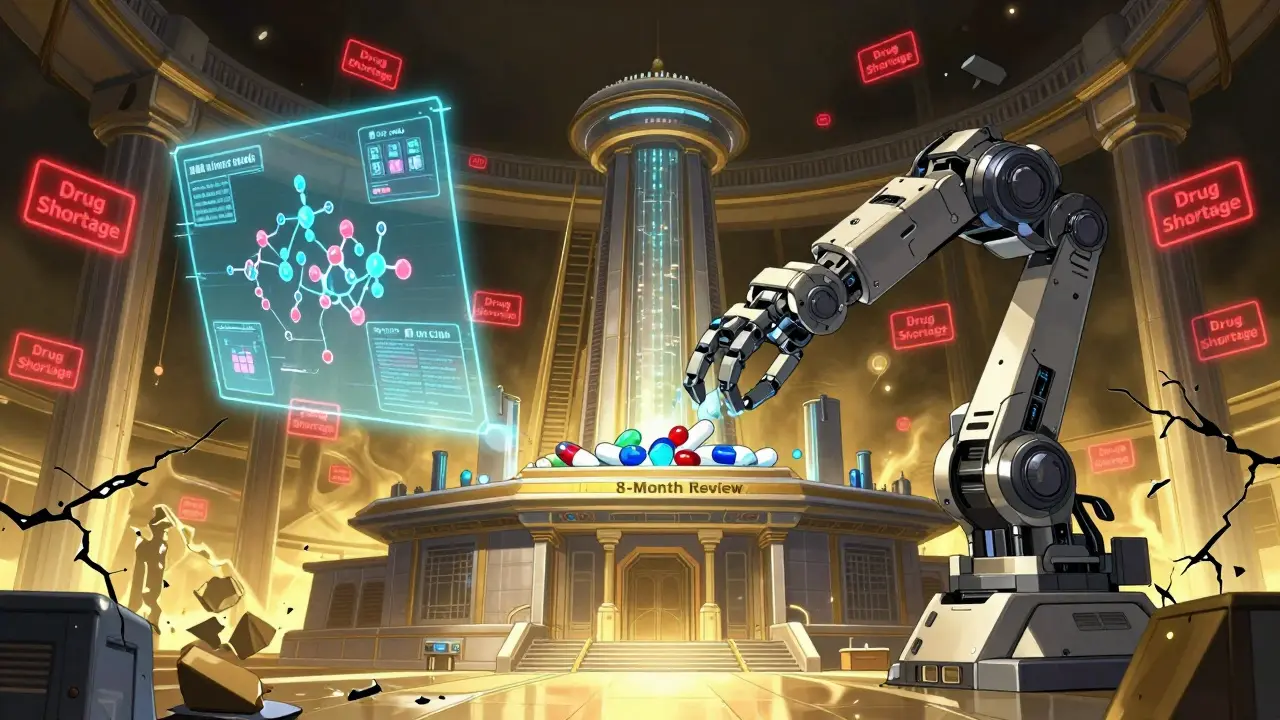
The ANDA Prioritization Pilot Program is an FDA initiative launched in October 2025 that gives faster approval to generic drug applications where the active ingredient, testing, and final manufacturing all happen in the United States. It targets drugs on the FDA’s Drug Shortage List and aims to reduce review times from 12-15 months to as little as 8 months for fully domestic applications.
Which drugs are prioritized under the pilot?
Drugs on the FDA’s Drug Shortage List (147 as of September 2025) and those identified as essential by the Department of Health and Human Services are prioritized. These include common medications like insulin, levothyroxine, epinephrine, metformin, and antibiotics. The program does not yet cover complex generics like transdermal patches or nasal sprays, but those will be added in January 2026.
How has the pilot affected drug prices?
First generic approvals under the pilot have led to average price drops of 78.3% within six months of launch compared to brand-name versions. However, because domestic manufacturing is more expensive, some experts predict short-term price increases of 12-18% for generics made entirely in the U.S. These are expected to normalize after 3-5 years as production scales up.
Why are some manufacturers struggling to join the pilot?
The biggest barriers are cost and complexity. Building or converting a U.S. manufacturing facility costs $120-180 million. Sourcing active ingredients domestically adds $1.2-1.8 million per drug application. Many small companies lack the capital. Others can’t find U.S. suppliers for complex molecules. Documentation requirements also add 217 hours per application on average.
Are U.S.-made generics safer or more effective?
Yes, according to clinical data. A March 2025 study in JAMA Internal Medicine found no difference in therapeutic effectiveness between generics approved under the pilot and those approved through traditional pathways. The efficacy stayed within a 95% confidence interval of 0.97-1.03. The FDA’s main goal is supply chain security, not clinical superiority-but safety standards remain unchanged.



jaspreet sandhu
January 1, 2026 AT 15:34USA thinks it can do everything alone now? Funny. India makes 44% of the world’s generic APIs and nobody dies. You think your $180 million factory is going to save anyone? The world runs on cheap medicine. You’re not protecting patients-you’re just making them pay more.
Alex Warden
January 2, 2026 AT 11:19Finally. It’s about time we stopped outsourcing our health to foreign labs that can’t even spell ‘sterile.’ If you can’t make insulin in America, you don’t deserve to breathe it. This isn’t nationalism-it’s national survival. And if you think prices are high now, wait till the next Chinese port shuts down.
LIZETH DE PACHECO
January 2, 2026 AT 20:52I’ve been a pharmacist for 18 years and I’ve seen too many patients skip doses because their meds weren’t in stock. This pilot? It’s a godsend. I’m not saying it’s perfect-but for the first time in a decade, I feel like we’re actually building something that lasts. Thank you, FDA.
Phoebe McKenzie
January 3, 2026 AT 10:06They’re lying. This isn’t about safety. It’s about control. The FDA’s been in bed with Big Pharma since day one. Now they’re using ‘national security’ to force small manufacturers out so only the big players survive. You think this helps patients? It helps stock prices. Watch.
gerard najera
January 3, 2026 AT 15:19Supply chain resilience > global cost arbitrage.
Stephen Gikuma
January 5, 2026 AT 05:14Did you know the WHO gets funding from the Gates Foundation? And Gates owns shares in Pfizer? This pilot is a distraction. They want you to think it’s about medicine-but it’s about monopolizing the supply chain. Watch the prices rise. Then watch the ‘emergency’ vaccines come out next year. Coincidence? I think not.
Bobby Collins
January 5, 2026 AT 18:15ok but like… what if the FDA just… trusted other countries? like why does everything have to be ‘made in usa’? i just want my metformin to not cost $300
Layla Anna
January 5, 2026 AT 19:07my grandma takes levothyroxine and she’s been fine for 12 years… i just hope this doesn’t make her pay more 😔 i get wanting to make stuff here but… can we not break the system that works? 🤔
Heather Josey
January 6, 2026 AT 12:14The data speaks for itself: faster approvals, fewer shortages, higher success rates. Yes, costs are higher now-but this is an investment, not an expense. The $4.2 billion in annual savings by 2030 will far outweigh the $1.8 billion upfront. This is smart policy, not politics.
Donna Peplinskie
January 7, 2026 AT 09:09It’s so refreshing to see a policy that actually thinks long-term… and includes small manufacturers in the conversation. I know it’s hard for them-but maybe the government should offer grants? Or tax incentives? We can do this without leaving anyone behind. Let’s build this together, not on top of them.
Olukayode Oguntulu
January 9, 2026 AT 00:40Ah yes, the grand return to American exceptionalism. A beautiful allegory for the collapse of global cooperation. You think you’re rebuilding supply chains, but you’re merely constructing a new kind of economic fortress-where the moat is filled with inflated drug prices and the drawbridge is controlled by venture capitalists who bought your local pharmacy. The irony? You’re making medicine less accessible in the name of accessibility.
Lee M
January 10, 2026 AT 01:37You can’t fix a broken system by just moving the pieces around. If you want domestic manufacturing, fund the R&D for new API synthesis. Don’t just slap a ‘Made in USA’ sticker on old processes. This is theater, not policy.
Kristen Russell
January 12, 2026 AT 00:48This is the kind of change we need-steady, smart, and patient. The short-term costs? Real. But the long-term wins? Life-saving. Let’s keep pushing forward.