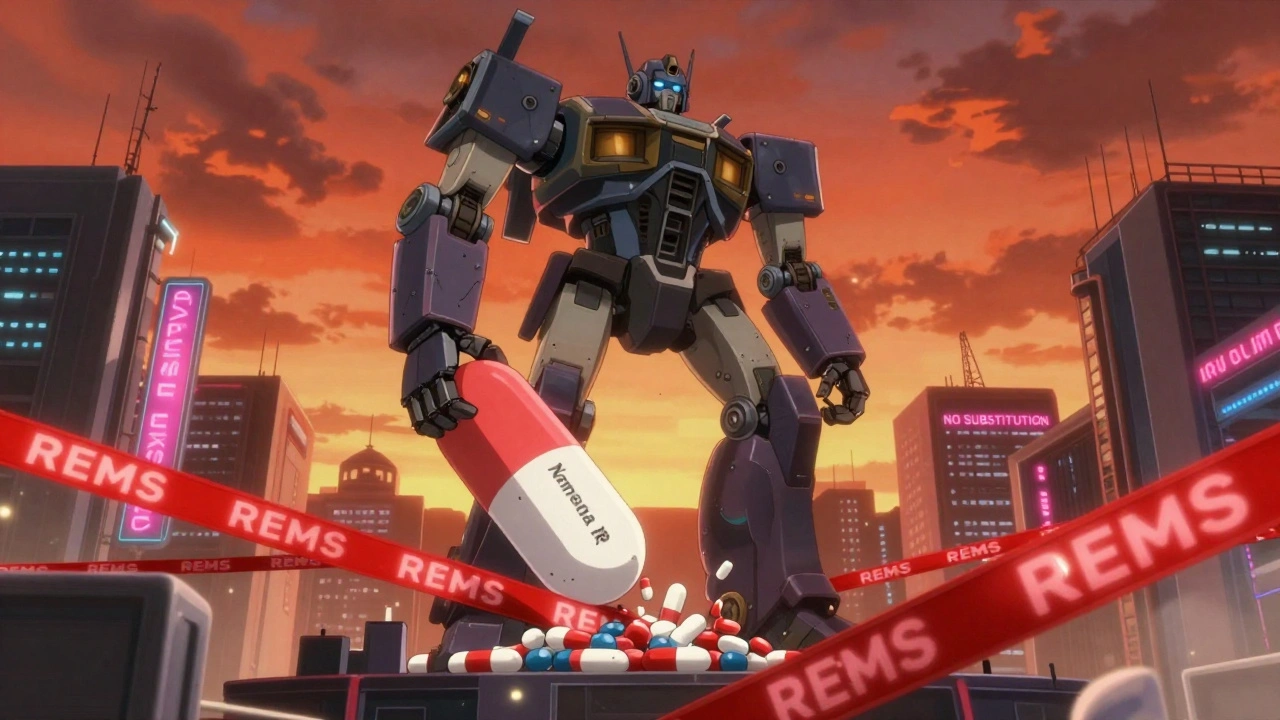
When you fill a prescription for a brand-name drug, you might assume the pharmacist will automatically give you the cheaper generic version-especially if your state law allows it. But what if the drug company made sure that version no longer exists?
How Generic Substitution Is Supposed to Work
In most U.S. states, pharmacists are allowed-or even required-to swap a brand-name drug for a generic version if it’s bioequivalent. That means the generic has the same active ingredient, works the same way, and meets the same safety standards. This system was designed to save money. When a patent expires, generics typically take over 80-90% of the market within months. Prices drop by 80-95%. Patients save billions. The system works. But in recent years, brand-name drugmakers have found ways to break it.Product Hopping: The Legal Loophole
The most common tactic is called product hopping. It’s simple in theory: when a drug’s patent is about to expire, the company pulls the original version off the market and replaces it with a slightly modified version-like an extended-release pill, a new coating, or a different delivery method. The new version gets a new patent. The old one disappears. Why does this matter? Because state substitution laws only apply to the original drug. If the original is gone, pharmacists can’t substitute the generic. Patients are forced to switch to the new version-even if it costs ten times more. Take Namenda, a drug for Alzheimer’s. In 2014, Actavis withdrew the original immediate-release version and replaced it with Namenda XR, an extended-release tablet. Thirty days before generics could enter the market, the old version vanished. Patients couldn’t refill their original prescriptions. Pharmacists couldn’t substitute. Generics were locked out. The result? The price stayed high for years. The Second Circuit Court of Appeals ruled in 2016 that this wasn’t innovation-it was anticompetitive. The court said Actavis didn’t just introduce a new product. It destroyed the market for the old one to kill competition before it even started.Why Courts Are Split
Not all courts see it this way. In 2009, AstraZeneca switched patients from Prilosec to Nexium, a similar heartburn drug. But Prilosec stayed on the market. The court dismissed the antitrust claim, saying offering a new version was just competition. The difference? Availability. If the original drug is still sold, courts say consumers have a choice. If it’s pulled, they don’t. That’s why the Namenda case succeeded and the Nexium case didn’t. Another example is Suboxone, a drug for opioid addiction. Reckitt Benckiser pulled the tablet form and pushed a film version, claiming the tablets were unsafe. They even sent letters to doctors warning about the tablets. The FTC found this was a scare tactic. The tablets weren’t dangerous-they were just cheaper. The court agreed. Reckitt settled for $1.4 billion in 2020.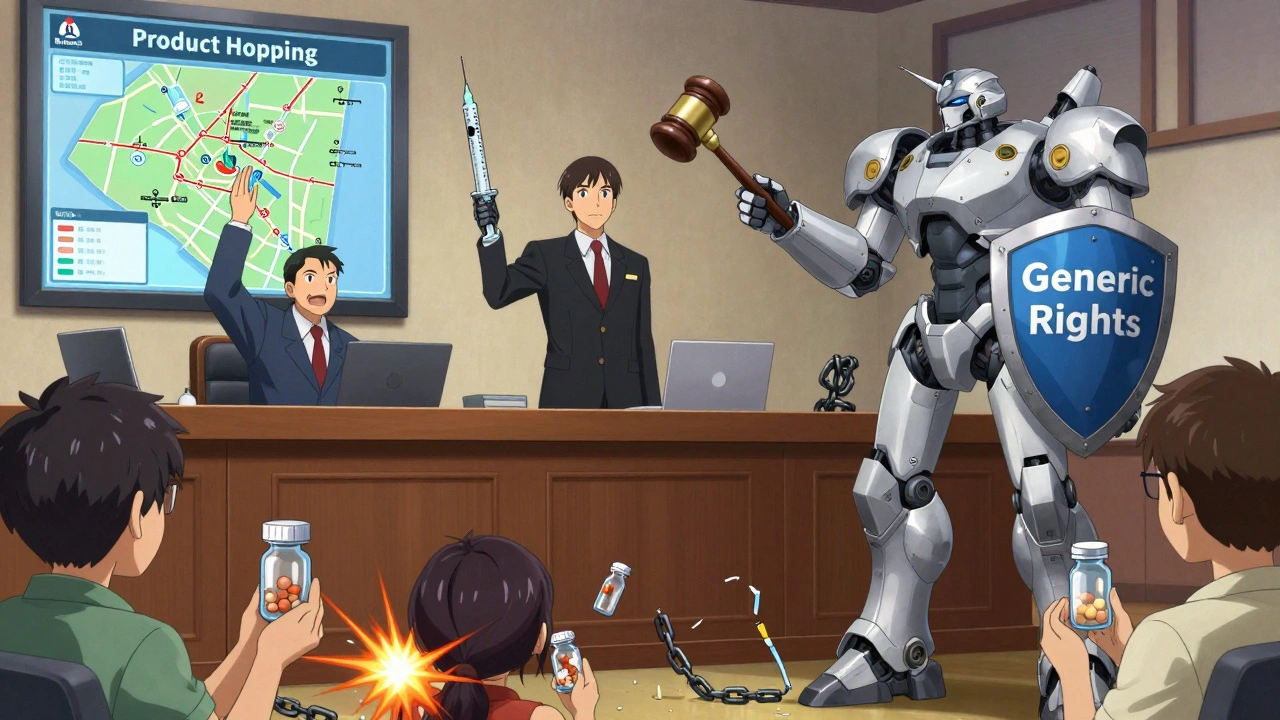
The REMS Trap: Blocking Generic Samples
Even if a generic company wants to enter the market, they need samples of the brand-name drug to prove their version works the same. That’s required by the FDA. Here’s the catch: brand-name companies control access to those samples. They use FDA-mandated safety programs called Risk Evaluation and Mitigation Strategies (REMS) to block access. They claim it’s for safety. But studies show more than 100 generic manufacturers have been denied samples. A 2017 study found that when REMS are abused, it costs consumers over $5 billion a year in delayed generic entry. The FTC calls this a textbook case of monopolization. Why? Because the conduct makes no economic sense unless it’s meant to hurt competitors.Who’s Winning? Who’s Losing?
The winners? Big Pharma. Between 2005 and 2020, the average price of brand-name drugs rose over 300%. Revlimid, a cancer drug, jumped from $6,000 to $24,000 per month. Humira, Keytruda, and Revlimid alone cost U.S. payers an estimated $167 billion more than they would have in Europe, where generic substitution is faster and harder to block. The losers? Patients. Medicare. Medicaid. Employers. Taxpayers. People who can’t afford their meds. One study showed that when product hopping works, generic market share drops from 80% to under 20%.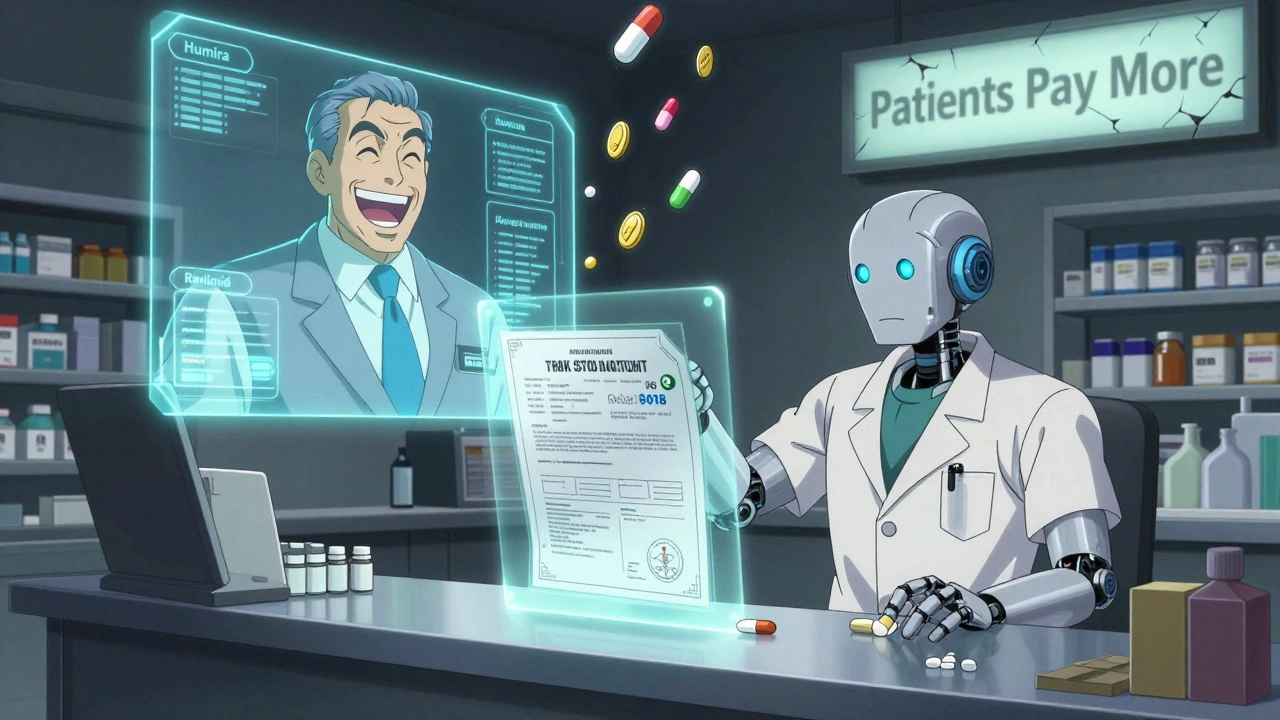
Enforcement Is Starting to Catch Up
The FTC has been fighting back. After its 2022 report on product hopping, the agency launched a wave of investigations. In the Namenda case, they got a court order forcing Actavis to keep selling the old version for 30 days after generics entered. In Suboxone, they forced Reckitt to pay billions in settlements. The Department of Justice has gone further. In 2023, Teva paid a $225 million criminal fine for price-fixing with other generic makers. Glenmark paid $30 million. These aren’t just civil cases-they’re criminal. The message is clear: manipulating the system won’t be tolerated. State attorneys general are also stepping in. New York sued Actavis in 2014 and won an injunction. California, Illinois, and others have followed.What’s Next?
The legal landscape is still messy. Some judges still see product hopping as innovation. Others see it as fraud. That inconsistency is why Congress is starting to act. In 2023, the House Appropriations Committee directed the FTC to propose new rules to close the loophole. Experts are pushing for three fixes:- Make it illegal to withdraw a drug solely to block generic substitution.
- Require brand companies to provide samples to generics without delay or restriction.
- Let pharmacists substitute generics even if the original drug is discontinued-as long as the generic is bioequivalent.
Why This Matters to You
If you or someone you know takes a chronic medication-diabetes, high blood pressure, depression, arthritis-you’re paying for this game. Every time a drug company delays a generic, you pay more. Insurance premiums go up. Government programs get stretched thinner. Pharmacies can’t help you save money. This isn’t about innovation. It’s about profit. And it’s happening right now, in pharmacies across the country. The fix isn’t complicated. Stop letting drugmakers pull the rug out from under substitution laws. Let generics do what they’re meant to do: bring down prices and save lives.What is product hopping in the pharmaceutical industry?
Product hopping is when a drug company withdraws an older version of a brand-name drug just before its patent expires and replaces it with a slightly modified version-like a new pill coating or extended-release formula. The goal is to block pharmacists from substituting cheaper generics, since substitution laws only apply to the original drug. This delays generic entry and keeps prices high.
Is it legal for a drug company to pull a medication off the market?
Yes, companies can legally discontinue a drug for business reasons. But if they do it specifically to block generic competition-like withdrawing the only version that can be substituted under state law-it may violate antitrust laws. Courts have ruled this way in cases like New York v. Actavis, where Namenda IR was pulled to stop generics.
How do REMS programs block generic drugs?
REMS are FDA safety programs meant to manage drug risks. But brand-name companies use them to deny generic manufacturers access to the samples they need to prove their version is safe and effective. Without samples, generics can’t get FDA approval. Over 100 generic firms have reported being blocked this way, costing consumers more than $5 billion a year in delayed competition.
Why don’t pharmacists just substitute generics anyway?
State substitution laws only allow pharmacists to swap a generic for the exact brand-name drug that was prescribed. If that drug is no longer available, the pharmacist can’t substitute-even if the generic exists. That’s why product hopping works: by removing the original drug, the company removes the legal basis for substitution.
What’s being done to stop these practices?
The FTC and DOJ have launched investigations and won major settlements, like the $1.4 billion deal with Reckitt over Suboxone. The FTC’s 2022 report pushed for legislative changes, and several states are now considering laws that let pharmacists substitute generics even if the brand drug is discontinued. Congress is also reviewing the issue, with hearings in 2023 targeting REMS abuse and product hopping.
How much money do these tactics cost consumers?
Experts estimate delayed generic entry through product hopping and REMS abuse costs U.S. patients and payers over $167 billion in just three drugs-Humira, Keytruda, and Revlimid-compared to what they’d pay in Europe. Revlimid’s price rose over 300% in 20 years. When product hopping works, generic market share drops from 80% to as low as 10-20%.




Clare Fox
December 6, 2025 AT 19:29so like... if the original drug disappears, the pharmacist can't give you the generic? that's wild. like, who decided that? it's not like the generic is different, it's literally the same chemical. just cheaper. why does the law care about the brand name at all?
Katie O'Connell
December 7, 2025 AT 16:53It is an egregious distortion of market dynamics when corporate entities exploit regulatory ambiguities to circumvent the intended function of statutory substitution protocols. The erosion of competitive equilibrium in pharmaceutical markets constitutes a systemic failure of antitrust enforcement, wherein profit maximization is prioritized over public health imperatives.
Akash Takyar
December 7, 2025 AT 23:28This is a very important issue. Many people suffer because they can't afford their medicine. Companies should not be allowed to use tricks to keep prices high. The government must act to protect patients. I hope more people speak up about this.
Arjun Deva
December 7, 2025 AT 23:53Wait... so this is all part of the New World Order? Big Pharma, the FDA, the FTC-they're all in cahoots! They want you dependent on overpriced drugs so they can control the population! Remember when they took away the original Namenda? That wasn't business-it was a mind-control experiment! They're hiding the truth behind 'REMS' and 'bioequivalence'-it's all smoke and mirrors!
Inna Borovik
December 8, 2025 AT 22:17Let’s be real-this isn’t about competition. It’s about greed wrapped in legalese. The fact that courts are split means the system is broken, not that the arguments are nuanced. Product hopping isn’t innovation-it’s fraud dressed up as R&D. And REMS abuse? That’s not safety-it’s extortion. The $5B/year cost? That’s not a statistic-it’s people skipping doses.
Jackie Petersen
December 9, 2025 AT 20:02Why do we even let foreigners make generics? They don’t care about our safety standards. This is why America’s healthcare is collapsing-because we let cheap imports undermine our drug companies. If you want safe medicine, you pay for American-made. End of story.
Annie Gardiner
December 9, 2025 AT 22:50But what if the new version is actually better? Like, what if the extended-release version reduces side effects? Isn’t that what innovation is supposed to be? Maybe people just don’t want to change because they’re lazy. Also, I heard generics are sometimes made in sewage plants now. Is that true? 🤔
Kenny Pakade
December 11, 2025 AT 21:49Big Pharma is a socialist plot to destroy American freedom. They want you on pills so you don’t have the energy to protest. The government lets them do this because they’re owned by the same people who run the Fed. You think this is about drugs? Nah. It’s about control. Wake up.
Nava Jothy
December 13, 2025 AT 07:32Oh my god. I just realized-I’ve been paying $400 for my antidepressant for years. And now I find out it's because some corporation pulled the old version? I'm not just angry-I'm heartbroken. 😭 This is why I don't trust anyone. Not even my pharmacist. Who even wrote these laws? Someone who owns stock in Pfizer? 🤡
Myles White
December 14, 2025 AT 10:13It's important to recognize that the current framework, while flawed, was designed with the best intentions-to ensure safety and efficacy through rigorous regulatory processes. However, the unintended consequence has been the creation of legal loopholes that enable anti-competitive behavior. The solution isn't necessarily to dismantle REMS or override state substitution laws, but to introduce targeted reforms: mandatory sample access timelines, clear definitions of 'abusive withdrawal,' and a federal override for substitution when the original product is discontinued without clinical justification. We need precision, not populism.
olive ashley
December 16, 2025 AT 05:58So... let me get this straight. You’re saying the FDA lets companies block generics? And courts are confused? And patients are dying because they can’t afford their meds? Wow. I guess we should’ve just let the free market handle it. /s. Also, I bet Big Pharma owns your doctor too. You ever notice how your prescription always costs more than your rent? Coincidence? I think not.
Dan Cole
December 17, 2025 AT 12:00The legal inconsistency is not merely a technical flaw-it is a philosophical rupture in the foundations of antitrust jurisprudence. The distinction between 'innovation' and 'anticompetitive withdrawal' hinges on a metaphysical interpretation of market intent, which courts are ill-equipped to adjudicate. Until we codify a doctrine of 'essential facility' in pharmaceutical distribution-whereby the original drug becomes a public good upon patent expiration-we are merely rearranging deck chairs on the Titanic of healthcare inequity.
Max Manoles
December 17, 2025 AT 14:59I’ve been working in pharmacy for 18 years, and this is exactly what I’ve seen. Patients come in asking why they can’t get the old version. We have to explain that the company pulled it, and now we’re stuck. It’s heartbreaking. I’ve had diabetic patients skip doses because the new version wasn’t covered. No one talks about this. Thank you for putting it out there. We need change.
Rashmi Gupta
December 18, 2025 AT 17:38Wait, so if the original drug is gone, generics can’t be substituted… but what if the generic was already approved? Why does the brand’s existence matter? That’s like saying if you stop selling a red shirt, you can’t buy a blue one that’s identical. This law makes zero sense. Who wrote this? A lawyer who got paid by Pfizer?
Andrew Frazier
December 19, 2025 AT 11:48Let’s be honest-this is why we can’t have nice things. America’s healthcare is a mess because we let lawyers and bureaucrats run everything. If you want cheap drugs, move to India. They don’t care about patents there. We’re paying for our own stupidity. Stop complaining and just pay up.