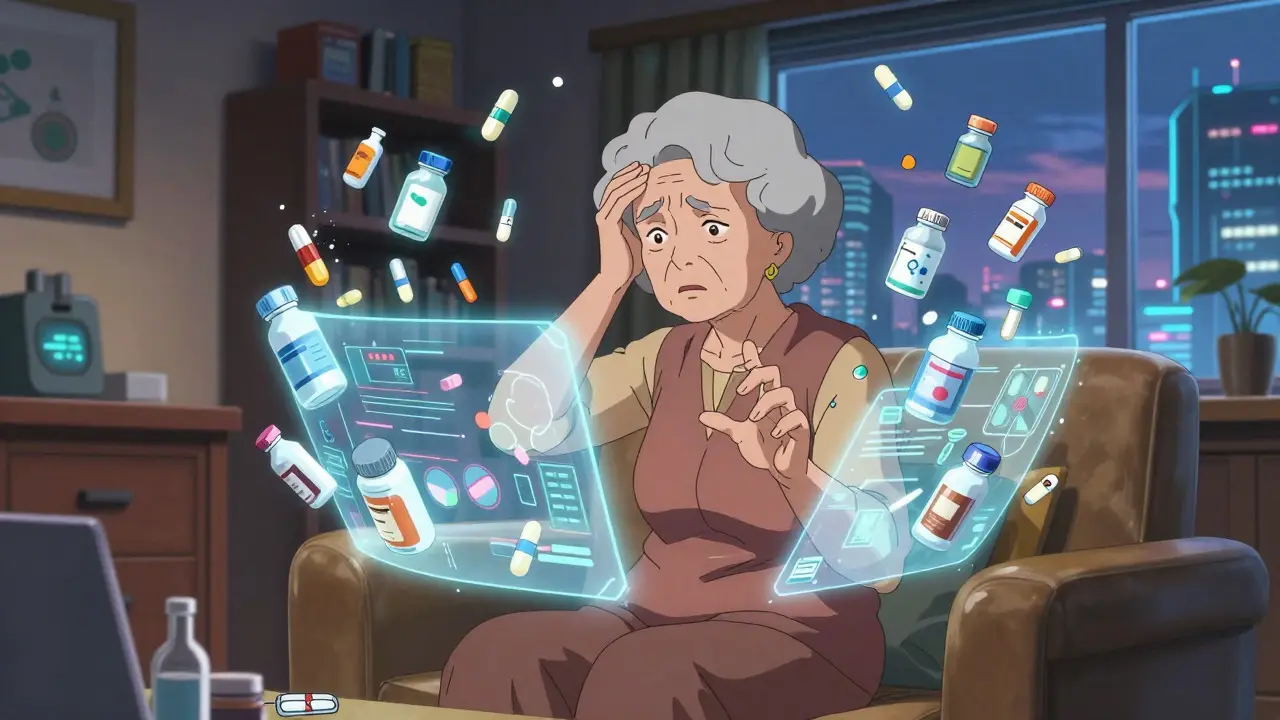
Imagine your parent suddenly forgetting their name, acting confused, or moving like they are in slow motion. Your first thought is probably dementia or just "getting old." But what if the culprit isn't a disease, but a pill? Many common medications cause side effects that look exactly like aging or neurodegenerative diseases. This phenomenon is known as medication-induced cognitive impairment, and it is far more common than most families realize.
The stakes are high. Misdiagnosing a reversible drug side effect as permanent dementia can lead to unnecessary hospitalizations, loss of independence, and years of reduced quality of life. The good news? If you catch these symptoms early, stopping or switching the medication often reverses the problem completely. Here is how to spot the difference between normal aging and medication side effects.
Why Older Adults Are More Vulnerable
Your body changes as you age, and those changes affect how you process drugs. By the time you hit your 60s and 70s, your liver metabolism slows down by 30-50%, and your kidneys clear waste 40-60% less efficiently. This means drugs stay in your system longer and at higher concentrations than they would in a younger person.
There is also the issue of Polypharmacy, which refers to taking multiple medications simultaneously. According to the American Geriatrics Society, 92% of adults over 65 take at least one prescription, and 55% take five or more. When different drugs interact, the risk of adverse reactions spikes. For example, combining a blood pressure medication with a diuretic might cause dizziness that looks like balance issues from aging, when it is actually a chemical imbalance.
The Anticholinergic Problem: A Major Culprit
If there is one class of drugs you need to watch out for, it is anticholinergics. These medications block acetylcholine, a chemical messenger essential for memory and focus. They are found in common over-the-counter sleep aids, allergy pills, bladder control drugs, and some antidepressants.
Dr. Malaz Boustani, an expert in aging research at Indiana University School of Medicine, documented cases where patients in their late 60s appeared to have severe dementia. After removing specific anticholinergic drugs like Benadryl and Seroquel, their cognition improved dramatically. In fact, research shows that seniors experience 30-50% greater brain exposure to these compounds compared to younger adults because the blood-brain barrier becomes more permeate with age.
Common signs of anticholinergic burden include:
- Confusion or disorientation (reported in 72% of affected seniors)
- Drowsiness or feeling "foggy" (81% incidence)
- Dry mouth and constipation (very common physical markers)
- Difficulty urinating
- Blurred vision

Other Medications That Fake Aging Symptoms
It is not just anticholinergics. Several other drug classes mimic the symptoms of frailty or cognitive decline.
| Medication Class | Common Examples | Mimicked Symptom | Prevalence in Seniors |
|---|---|---|---|
| Benzodiazepines | Lorazepam, Alprazolam | Short-term memory loss, sedation | 65% report memory impairment |
| Corticosteroids | Prednisone | Mood swings, agitation, psychosis | 42% experience mood changes |
| Opioids | Morphine, Oxycodone | Confusion, lethargy, constipation | 57% report short-term memory loss |
| Antipsychotics | Risperidone, Quetiapine | Tremors, stiffness (Parkinson's-like) | Varies by dose and duration |
For instance, antipsychotics can cause tremors and muscle stiffness that doctors might mistake for Parkinson's disease. If misdiagnosed, the patient might receive additional medication for a condition they don't actually have, creating a dangerous cycle of polypharmacy.
How to Tell the Difference: Key Diagnostic Clues
So, how do you know if it is the meds or the disease? Look for three specific patterns. First, check the timing. Did the symptoms start shortly after a new medication was added or a dose was increased? Symptoms appearing within 14 days of a change are a major red flag. Second, look for fluctuation. True dementia usually progresses steadily. Drug-induced confusion often comes and goes, worsening after doses and improving before the next one. Third, assess the speed of onset. Sudden confusion is rarely Alzheimer's; it is often a reaction to something acute, like a new drug or an infection.
Experts refer to this as "medication fog." Affected seniors often describe feeling like they are moving in slow motion or finding simple tasks overwhelming. If your loved one says, "I feel so tired all the time," or "I can't remember what I had for breakfast," ask about their recent pill changes.

Practical Steps for Families and Caregivers
You don't need to be a doctor to start investigating. Start with a comprehensive medication review. Gather every pill your parent takes, including supplements and over-the-counter remedies. Bring this list to their next appointment and explicitly ask the doctor: "Could any of these be causing cognitive changes?"
Consider using the Beers Criteria, a list maintained by the American Geriatrics Society that identifies medications generally inappropriate for older adults due to high risk of side effects. While your doctor will use this tool, knowing it exists helps you advocate for your parent. Ask if any of their current prescriptions appear on the list and if alternatives exist.
If a medication is suspected, don't stop it cold turkey unless told to do so. Doctors usually taper off problematic drugs over 4-12 weeks while monitoring symptoms. Studies show that 35-45% of apparent dementia cases improve significantly after such medication adjustments. Keep a symptom diary during this period, noting when confusion peaks and fades, to help your healthcare team make informed decisions.
Frequently Asked Questions
Can stopping medication reverse dementia symptoms?
Yes, if the symptoms were caused by medication side effects rather than neurodegenerative disease. In cases of medication-induced cognitive impairment, discontinuing or switching the offending drug can lead to full or partial recovery of cognitive function within weeks to months.
What is the Beers Criteria?
The Beers Criteria is a clinical guideline published by the American Geriatrics Society that lists medications that are potentially inappropriate for older adults. It helps doctors identify drugs with a high risk of adverse effects relative to their benefits.
Are all sleeping pills bad for seniors?
Not all, but many popular ones are. Over-the-counter sleep aids containing diphenhydramine (like ZzzQuil) are anticholinergic and carry high risks. Prescription benzodiazepines also pose significant cognitive risks. Non-drug therapies or safer alternatives should be discussed with a doctor.
How long does it take for side effects to go away after stopping a med?
It varies by drug. Some effects fade within days, while others, particularly from long-term use of benzodiazepines or anticholinergics, may take several weeks or even months to fully resolve. A gradual tapering process under medical supervision is standard.
Should I share my parent's supplement list with their doctor?
Absolutely. Supplements can interact with prescription drugs and contribute to side effects. Providing a complete list of all substances taken ensures a thorough medication review and reduces the risk of missed interactions.