
When you pick up a bottle of generic ibuprofen at the pharmacy, you’re probably not thinking about how long it took the FDA to approve it. But behind that low price tag is a complex, highly regulated process that can take anywhere from 10 months to over three years - depending on the drug. For most people, the question isn’t just how long the FDA takes - it’s why it takes that long, and whether the system is working as it should.
What’s the standard timeline for FDA generic drug approval?
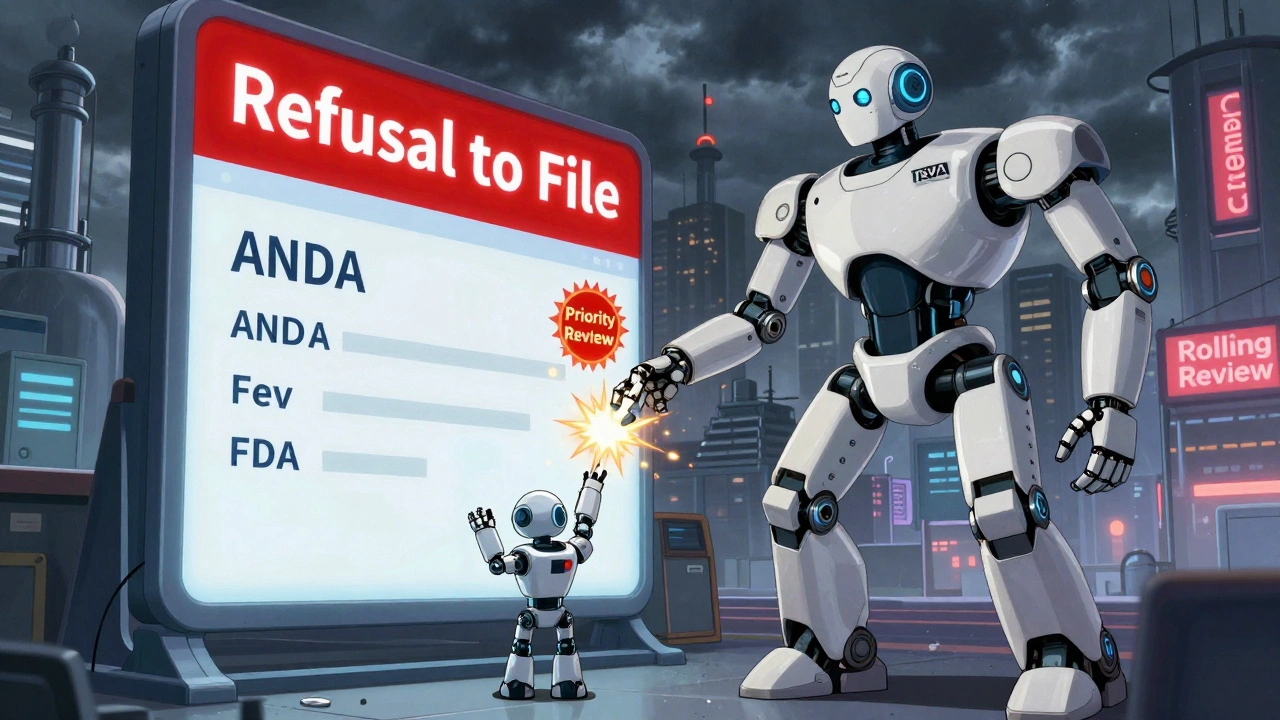
The FDA’s official goal for reviewing a standard generic drug application - called an Abbreviated New Drug Application, or ANDA - is 10 months after the application is accepted. That’s the target. But in reality, the clock starts ticking only after the agency confirms your application is complete enough to review. That first step, called the filing review, takes up to 60 days. If your paperwork is messy, missing data, or poorly organized, the FDA will send you a refusal to file letter. You’ll have to fix it and resubmit. That adds months before the 10-month clock even begins.
Once the review starts, the FDA checks three things: whether the generic drug is chemically identical to the brand-name version, whether it works the same way in the body (bioequivalence), and whether it’s made in a clean, reliable facility. If everything looks good, you get approved. If not, you get a complete response letter - basically, a detailed list of what’s wrong. About 42% of applications get this letter on the first try, up from 38% in 2024. That means nearly half of all generic drug makers have to go back, fix something, and wait again.
Why do some approvals take years?
Not all generic drugs are created equal. A simple tablet? That’s straightforward. A complex nasal spray? A patch that releases medicine slowly? A liquid suspension that needs special stabilization? Those are complex generics. And they take longer.
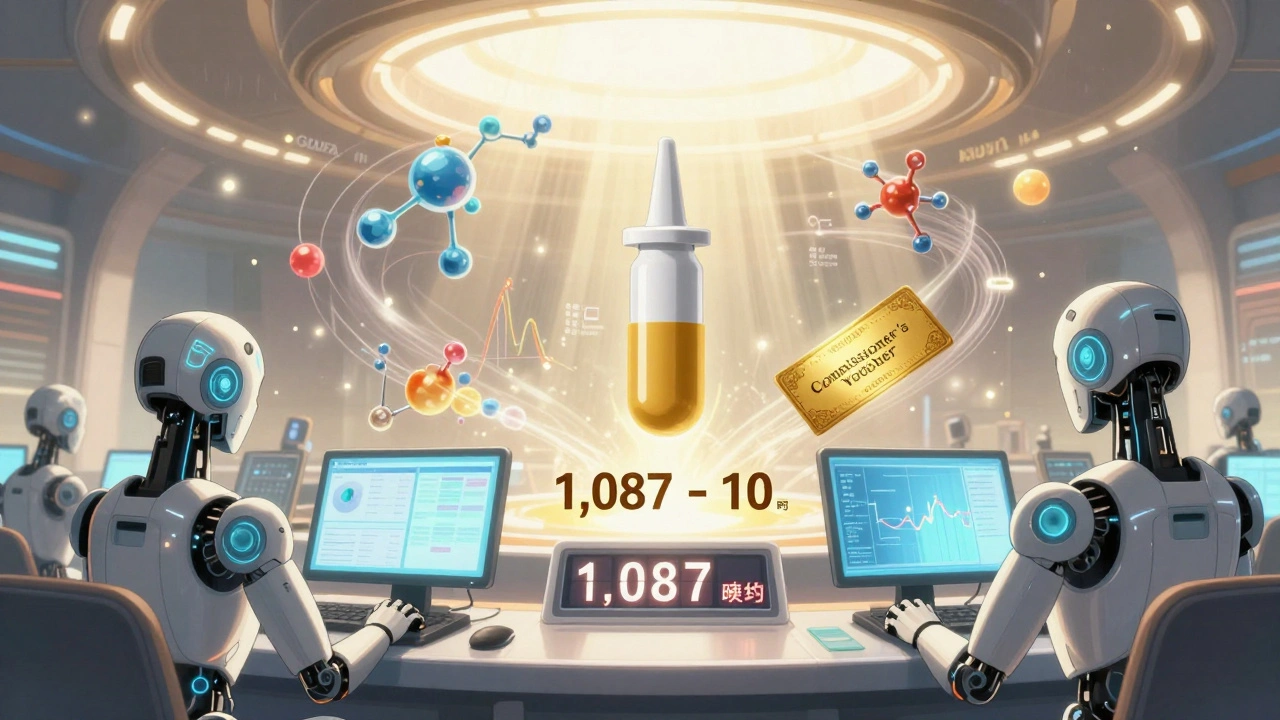
The FDA’s data shows that standard tablet generics now average around 35 to 38 days from acceptance to approval - that’s just over five weeks. But complex generics? Those can take 18 to 24 months. One Reddit user reported a nasal spray generic taking 1,087 days (almost three years) from submission to approval. Why? Because proving bioequivalence for complex products isn’t just about matching a chemical formula. It’s about matching how the drug behaves in the body - and that’s harder to measure.
That’s why the FDA created its Complex Generic Drug Products initiative in 2023. Dedicated review teams now handle these tricky applications. Since then, approval times for complex generics have dropped by 22%. Still, they’re nowhere near the speed of a simple pill.
What’s the difference between standard and priority review?
The FDA doesn’t treat every generic drug the same. If a drug is in short supply - like epinephrine, doxycycline, or insulin - the FDA can give it priority review. Priority doesn’t mean faster just because you ask for it. It means the FDA has decided your drug is critical to public health. That could be because there’s only one manufacturer, or because patients are going without.
Priority review doesn’t have a fixed timeline published by the FDA, but industry insiders say it typically cuts 3 to 6 months off the standard process. In 2025, the FDA approved 11 first-time generic drugs in just the first nine months - up from 8 in all of 2024. Many of those were for drugs with shortages. The agency is now using AI to flag these applications early, so they jump to the front of the line.
How is the FDA speeding things up?
The FDA’s Generic Drug User Fee Amendments (GDUFA) - a funding deal between the agency and drug makers - has been the biggest driver of faster approvals since 2012. Under GDUFA III (2023-2027), the FDA committed to approving 90% of standard applications on time. And they’re hitting that mark.
But the real game-changer in 2025 is the new Commissioner’s National Priority Voucher program (CNPV). This lets companies apply for a special fast-track review - cutting approval time from 10 months to just 1 to 2 months. It’s only available for drugs that treat serious conditions with no other generics available. So far, only a handful have qualified, but the pipeline is growing.
AI is also playing a bigger role. The FDA’s pilot programs using machine learning to review chemistry data have reduced review times for standard generics by 15.8%. Instead of human reviewers reading through hundreds of pages of lab data, algorithms now flag anomalies instantly. That frees up experts to focus on the hard questions.
Another new tool? Rolling review. Before, companies had to wait until their entire application was finished to submit it. Now, they can send parts of it in as they’re ready - manufacturing data one month, stability results the next. That cuts down on delays caused by waiting for the last piece of paperwork.
Who’s getting approved fastest?
The biggest generic drug makers - Teva, Viatris (formerly Mylan), and Sandoz - don’t just have more resources. They’ve mastered the system. They use pre-submission meetings with the FDA to get feedback before they even file. They hire former FDA reviewers. They build their applications with precision.
As a result, they’re getting approvals faster than smaller companies. Teva alone holds 18.3% of the U.S. generic market. Their average approval time is 20% shorter than the industry median. Why? Because they’ve turned the FDA process into a well-oiled machine.
Smaller companies? They often struggle with incomplete submissions. One survey found that 29% of manufacturers say the FDA’s review standards are inconsistent - sometimes the same issue gets flagged in one application but ignored in another. That unpredictability adds risk and delays.
What’s the real cost of delays?
Every day a generic drug is delayed, patients pay more. In 2025, generic drugs made up 90% of all prescriptions filled in the U.S. - but only 23% of total drug spending. That’s a $1.7 trillion savings over the last decade, thanks to generics.
When approval takes longer, brand-name drugs stay on the market longer. That means higher prices for patients, insurers, and Medicare. For drugs like insulin or asthma inhalers, a delay of even a few months can mean people skip doses or go without.
Experts warn that pushing too hard for speed could risk safety. Dr. Peter Lurie from the Center for Science in the Public Interest says, “Rushing approvals without enough scrutiny could let substandard products onto the market.” The FDA counters that they’re using a risk-based approach - focusing more scrutiny on high-risk products and less on low-risk ones. They’ve also increased inspections of foreign manufacturing sites, which now account for over 80% of generic drug production.
What’s next for FDA generic approvals?
The FDA’s goal by 2027? A median approval time of just 20 days for standard generics and 10 days for priority ones. That’s ambitious. It would mean approving a simple generic in less than a month - faster than most people wait for a new phone.
But it depends on funding. GDUFA III is funded through user fees paid by drug companies - $138,400 per application in 2025. Small businesses can get fee waivers, but only 4.7% of applications qualify. If Congress doesn’t renew this funding after 2027, progress could stall.
Meanwhile, the number of generic drugs approved keeps rising. In 2025, the FDA approved more first-time generics in the first nine months than in all of 2024. That’s a sign the system is working - even if it’s still messy, slow for some, and uneven across drug types.
For patients, the message is clear: the system is getting faster - but not for everyone. If you need a simple tablet, you’ll likely get it soon. If you need a complex product, patience is still part of the process.
What can generic drug makers do to speed up approval?
If you’re a company trying to get a generic drug approved, here’s what actually works:
- Submit a complete application - Missing chemistry data or incomplete manufacturing info is the #1 reason for delays. Use the FDA’s checklist.
- Request a pre-submission meeting - Talk to the FDA before you file. Get their feedback on your plan. It saves months.
- Focus on quality, not speed - A clean first submission beats a rushed one that gets rejected.
- Apply for priority review - If your drug treats a shortage or has no competition, make sure you document it clearly.
- Use rolling review - Don’t wait for everything to be perfect. Send what you have, when you have it.
It’s not magic. It’s just preparation.
How long does it take the FDA to approve a generic drug?
The FDA’s official goal is 10 months after accepting a complete application. For simple generic tablets, actual approval times are often under 40 days. Complex generics - like nasal sprays or injectables - can take 18 to 24 months. Priority reviews for drugs in short supply may cut that time by 3 to 6 months.
What is an ANDA?
ANDA stands for Abbreviated New Drug Application. It’s the form generic drug makers submit to the FDA to prove their product is the same as the brand-name drug in dosage, safety, strength, how it’s taken, and how it works. Unlike brand-name drugs, generics don’t need new clinical trials - they just need to show bioequivalence.
Why do some generic drugs take longer to approve than others?
It depends on complexity. A simple pill is easy to copy. But a drug that needs a special delivery system - like a patch, inhaler, or liquid suspension - is much harder to replicate. Proving it works the same way in the body requires more testing, more data, and more review time. The FDA has special teams for these complex products, but they still take longer.
What is priority review for generic drugs?
Priority review is given to generic drugs that treat conditions with no other available options or are in short supply. It doesn’t guarantee approval, but it moves the application to the front of the line. While the FDA doesn’t publish exact timelines, industry estimates suggest priority reviews reduce approval time by 3 to 6 months compared to standard reviews.
Is the FDA’s approval process becoming faster?
Yes. Since 2020, the median approval time for generics has dropped by nearly 19%. In 2025, the average approval time for standard generics is around 35 days - down from 42 days in 2023. This is thanks to GDUFA funding, AI tools, rolling reviews, and better communication between the FDA and manufacturers. The goal is to get to 20 days by 2027.
Can a generic drug be approved faster than the brand-name version?
Yes. Brand-name drugs must go through full clinical trials, which can take 10+ years. Generic drugs only need to prove they’re bioequivalent - which usually takes 1 to 3 years. In fact, many generics are approved years after the brand-name drug’s patent expires, but the FDA can fast-track them if there’s a shortage. Some complex generics have been approved in under a year, while the original brand took over a decade to get to market.


sagar bhute
December 3, 2025 AT 22:47The FDA takes three years to approve a nasal spray but my Amazon package arrives in two days? This system is broken.
Cindy Lopez
December 5, 2025 AT 08:51Missing semicolons in the ANDA submission? That’s the problem. Not the FDA. Every single delay is preventable. Companies need to hire actual scientists, not interns who think ‘bioequivalence’ is a Spotify playlist.
Ignacio Pacheco
December 5, 2025 AT 09:33So the FDA uses AI to read lab reports now? Cool. Next they’ll have a robot judge whether your pill dissolves at the right speed. Maybe it’ll also rate your submission on a scale of 1 to 10 based on how much coffee you drank while writing it.
Jim Schultz
December 6, 2025 AT 11:50Let’s be real: Teva and Sandoz don’t ‘master’ the system-they pay for it. The GDUFA fees? That’s a tax on small companies. The FDA isn’t speeding things up-they’re just letting the big boys skip the line. And don’t get me started on ‘priority review’-it’s just corporate favoritism with a PowerPoint.
Vincent Soldja
December 8, 2025 AT 03:06Approval times vary. Complex drugs take longer. That’s science. Stop complaining.
Makenzie Keely
December 9, 2025 AT 10:00For everyone feeling frustrated-this is actually a win! Think about it: 90% of prescriptions are generic because of this system. Yes, it’s messy. Yes, it’s slow sometimes. But the FDA is using AI, rolling reviews, and targeted fast-tracks-and they’re hitting their goals. Small companies? Reach out to FDA’s small biz office. They’ll help. You’re not alone. This system is improving. Keep pushing.
Francine Phillips
December 10, 2025 AT 02:55the 10 month thing is misleading. it's not like they start counting the day you hit submit. they wait. then they check. then they say no. then you fix it. then they wait again. it's a maze.
Katherine Gianelli
December 11, 2025 AT 10:53I know someone who works at a tiny pharma startup-they spent 18 months trying to get a generic asthma inhaler approved. They didn’t have a legal team. Didn’t have former FDA staff. Just a brilliant chemist and a lot of hope. They finally got approved after using rolling review and a pre-submission meeting. It wasn’t easy. But it happened. If you’re a small company, don’t give up. Talk to the FDA early. Ask for help. They’re not monsters. They just need good data.
And to the people saying ‘just pay more’-no. This isn’t about money. It’s about fairness. Everyone deserves a shot. Even the little guys.
Kara Bysterbusch
December 11, 2025 AT 20:47The structural inequities embedded in the GDUFA fee structure are not merely bureaucratic inefficiencies-they are systemic barriers to pharmaceutical equity, disproportionately disadvantaging emerging manufacturers who lack the capital to navigate the labyrinthine regulatory architecture. The FDA’s commendable adoption of AI-driven analytics and rolling submissions represents a paradigmatic shift toward evidence-based efficiency, yet the persistent reliance on user fees as a primary funding mechanism inadvertently privileges corporate consolidation over public health inclusivity. It is ethically untenable that a life-saving generic insulin, critical for millions of low-income Americans, remains delayed for over two years due to incomplete manufacturing documentation, while a multinational conglomerate secures priority review within weeks. The 2027 target of 20-day approval timelines for standard generics is not merely an operational goal-it is a moral imperative. Without structural reform that decouples regulatory access from financial capacity, the promise of affordable medicine remains an aspirational fiction.