Have you ever stood at the pharmacy counter, heart sinking as the pharmacist announces a price that feels less like a copay and more like a mortgage payment? You are not alone. Medication costs have become one of the most stressful parts of healthcare for millions of people. But there is a growing army of tools promising to slash those bills: Prescription Discount Programs and coupons.
They pop up everywhere-from apps on your phone to flyers in your mailbox. The promise is simple: lower prices. But do they actually work? The short answer is yes, but with some serious caveats depending on what you take and how you pay for it. Let’s break down exactly how these programs function, where they shine, and where they might actually cost you more than you think.
How Prescription Discounts Actually Work
To understand if these tools save you money, you first need to know what they are doing behind the scenes. There are two main types of discounts floating around: third-party discount cards and manufacturer coupons. They look similar to the patient-you show a code or an app screen-but they operate very differently.
Third-party discount cards, such as GoodRx, Blink Health, and NeedyMeds, act as middlemen. They negotiate bulk pricing agreements with pharmacies. When you use them, you are essentially accessing a pre-negotiated cash price. These are often best for uninsured patients or those whose insurance copays are surprisingly high.
On the other hand, Manufacturer coupons are different beasts. These are offered directly by drug companies, usually for brand-name medications. They function as point-of-sale rebates. The coupon lowers what you pay at the register, but it often keeps the list price high. This distinction matters because it affects how much the healthcare system pays overall, and sometimes, how your insurance counts that payment toward your deductible.
The Savings Gap: Generics vs. Brand Names
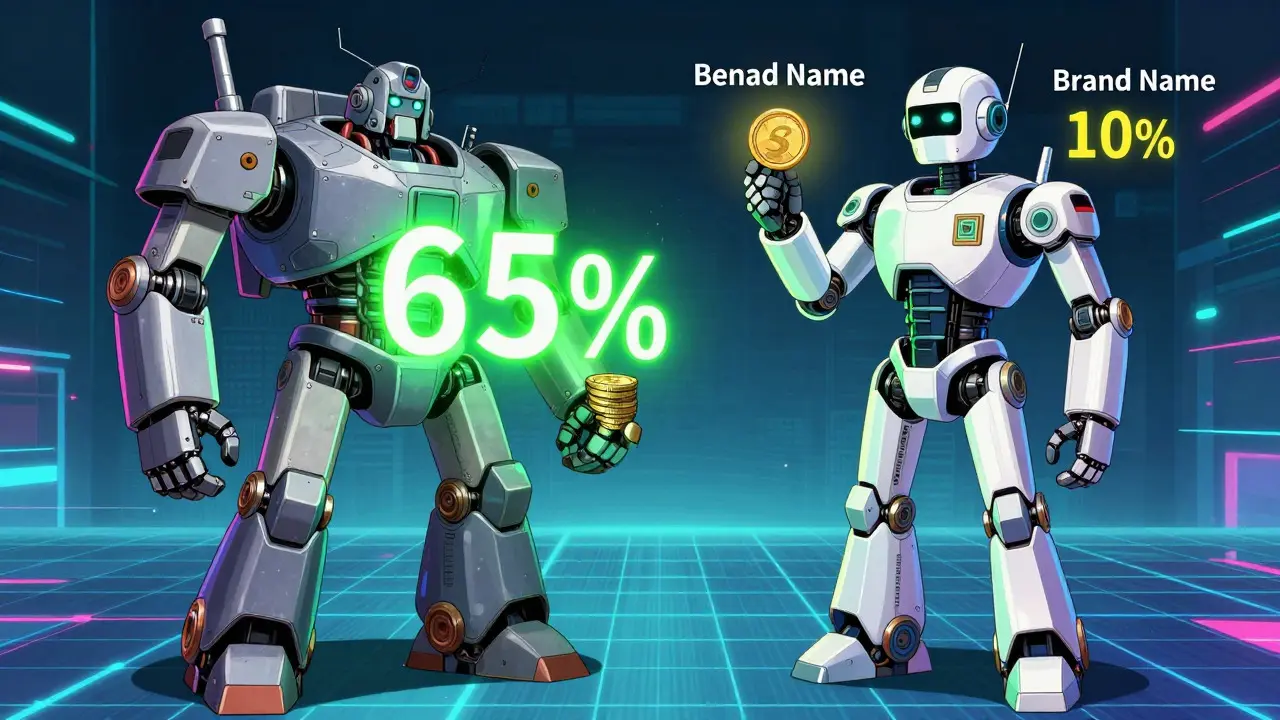
Here is the biggest catch: not all drugs are created equal when it comes to discounts. If you are taking generic medications, these programs can be life-savers. A 2022 analysis published in *Circulation: Cardiovascular Quality and Outcomes* found that discount cards delivered an average 65% discount on generic medications. For example, a standard three-drug generic regimen that might cost $52.80 at cash price could drop to just $18.60 with a discount card.
But switch to brand-name drugs, and the magic fades fast. That same study showed discounts for brand-name medications ranged from a meager 6.8% to 11.7%. An ideal four-drug heart failure regimen priced at $1,300.50 only dropped to $1,212.46. That is a saving of about $88-not nothing, but hardly a revolution.
| Drug Type | Average Discount | Example Cost Reduction |
|---|---|---|
| Generic Medications | ~65% | $52.80 → $18.60 |
| Brand-Name Medications | 6.8% - 11.7% | $1,300.50 → $1,212.46 |
This disparity exists because generic drugs have low production costs and high competition, allowing pharmacies to pass on significant savings. Brand-name drugs, however, are protected by patents and pricing strategies that resist deep discounting.
Insurance Status Changes Everything
Your insurance plan plays a huge role in whether a discount card helps or hurts. If you are uninsured, these programs are often your best friend. They provide access to negotiated rates that would otherwise be out of reach. For commercially insured patients, the math gets trickier. You need to compare your insurance copay against the discounted cash price. Sometimes, the discount card is cheaper; other times, your insurance has already negotiated a better rate.
For Medicare Part D beneficiaries, it is complicated. Historically, using a manufacturer coupon meant the payment didn’t count toward your "True Out-of-Pocket" (TrOOP) costs, which determine when you hit catastrophic coverage. However, recent changes under the Inflation Reduction Act aim to cap out-of-pocket costs at $2,000 annually starting in 2025. This shift may reduce the urgency for some seniors to seek out complex discount schemes, though many still find value in comparing prices before filling prescriptions.
AARP Public Policy Institute data suggests that more than half of commercial and Medicare Part D patients could reduce their out-of-pocket costs by 20% or more using discount cards after initially abandoning a prescription due to cost. Nearly half of seniors saved more than $5 per prescription compared to their Medicare drug plan coverage. That adds up over a year.
The Hidden Costs: Market Distortion and Demand
While individual patients might save money, experts worry about the broader impact. Dr. Kao-Ping Chua from the University of Michigan noted in a 2024 *JAMA Network Open* study that the frequency of coupon use was linked more to market competition than to actual patient need. Essentially, coupons are used heavily where brands are fighting for shelf space, not necessarily where patients are struggling most.
There is also the issue of induced demand. Research by Qato et al. indicates that manufacturer coupons can increase demand for brand-name drugs by 60% or more by making them appear artificially cheap compared to generics. This undermines efforts to keep overall healthcare costs down. The Congressional Budget Office estimates that these coupons could increase Medicare Part D spending by $2.7 billion annually by encouraging the use of higher-cost brand names over cheaper generics.
So, while you might save $10 on your specific prescription, the system might be paying $50 extra elsewhere. It is a trade-off between individual relief and systemic efficiency.
User Experience: Confusion and Inconsistency
Even if the math works out, the user experience isn’t always smooth. Many people report confusion about when to use a discount card versus their insurance. Medicare Rights Center surveys show that 42% of seniors feel confused about this decision. Pharmacists aren’t always trained to guide you either; 28% of user complaints on Consumer Affairs cite pharmacist unfamiliarity with certain discount programs.
Pricing inconsistency is another major pain point. Trustpilot reviews for GoodRx highlight that 37% of negative reviews mention inconsistent pricing across pharmacies. One pharmacy might offer a great deal via the app, while the one next door charges significantly more for the same drug, even with the discount applied. This forces users to shop around, adding time and stress to an already difficult process.
However, the convenience factor cannot be ignored. Apps like GoodRx have streamlined the process, allowing users to compare prices across local pharmacies in minutes. With an average setup time of just 5-15 minutes per prescription, the barrier to entry is low. For many, the ease of downloading an app and scanning a QR code outweighs the hassle of calling multiple pharmacies.

Who Benefits Most?
Not everyone will see dramatic savings. Here is who tends to benefit the most from prescription discount programs:
- Uninsured Individuals: Without any insurance negotiation, discount cards provide access to wholesale-like pricing.
- Patients on High-Deductible Plans: If you haven’t met your deductible, you are paying full retail price. Discount cards can bridge that gap.
- Those Taking Generic Medications: As shown earlier, the deepest discounts apply here.
- People Abandoning Prescriptions Due to Cost: Over half of members who abandoned prescriptions later used discount cards to obtain them, saving an average of $18.75 per prescription according to Blue Cross Blue Shield analysis.
If you are on a traditional PPO plan with low copays for generics, you might not save much. Always check both prices before filling.
Future Trends and Regulatory Shifts
The landscape is shifting. The 2024 Inflation Reduction Act’s Medicare drug negotiation provisions may change how we view discount programs. By capping out-of-pocket costs, the government is addressing the root cause of affordability for many seniors. Additionally, the Federal Trade Commission is investigating potential anti-competitive effects of manufacturer coupons, suggesting that regulatory scrutiny is increasing.
We are also seeing integration with telehealth platforms. About 38% of major telehealth providers now offer integrated discount options, making it easier to get prescribed and afford medication in one click. AI-driven price comparison tools are being piloted by major pharmacy chains, promising real-time analysis of insurance benefits versus discount card prices. This technology could eliminate the guesswork and confusion that currently plagues users.
Dr. Stacie Dusetzina of Vanderbilt University Medical Center predicts that the most sustainable models will be those integrated directly with insurance benefit design. Instead of operating as parallel systems that confuse patients, future solutions will likely work collaboratively with insurers to present the lowest net cost at the point of sale.
Practical Tips for Maximizing Savings
To make the most of these programs, follow these steps:
- Always Compare Prices: Use apps like GoodRx or Blink Health to check the cash price with a discount card against your insurance copay. Do this every time you refill.
- Ask About Therapeutic Substitution: Talk to your doctor about switching to a clinically equivalent but less expensive alternative. Studies show therapeutic substitution can account for significant savings, especially for drug classes like calcium channel blockers.
- Check Manufacturer Websites: For brand-name drugs, visit the manufacturer’s website directly. They often have patient assistance programs or coupons that aren’t available through third-party apps.
- Understand Your Plan’s Rules: Know if your insurance allows you to use discount cards without penalty. Some plans may void coverage if you use external discounts.
- Shop Around: Prices vary by pharmacy. Don’t assume your usual pharmacy offers the best deal. Check nearby independents and large chains.
Can I use a prescription discount card with my insurance?
Generally, no. You must choose one or the other at the point of sale. Using a discount card means you are paying cash, so the payment won't count toward your insurance deductible or out-of-pocket maximum. Always ask your pharmacist which option results in the lower total cost for that specific fill.
Are prescription discount cards free to use?
Yes, most major third-party discount cards like GoodRx and SingleCare are free for consumers. Pharmacies pay a fee to participate in the network, which subsidizes the lower prices offered to patients. Be wary of any service asking for a monthly subscription fee unless it offers additional verified benefits.
Why are brand-name drug discounts so small?
Brand-name drugs are protected by patents, giving manufacturers control over pricing. While they offer coupons to maintain market share against competitors, they rarely discount deeply enough to match generic prices. Additionally, high list prices mean even a percentage-based discount results in a high final cost compared to generics.
Do discount cards work for Medicare Part D beneficiaries?
It depends. While you can use them, payments made via discount cards typically do not count toward your True Out-of-Pocket (TrOOP) costs until recent regulatory changes begin to take effect. This means you might pay less upfront but delay reaching catastrophic coverage. Consult your pharmacist or plan administrator for current rules.
What is the difference between a discount card and a manufacturer coupon?
A discount card negotiates a lower cash price with the pharmacy. A manufacturer coupon is a rebate from the drug company that reduces your copay but often keeps the list price high. Manufacturer coupons are usually restricted to specific brand-name drugs, while discount cards cover a wide range of generics and brands.